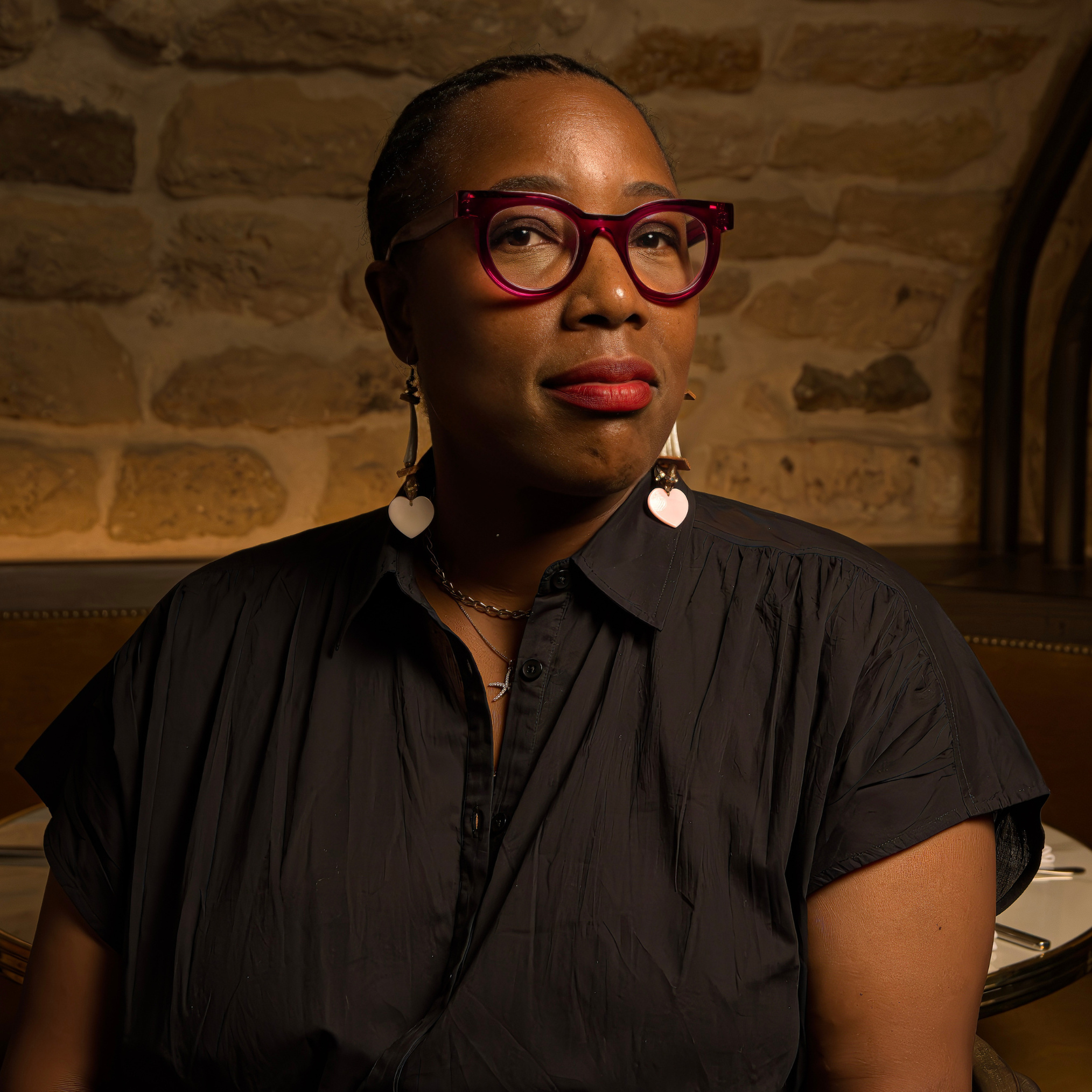
From being fired from social work to finding her calling in the kitchen, she shares her unconventional path along with candid insights on culinary excellence, navigating racial dynamics in business partnerships, and why sustaining hospitality means investing in entire ecosystems, not just what’s on the plate.
Links
Transcript
HOST: ALICE CHENG
Welcome to Hospitality On The Rise, the podcast about the people shaping the hospitality industry and their journeys. I'm your host, Alice Cheng, Founder and CEO of Culinary Agents, hospitality's go-to hiring platform. And I'm here to give you your dose of virtual mentorship.
Here, we'll be sharing the stories, lessons learned, and advice from hospitality leaders who've carved out their own path to success. After all, this industry is where many get their start and go on to do incredible things.
Whether you're a pro, starting out, or just love the hustle, this podcast highlights what makes hospitality extraordinary, the people.
HOST: ALICE CHENG
We're so excited to have Mashama Bailey here with us today. Mashama is the Chef and Co-Owner of Grey Spaces, which includes The Grey in Savannah, Georgia, and a new-ish project recently opened in Paris, which we're going to hear more about. She's also the Board Chairwoman of the Edna Lewis Foundation, Co-Author of Black, White, and The Grey, as well as 2025 Observer Nightlight 2025 Nightlife & Dining Power Index. 2022 James Beard Foundation Award Winner - Outstanding Chef. 2019 James Beard Foundation Award Winner - Best Chef: Southeast. Finalist several years, the list goes on and on. Mashama, thank you so much for joining us today.
GUEST: MASHAMA BAILEY
I'm so happy to be here, Alice. Thank you so much for having me.
HOST: ALICE CHENG
Yeah, and I'm particularly excited for a couple reasons, but one I like to highlight is there has been so much news about you and interviews, and you have an episode on Chef's Table, which was lovely. So I love that I get to kind of fill in the blanks…
GUEST: MASHAMA BAILEY
Oh yeah!
HOST: ALICE CHENG
…because this show is about how did you get there? Let's celebrate the accolades, but let's talk about all of that hard work, all of the stuff that came before it.
GUEST: MASHAMA BAILEY
Oh my gosh.
HOST: ALICE CHENG
So let's take a step back and how did you get into this industry?
GUEST: MASHAMA BAILEY
I have not been asked that question in a really long time, or if ever, I think. But it's an interesting thing. I started in social work, and I worked at a group home in Brooklyn, New York. And the group home that I worked at was working with inner city youth. It was a family shelter, and they used to have all these different potlucks during the holidays and during different occasions, and it could be for President's Day or for Thanksgiving or in the summer. We would just sort of do these potlucks, which I thought was really good, and I would like to bring a covered dish to these things.
Up until then, I'm the firstborn of three, was a latchkey kid, both my parents worked and went to school. So I often was in charge of the after-school snacks and making sure that my brother and sister had something before dinner, so when my parents came home, we weren't all starving. We usually ate around 8 p.m. at night, which is kind of late when you think about it, but that's what my parents did.
And so it wasn't until I got to college that I really started being introduced to different types of food. Graduated college, and I remember my junior year, I just was so stressed because I didn't know what I wanted to do. I didn't know what I wanted to be when I got out of school. And so I always kind of keep that in the back of my mind. And then I ended up going into social work, working at a homeless shelter, and I ended up getting fired from this homeless shelter. And that was probably the best thing that ever happened to me.
It was right around the holidays. I was talking to someone about cooking school. I was talking to someone about catering, and they introduced me to Peter Kump's, and so I went to cooking school. I just kind of did it. And I wasn't sure if I loved it. I wasn't sure if I was gonna continue cooking for the rest of my life. But what I did know is that I liked the way that I felt when people complimented me on the things that I cooked. I liked being at the party, almost in the background, and helping out and serving. I liked that hospitality and those acts of service.
And so I got into culinary school, and one of my chef instructors, he asked me, he told the class, “If you love it, you'll do it forever. And if you don't love it, this industry will chew you up and eat you up.” And so I basically ended up asking myself that question until one day I realized that I was feeling a little under the weather. These were pre-COVID days. I was sick. And I knew if I didn't go into work, someone else was going to have to do my, they were going to have to do my work for me that day. And then I decided to go to work and I was like, “I think I love it. I think I love this industry.” And I've been pushing ever since.
HOST: ALICE CHENG
I love that. In a couple different ways to latch onto a couple things that you said. First of all, sometimes things work itself out. What probably didn't feel great when you got fired from your job turned into an opportunity.
GUEST: MASHAMA BAILEY
It was scary. Mm-hmm.
HOST: ALICE CHENG
You followed that, and look where you are now. The rest is history, kind of.
GUEST: MASHAMA BAILEY
Mm-hmm. I know.
HOST: ALICE CHENG
So you go to school, you graduate, now you love it. At that point, were you like, “One day I'm going to have my own restaurant” or you were just like, “Let's just keep doing this and figure out what's next”?
GUEST: MASHAMA BAILEY
Yeah, so I think my family, my grandmother–my father's mother–she was a really good cook, and she really liked to entertain. She had the gold silverware and the plate settings, and she threw parties all the time, and we lived with her for quite a while when we lived in New York City. And she talked about having a restaurant. She was like, “If I wasn't a nurse, I would have a restaurant. And it would be just kind of like a neighborhood hangout joint.”
And I think that she was the first person that put the possibility of owning my own place in my head. And what I wanted originally was something very neighborhoody, something very small, very local that cooked really sort of just soul food, right? I wanted to cook chicken dishes and waffles and breakfast dishes and things like that. I wasn't really that interested in the higher echelon type of cooking until I went to culinary school and I was introduced to those foods, and I became really curious about that type of cuisine. That's when I think my world opened up to the possibility of going beyond just a small neighborhood shop. So I wanted to explore cooking that way, and I was interested in traveling with food too.
HOST: ALICE CHENG
And you went, and traveling you did. I know you spent quite some time in France. How did that come about?
GUEST: MASHAMA BAILEY
I was working as a personal chef on the Upper East Side, and the family was a really nice family but I knew that it was a dead end. I was there for four years, I worked with them for four years and by year three I realized that I wasn't as passionate about food as I was when I first started working for this family, and I really needed a way… I wanted to do a drastic shift, so I went back to the bulletin board they had up at culinary school. So before Culinary Agents…
HOST: ALICE CHENG
Before Culinary Agents, yeah.
GUEST: MASHAMA BAILEY
Before Culinary Agents, your cooking school would put bulletin boards up, or they would send out an email. And they would say, “Hey, this person graduated, that person graduated” or “This is an opportunity for a person to work here. There's a position open at this restaurant.” So I went back to my culinary school, and I looked at the bulletin board, and I noticed that there was a trip to the château, Château du Feÿ. And they were looking for stages to work there. And I thought, well, why not? And it was a three-month program. It was eight weeks at the château, and then it would be four weeks at a Michelin-starred restaurant that you can choose within the region. And I thought, that's a really great opportunity. Institute of Culinary Education was a French-based school. So I thought, “Okay, I understand some of this food. I really like French food. I'll go on this trip.”
And I applied for it and I was sort of the last person to be accepted in the program. And it was the last year of the program. There was a young lady who I took her place. Apparently she got married or she had a baby, so she wasn't able to go. And so I was a late entry, and I ended up going. And I ended up staying for five months because they were closing the château because it was the last of the program, and they asked the last sort of group of students to stay on and help them break down the château.
HOST: ALICE CHENG
What an incredible experience. And I want to hone in on this a little bit because you went into private chefing kind of earlier on in your career.
GUEST: MASHAMA BAILEY
I did, I did. It was too early, actually.
HOST: ALICE CHENG
I was just going to ask you your feelings about that, because that is something that is a path that people take. And sometimes you hear about them doing it later on.
GUEST: MASHAMA BAILEY
I think for me, I was having all of these kind of tough conversations with myself. I lived on my own. I lived independently. I didn't have any roommates, and I was paying all my bills, and I was broke all the time. And I had already graduated college, so I had a small amount of student loans. And I was going through a work study program at the cooking school, so I didn't have a lot of time for a full-time job and cooking school. So it was just really hard to make ends meet.
And I think I made a lot of choices early on for money. And I think that my going into personal chefing so early was because I was really interested in paying my student loans off and paying my rent. In hindsight, I would have probably gotten a roommate, and I would have probably stuck within the industry because what happened was I got out of culinary school, and I worked for about three or four years out of culinary school, but I only made it to like garde manger. I didn't really go to the hotline. I wasn't a sous chef. And so before I kind of got a step up, or I got my stripes in a certain position, I left the industry into private chefing. And I think that that's a real thing.
Like, I don't think being a private chef is the same as working in a restaurant or the same as working in a catering call or for a caterer. I think that when you're a private chef, you do leave the industry because you're cooking for a family, essentially. And I didn't think of it like that at the time. I thought, “Okay, I'm getting experience, yada, yada, yada.” But in hindsight, I left the industry, and I left the industry before I had any real experience. So four years as a private chef, and then another five, six months in France. When I came back, re-energized and refocused because I was in France cooking and learning about the five mother sauces and all these kind of essential core recipes that you learn in culinary school, I thought, “Oh cool. I'm ready to go back into restaurants and I want to open my own restaurant.” And I had to start all over again. I had to start right back at garde manger, and I was like, okay. But the difference was I wasn't with my same class. I was with people who were five years younger than me, six years younger than me at the time. And I was already a career changer. So I'm the big age of 32, working with 20 year olds and 25 year olds because I kind of took a sidestep and went into personal chefing.
And I made that decision because I was interested in the money and interested in… yeah, I think it was really financially driven. And I think if I were to give my younger self a piece of advice, I would say, don't make decisions on your career based on money. Make decisions based on education and experience. ‘Cause money's going to come and money's going to go.
HOST: ALICE CHENG
Yep, yep. That little pesky thing, money, you know. Rent.
GUEST: MASHAMA BAILEY
O my God, yeah.
HOST: ALICE CHENG
That thing just keeps coming at you, right? Month after month.
GUEST: MASHAMA BAILEY
Yeah, exactly. Yeah, but if I was smart, I would have, like–I lived in Bed-Stuy anyway, I would have moved into a brownstone and got like six roommates and paid my way in a different way.
HOST: ALICE CHENG
Yeah. Right, because you don't want six roommates when you're 32. That's a different experience.
GUEST: MASHAMA BAILEY
No, no, no, you don't.
HOST: ALICE CHENG
I hear that. I hear that. I mean, I too am the result of many, many roommates within a small space in Manhattan in the earlier years. But things seem to have worked out. That's great advice. I think that the point is also in why we do a lot of these things, that everyone has their own path. There's a lot of different ways to do that. And only you can ask yourself the hard questions and be honest with yourself with what is the most important priority in your life at that time. And if the answer comes back to money, then that's okay. Figure that out, right? But there are different ways to address challenges. And so when you came back, did you go straight to Prune or were you working in different places before then?
GUEST: MASHAMA BAILEY
When I came back, I ended up working at… what did I do when I came back? When I came back, I ended up working with Davidburke & Donatella. I ended up working with David Burke, and I worked there for about a year and a half. I went from garde manger, and I started working on the grill, which was a disaster. I was just like… It was so fast that I was burning up steaks and really did not have a lot of control over my emotions when I worked at Davidburke & Donatella, meaning like the stress of the job, and also it was a boys club. It was just, like, all dudes very kind of, very kind of “pat yourself on”, very bro-y, everybody celebrated all the small wins, you know?
And I was older, so I didn't really get it. I didn't really like participating in it, necessarily. But I thought, okay, this is a really good place to cut my teeth. And they weren't disrespectful, they just were young and annoying, you know? And you kind of get a little annoyed by the banter that happens when there's just a bunch of guys kinda talking about their privates all day, you know? Or using that as a way to be like, “All right, let's get motivated and let's…” you know? It's just so cliquey.
And I worked there for about a year, and I ended up going over to Prune after that. I met someone who knew someone who was leaving Prune, and I ended up going to Prune and staging, and it was like a whole different world.
HOST: ALICE CHENG
What a wonderful restaurant that was.
GUEST: MASHAMA BAILEY
Yeah. Gabrielle Hamilton, like to this day, she's probably the best chef I've ever worked for. She just has so much integrity, you know? Chefs have integrity, but she has integrity not only for her food, but also for her staff and the type of restaurant that she runs, how she wants people to treat one another. And I think I learned a lot of bad habits in kitchens, and in Prune, there was a mirror that was reflected on me with those habits and how to be a better person. And I think that I learned lessons on how to be a better person, which has moved me into being a better leader here.
Because when you're stressed, some of these things come out in ways that you don't expect, right? Like you're lashing out or you're gatekeeping, or there's some ways where when you're put up against a wall and you're working hard and you're trying to get the team to pull in the same direction as you are, some bad things come out, some good things come out. But also if you've been around people who teach you how to sandbag or who teach you how to intimidate, you tend to use those practices as ways to motivate. And going to Prune, it was a good sort of graduate school for me, because it taught me how to be a more compassionate and more empathetic worker or a team member.
HOST: ALICE CHENG
Yeah, and at Prune, for those who never had the pleasure of experiencing it, you had nowhere to hide if you weren't there.
GUEST: MASHAMA BAILEY
Nowhere.
HOST: ALICE CHENG
Like even if you wanted to, there was no space to hide. I mean, it's just, you were there.
GUEST: MASHAMA BAILEY
Yeah, no. There was no space to hide, and then you just either have to step up and do the right thing or you're just gonna get called out, you know? And I didn't wanna do the wrong thing. I didn't wanna be lazy in that space. I wanted to kind of do more, because I realized that no one ever really asked me what I wanted. And Prune was the first restaurant that asked me what do I wanna eat? What do I wanna cook? What do I want to serve for family? What am I interested in? Do I want to cook? You know, it was the first place to ever really ask me questions about what I wanted. And I think, I feel like I strived in that environment.
HOST: ALICE CHENG
Yeah, and that's so important. You describe basically culture, right? I mean, and things have changed and evolved over the years.
GUEST: MASHAMA BAILEY
Mm-hmm. Yeah.
HOST: ALICE CHENG
That's a positive thing across many different types of parts of the industry. But when folks are looking at what do I want to do, what experience do I want to have, what kind of leader do I want to have, who do I respect? All these factors we're noticing more and more, which is great, and what we encourage is it goes into the job search. It goes into the career-planning. It goes into the hard questions that you ask yourself.
GUEST: MASHAMA BAILEY
Mm-hmm. Yeah.
HOST: ALICE CHENG
Whether it's a day-to-day business as usual or at some sort of pivotal moment in your lifetime. Because the industry is hard, and it's one of the ones that really infuses people and personalities and preferences, and all these things literally pressure cook together for service.
GUEST: MASHAMA BAILEY
Totally.
HOST: ALICE CHENG
And like you said, sometimes you can expect things to go a certain way, and sometimes you don't know what's gonna come out of it.
GUEST: MASHAMA BAILEY
Mm-hmm. I really like that you brought it back around the culture because I think that coming into… Like, leaving Prune, I knew that culture was really important, and going into Prune, it was kind of pre-Me Too. It was pre Mario Batali, like Mario Batali was on the top of his game when I was at Prune. Even the one of chefs I worked for was called out on sexual harassment. So all these issues that were happening in kitchens and in business and being under, working with powerful people and how powerful people can take advantage of others, those things weren't really… they were still whispers. And so post-Prune, all of that was broken wide open. So it's almost like I learned my lesson at the right time, you know?
I worked with someone that was teaching me how to be a better human at the right time because it wasn't sustainable. Like, the lifestyles and kitchens and how you treated people, it just wasn't a sustainable way to be if you weren't going to be nurturing to your staff, you know? And not to say that I haven't had backslides or I haven't yelled at anyone or anything like that. Like, that's not true, but I'm more conscious about how I communicate with people, especially in year 11.
HOST: ALICE CHENG
Yeah, yeah.
GUEST: MASHAMA BAILEY
And the grades went up for 11 years. In year two, year three, I'm sure I'm the villain in some people's stories, but it wasn't intentional.
HOST: ALICE CHENG
And that's a perfect segue into basically this portion of the show, which is opening your own place. And now that you've had some experiences working under different types of leadership, you're on your own kind of evolving leadership journey as well, right? And you have now the pressures of ownership. You have different things that perhaps weren't on your list of things to do and worry about when you were working under somebody else, right? So talk to me a little bit about transitioning from being in a leadership position, working for someone else, and then opening your own restaurant.
GUEST: MASHAMA BAILEY
Well, it was hard. It was hard. I think when you start cooking and you want to be a chef, you really are just thinking about cooking good food and making dishes that people like. You're not really thinking about creating a culture in order for people to thrive in. You're not really thinking about the P&Ls and how to pay people. You're not really thinking about advertising and how to recruit people.
So I think really the biggest transition for me was not keeping my head buried in the kitchen and also focusing on front of house and focusing on the overall culture of the restaurant. Like, what uniforms are people gonna wear? What music are we playing in the restaurant? What rules are we having folks abide by when they come into the space?
So we started off with a real hardcore no cell phone rule, right? We also started off with a no smoking rule, like you can't smoke in your uniform. So when you punch in, you're in until you punch out and you change out of your clothes, then you can go have a cigarette. And it was just sort of like, I was a smoker at the time, and I was just like, I don't want people… smokers get unsolicited breaks, and I don't think that's fair. And I didn't think it was fair when we were building up the culture of the restaurant too.
I don't want to treat the dishwashers different than I treat the line cooks different than I treat the back servers, right? So that part was the hardest part because I had to take my head from the pots and pans and the sauce work and all that stuff. And I had to focus on the staffing and the staff and the people of the restaurant. And also I had to focus on how to pay them. So that was really the biggest transition.
HOST: ALICE CHENG
Yeah, and having spent so much of, I would say, your professional cooking career up until then in New York City, did you find some big changes when you opened in Savannah?
GUEST: MASHAMA BAILEY
Huge, huge, huge, huge. Savannah is such a small city, and it's a hospitality city. But I think that the types of restaurants that were here were really focused on tourism, focused on having folks come in once, twice, you know? And I think we really wanted our place to be a local restaurant. We wanted to focus on local people, the local people of Savannah. And in order to do that, you have to be consistent. And you have to find cooks who are willing to be consistent and who come to work with integrity.
And so it was really difficult to sort of hold people to standard because they could go down the street and go on smoke breaks. They can go somewhere else and use their phone while they're washing dishes. And I think the rules that we've set for people were a little stricter because I think we wanted to go above and beyond. We wanted to strive for awards and national recognition. And in order to do that, we needed a focused team.
And so it was really hard kind of shifting through the pack of folks who were here that wanted to take cooking seriously because there weren't many restaurants in Savannah that was taking food seriously from the cook point of view, the cook's point of view and steps of service and front of house. Sorry.
HOST: ALICE CHENG
Yeah, no, absolutely. I mean, elevating all of the pieces across the board and introducing something. Like you said, hospitality is not a new thing, especially in the South, right?
GUEST: MASHAMA BAILEY
Uh-uh. Exactly.
HOST: ALICE CHENG
But packaging it in your way, taking all the experiences that you had both from the cooking side, but then also working the culture, the leadership, packaging it to communicate and build a place for the community, but then also kind of educating the community as to why your place is different and special and needed. I mean, those are tough things to package all in.
GUEST: MASHAMA BAILEY
Really tough. Just a really quick example. So when we got here, we went out to eat to different restaurants, my business partner and I. We were talking about the tip pool, and we were talking about pooling tips. And we went to different restaurants and we asked them if they pooled tips, and they were like, “What's that?” And it would seem so normal and so common in the restaurants that I've worked in, every single restaurant I've ever worked in, the front of house pooled tips, and they went off a point system. And that really just kind of reiterates teamwork and the fact that you all have to pull together. So that was even something that was challenging in the beginning, because we had to get certain servers that were even interested in working in that environment because it wasn't normal here.
HOST: ALICE CHENG
Yeah, yeah. Well, just a high level synopsis. You know, Eater, the 21 Best New Restaurants in America, 2015 Food & Wine Top Restaurants of the Year, 2017 Wine Enthusiasts America's 100 Best Wine Restaurants. I mean, you guys are doing something right. I joke, but I think part of this is like, once you reach a certain point and you get that national recognition, and now people are seeking you out to work for you, with you as part of their career journey, it's always nice to take a step back and highlight the hard work and persistence that went into and probably the learnings over the 11 years that you've been there, right?
Is there something that you can point to that's dramatically different or different from the beginning, when you were starting out, and how it's evolved into 11 years later? Was there something that you were like, “Let's do this,” and then you realized, that might not be the best way?
GUEST: MASHAMA BAILEY
Oh my God, there are a couple things, and I can't really think of one, but I'm sure that there's like five or six things that we've done in the past that we were like, “Uh, that doesn't really work.” You know, one of the things that we started off with that was really heavy, that doesn't work, but we kind of still keep it a rule is the cell phones. We used to have people keep their cell phones in their lockers. I think 11 years ago, your phone use was different than it is now. And so now it's like, everything is on your phone, right? Like, everything is on your phone. You watch TV on your phone, you communicate on your phone, you play games on your phone. And so now it's like… I think people would walk out if we told them that they could not have their phones on them.
So I think that that's a rule that we just, we still enforce, because it's a restaurant, it's dangerous to be on your phone, and you definitely can't use your phone during service. But that's not something that we police as hard as we used to anymore. So that's sort of like a light example of that. Oh my God, I can't think of anything.
HOST: ALICE CHENG
So we're going to have you back for episode two. But I can probably just continue talking to you for the next couple hours here. I want to kind of fast forward a little bit, because it's hard enough to open a restaurant, keeping it alive and well and thriving for 11 years. That's like next level hard, so congratulations to you and your team.
GUEST: MASHAMA BAILEY
Thank you.
HOST: ALICE CHENG
But let's talk about growth. So, some people expand down the street, maybe to the next town over, and you all are opened in Paris, right?
GUEST: MASHAMA BAILEY
Yeah, yeah. So funny, we opened up The Grey Market in 2018, that was down the street. Then in 2020, we opened up in Austin. And now in 2025, we're in Paris. And we only have two restaurants: here and in Paris. COVID kind of closed the other two. My business partner is a Francophile. We wrote a book, Black, White and Grey; we had to rewrite that book because we sent it out for that sensitivity read, and I think that I was approaching the project very laissez-faire, and it was like, no, no, no, no, no, no, you got to take this seriously. And so we went to Paris to kind of rewrite the book.
And it's a little bit of a longer story than that, but just being over there, I think my business partner was very convincing in the fact that “We can do this, we can live here, and we can have a restaurant here, and they'll love your food and our sense of hospitality, and this would be great.” And you know, by week six, I'm like, “Sure, yeah, this would be great.” And I never thought in a million years that it would happen. And then fast forward, like, five years later, we have a restaurant. And we bought the space two years ago.
So I think it's hard work. We haven't figured out what the systems are going to be yet. I was there for six months, came back in January, got here right before New Year's Eve, and I go back in a couple of weeks. And we're gonna play ping pong, and I'll spend time there, he'll spend time there. Space is small, so that's good. It's only about 40 seats, which is, like, perfect. It's a neighborhood bistro de quartier, so it's just like a small luncheonette breakfast spot, and we serve some dinner too. So it's just pretty romantic, I think, and a lot of work.
HOST: ALICE CHENG
Well, it sounds magical. It sounds magical. And I'm going to highlight a couple of things here that may not be as obvious, but we didn't touch upon the story of you and your business partner. But I'll emphasize from the outside looking in from what I've seen, for those of you who are interested, there's all sorts of things published. And like I mentioned earlier, the Chef's Table episode, which is lovely. But finding your business partner, the right one, is nothing to be rushed and could make or break a lot of different things.
So I love hearing and seeing how you got introduced through Gabrielle, I believe, and then how it evolved, and how you all kind of see eye to eye. And I think that makes things, I won't say easier, but it certainly gives you a partner in crime to take risks with.
GUEST: MASHAMA BAILEY
Yeah, we trust each other, and it took us a long time to gain and earn that trust from one another. And definitely me being a black woman in business and him being a white male, there was definitely that part. You know, there was some racial things going on that we were both kind of suspicious in our own ways. And we talk about that in our book. And even writing the book, I'm surprised, like, writing that book, we're still business partners, because that could have totally broken us up. And I didn't realize that we needed to write that book in order for us actually to get closer and to reveal some of the things that we were afraid to talk about with one another. And I think writing that book really helped our relationship because we got to work through some of the things that we weren't saying to one another.
And that's really what business partnerships are about. They're like a marriage, right? You have to be able to communicate, and you also have to know what good, fair communication is and what's on the table and what's off the table to talk about in order to have a business that thrives, because you don't want your staff to see you and your business partner bickering like an old married couple. And we used to do that. We used to kind of fight in front of everyone. You know? But they were alright with it, we kind of worked some things out, and now we're thick as thieves, so it's really good, yeah.
HOST: ALICE CHENG
Yeah, well, I love that and I'm very excited to see the new projects and what's coming. But we're going to go to some quickfire on that note.
GUEST: MASHAMA BAILEY
Yay!
HOST: ALICE CHENG
What advice would you tell your younger self?
GUEST: MASHAMA BAILEY
You're right where you're supposed to be. Don't rush it.
HOST: ALICE CHENG
What's your advice for someone struggling in the industry?
GUEST: MASHAMA BAILEY
Find the person that helps connect you to the things that inspire you. Stay inspired, and find that person that grounds you and calms you down. Because sometimes we jump too soon, and sometimes we stay too long. And I think you need someone in your corner that's gonna push you but also help you feel grounded and keep you inspired. You need an advocate and someone who's gonna, you need a support system. And I think that's the most important thing in this industry. You need somebody that's gonna listen to you and that's gonna hold your hand when you need your hand held.
HOST: ALICE CHENG
Love that. What's your advice for fellow hospitality leaders?
GUEST: MASHAMA BAILEY
I think that it's complicated for us because I think that there's a lot of things that are in play. I think that a lot of our ecosystems are shutting down, and I think we need to really focus on re-establishing connections with that. Like revitalizing those systems that made the food in our regions really special. Investing in those things, I think, is important for us. Investing in our guests and our guest experience and having some transparency with the guests to let them know what we're serving and who we're all supporting. Because the hospitality industry is not just, you're not just supporting the chef, and you're not supporting the server, you're also supporting the farmer, and you're supporting the delivery truck driver, and you're supporting the person who sells the seed and the person who raises the cattle.
There's a huge system that you're supporting when you dine at restaurants. And I think for hospitality leaders to continue to speak to that and continue to shed light on that in order for us to be able to charge the fair prices that we need to charge to support those systems, I think we all need to talk about that stuff, so people feel connected to what we're doing.
HOST: ALICE CHENG
Yeah, absolutely right. Well, on that note, Mashama, thank you so much for spending time with us and sharing a little bit more about how you got to where you are and we cannot wait to see what’s next.
GUEST: MASHAMA BAILEY
Thank you, thank you.
HOST: ALICE CHENG
Remember, success looks different for everyone in hospitality. No two paths are the same. If you have a leader or a topic you want to hear about, email [email protected].
Hospitality On The Rise is brought to you by Culinary Agents, connecting top talent with employers since 2012. Whether you’re hiring or looking for your next opportunity, join us at CulinaryAgents.com
For more inspiration, subscribe to Hospitality On The Rise and visit HospitalityCareerPaths.com, a free platform by Culinary Agents.
Thanks for tuning in! Remember to like, follow, and subscribe. And if you loved this episode, share it with someone who could use a little inspiration.