Links
Transcript
HOST: ALICE CHENG
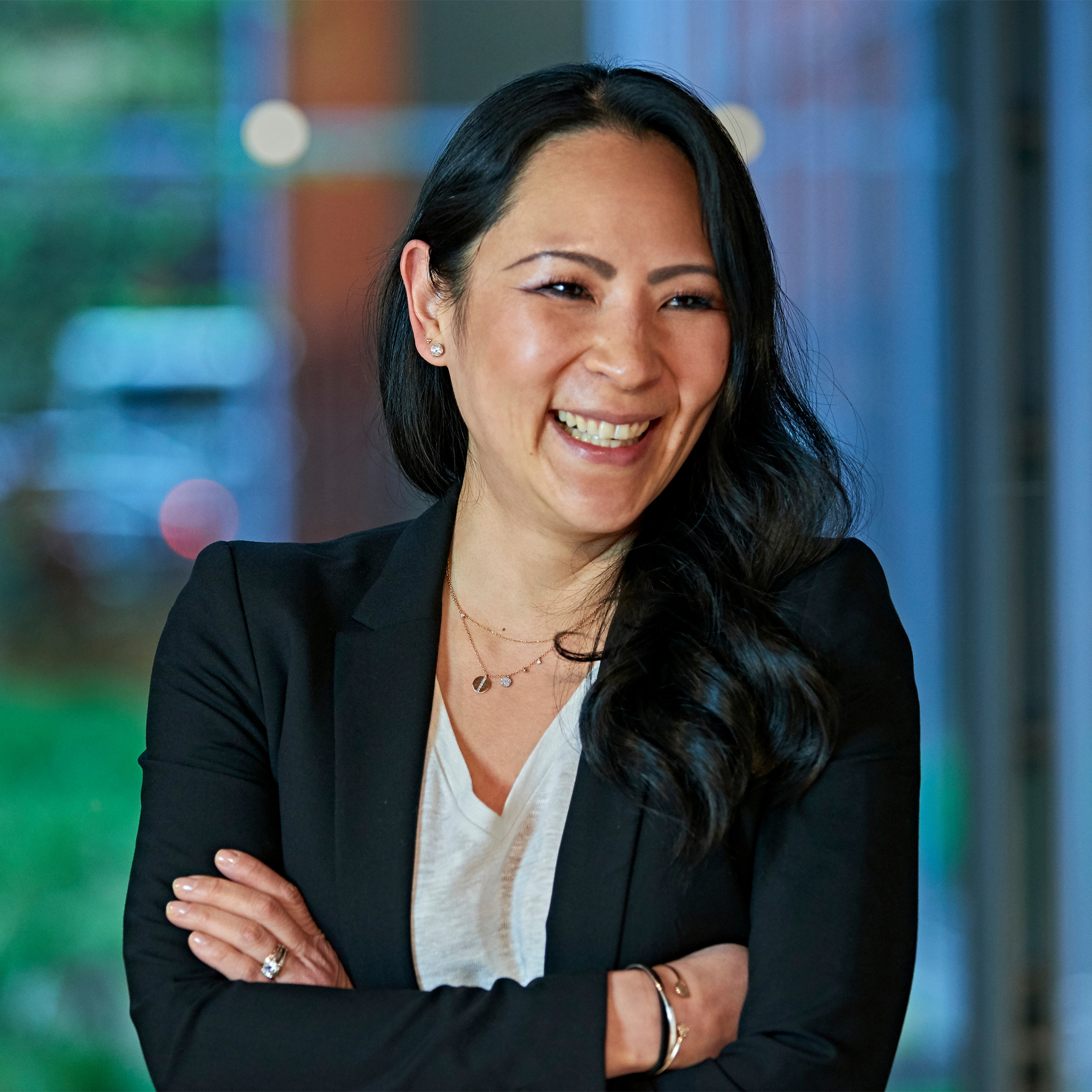
Welcome to Hospitality On The Rise, the podcast about the people shaping the hospitality industry and their journeys. I'm your host, Alice Cheng, Founder and CEO of Culinary Agents, hospitality's go-to hiring platform. And I'm here to give you your dose of virtual mentorship.
Here, we'll be sharing the stories, lessons learned, and advice from hospitality leaders who've carved out their own path to success. After all, this industry is where many get their start and go on to do incredible things.
Whether you're a pro, starting out, or just love the hustle, this podcast highlights what makes hospitality extraordinary, the people.
HOST: ALICE CHENG
I'm so excited to have Sam Yoo here with us today. Sam is the Chef-Owner of Golden Group Foods, which includes Golden Diner and Golden Hof. And we're going to hear a little bit more about these as the infamous, not just– there are more things than just the pancakes there! OK, more than just the pancakes. But he has recently, in New York Times, 100 Best Restaurants in New York City for Golden Diner. Congratulations. As well as in 2020, was a James Beard semifinalist for Best New Restaurant. So welcome, Sam. Thank you so much for joining us today.
GUEST: SAM YOO
Thanks for having me. Thanks for thinking to bring me on here. Super excited. I use Culinary Agents, my team does, so it's really great to have this opportunity.
HOST: ALICE CHENG
I love it. I love it. And I was looking over your earlier career and stuff like that and realizing that you've probably kind of seen Culinary Agents over the years as well. And it's always really awesome to hear from someone who has kind of grown through their career path their own way and then share some of your advice back to the audience here. So tell me, how did it all begin?
GUEST: SAM YOO
Sure. I grew up, born and raised in New York. I grew up in a restaurant family. My dad used to have a Dunkin' Donuts growing up out in Greenpoint back in the day. Yeah, I remember flipping donuts on these huge fire vats in this very… at once dangerous part of Greenpoint. Now, Greenpoint is not that. But I remember experiencing that, just loving food, creation of food, and also being part of Korean restaurants as well. And so I just remember the energy and the vibe of a busy restaurant or even just customer service. And I just loved it. So I didn't know it back then, but when it came time to make a decision, it was pretty clear for me what I wanted to do.
HOST: ALICE CHENG
I was just going to ask, because sometimes when folks start in the early–especially if there's a family history of working in restaurants and service, oftentimes the parents are like, “I don't want you to do this in the future.” Right? Or oftentimes the kids are like, “Ugh, I grew up doing this stuff. I don't want to do it.” So you kind of had the other effect with having a location of that of Dunkin’ Donuts, I'm sure very busy. Your parents probably worked really hard. And you started at a young age working in all this as well. At what point were you like, “I want to continue doing this”?
GUEST: SAM YOO
So it was my senior year of college when I was supposed to find a regular job, normal… just non-hospitality job. But throughout my college years, I always had restaurant jobs to supplement the unpaid internships that I was working. And it was more to make money, but also I actually didn't know how much I enjoyed that work and just connecting with people. And so when it was time to get a job, I realized why am I looking for these marketing jobs or these… I think that was primarily the kind of work that I was looking for, so I'll just leave it at that. But it just made sense for me to stay in food.
So this was in 2008. And I remember thinking, “I want to start a food truck” because it's very low costs and low risk. This was before there was a whole food truck explosion, like a little before when Roy Choi really popped off. When I told my dad about it, he was like, “If you really want to do food, you should learn how to cook.” Because that's one thing that he didn't have a skill set to do. He was more of an owner-operator. And he realized how much he lost by not being able to speak the language of a chef or whatever it is. And so I took that advice, and I never opened up a food truck, but focused all that energy on trying to become a really great cook.
HOST: ALICE CHENG
Great, so I had to ask, because you probably thought about it, what would have been your food truck concept?
GUEST: SAM YOO
I think it probably was, at that point, I was trying to do a very fast-casual Korean concept, trying to McDonalds-ify Korean food. I remember there was a company called Yoshinoya, which was– it still exists, it's a very huge Japanese “don” beef over rice concept. And there's a bunch in Asia, and there might be still one in Times Square, I'm not 100% sure. But I wanted to do a Korean version of that.
HOST: ALICE CHENG
So that got put on the back burner, and you decided to go work in kitchens or go to culinary school?
GUEST: SAM YOO
So I ended up moving to Seattle just because I was very intrigued about the city, and I thought that I heard just good things, and I ended up working during the day. I had a front of house job working at the W Hotels as a front of house manager, which is crazy, from like 6 a.m. to 4 p.m. And then I had a cooking job from like 5 to like 11, or 5 to like midnight. So I did that for about two years in Seattle.
HOST: ALICE CHENG
Wow, wow, how is that going from born-and-raised in New York to Seattle? What were some of the differences or the challenges you saw in the hospitality world there?
GUEST: SAM YOO
It was interesting. Seattle was a cool city. It was fine. If I did it again, I definitely wouldn't– I treated it like Manhattan a little too much where I was taking public transportation and biking everywhere. But it's really a car city to really experience how great Seattle is in terms of the nature and just the great outdoors. But I was working too much anyway, so I didn't really have…
HOST: ALICE CHENG
It didn't matter.
GUEST: SAM YOO
It didn't really matter, but in hindsight, I probably would have gotten a car.
HOST: ALICE CHENG
Nice. So you're getting your experience, and it's good. I mean, front of house and back of house experience, basically simultaneously, doing doubles every day. Right?
GUEST: SAM YOO
Yeah, definitely, yes.
HOST: ALICE CHENG
So is this when you're like, “OK, I want to have my own spot in the future” or “This is my thing” or were there doubts while you were doing this? Like, “Man, I thought I wanted to do this, but I changed my mind.”
GUEST: SAM YOO
No, I think the fact that I was in college and I was like, “Oh, I want to start a food truck” or like, I didn't know how important it was to have my own place back then, but even when I, you know, many years down the line, when I was working under some prominent chefs, I always knew that I wanted to have my own place. I think that was always in me. I don't think there was a point where I was like, “Oh, do I want to have a...?” It was not even a question for me.
HOST: ALICE CHENG
Yeah, I love that. And the reason why I keep asking that in different ways is because there's different approaches. Some people kind of realize after certain experiences, and some people from the get-go or earlier realize that this is something that is a goal of theirs. And that sometimes shapes the way that they progress their career, with either where they work, who they work for, what training they kind of seek.
So you mentioned that you work for some prominent chefs. Did that happen after you came back to New York or…?
GUEST: SAM YOO
Yes, yes. So I came back to New York and then immediately staged at probably nine different restaurants, all great ones. But I ended up at Momofuku Ko, working under Pete Serpico and Sean Gray and a bunch of other great chefs. And that was an amazing experience. I was there for a year, and then I moved over to Major Food Group before Major Food Group was a thing. It was literally just one Torrisi on Prince and Mulberry. And I worked very closely with Rich, Mario, and Chef Eli. Yeah, that was a very special place, and it was such a privilege to work with them at that point.
HOST: ALICE CHENG
Yeah, I remember that spot. Wow, who would have thought, right? There's another example of aggressive growth and figuring it out and building a brand and doing their thing, right? Which you are building your own brand. So after you have some of this experience, you also had some international experience too, right?
GUEST: SAM YOO
I did, I did. During my time–I was still with Major. They gave me the opportunity to work and do a couple months' stage over at Noma. And then during that same fall, I also spent some time in Italy and Emilia-Romagna and Tuscany, in a very small town called Capezzano Pianore. Just working with this very amazing family that pretty much did everything. They harvested their own olives to make their own olive oil. They had a little bee house, and they made their own honey.
HOST: ALICE CHENG
Sounds amazing.
GUEST: SAM YOO
Yeah, it was one of those priceless experiences that really taught me so much more than just cooking. It was really about life and relationships and just how things aren't really always about the New York City grind or, you know, it was really about how one should live.
HOST: ALICE CHENG
Yeah, yeah, and that kind of sums up, I think, like Italian culture in general. May I ask, how did you land these? Because sometimes people are like, “I would love to do that.” And then the following question is like, “How do I actually do that?” Right?
GUEST: SAM YOO
It was through relationships. I mean, Rich put me in touch with René. The family that I stayed with was actually the family that Mario stayed with when he was 27. And so it was through the people that I had worked for and worked with. And they were able to make those introductions for me.
HOST: ALICE CHENG
That's great. I love that. That's a great example of, you know, we talk about doing your research, finding where you want to work, who you want to work for, doing your best while you're there to support your managers or the business leaders, and you stand out in your own way. And when you ask for help or if there's an opportunity, jump for it, jump at it. And hopefully your reputation and what you've put into it already is enough for them to put their reputation or their asks on the line, like their favors.
It was great. Congratulations. I mean, it sounds like a lot of that influenced kind of what you have today, right? So then you go and you experience all these things, and are you formulating your own concept now and how you want your place to be when you come back? Or did you have a bunch more experiences in between there?
GUEST: SAM YOO
At that point, it was still… it was a little bit further down the line. It was only two years after that when I really started developing a business plan and honing in on what the concept was. I was still just trying to get life experience and just try to be the best cook and be a sponge at that point. Just in my own…
HOST: ALICE CHENG
That's important too.
GUEST: SAM YOO
Right, right. Grinding and being able to be a technician with my hands and being able to execute the things that I want. I'm able to teach to future cooks and also just execute in a way where I don't have to rely on anyone in the case that I may not be able to do it.
HOST: ALICE CHENG
Yeah, I mean, especially when you get such opportunities, making the most of it and really getting and extracting everything that you can in the entire experience, I think that's something we've heard really common with people, especially when they have a unique situation or something where they're just absorbing and learning. Right? It's like, be in that moment, live in that moment and get the most that you can out of that, because you don't know what could happen next, right?
GUEST: SAM YOO
Exactly, yeah.
HOST: ALICE CHENG
OK, so you did all that stuff overseas and then you came back… eventually.
GUEST: SAM YOO
I did, I did. I came back. Then I opened up a bunch of restaurants, more restaurants with Major Food. I opened up Dirty French. And then at that point I had… I opened up Dirty French, I was there for about a year. And then I left to work with my family at the space where Golden Hof is today. It used to be called New York Kimchi. And that was to see if I'd be able to
work with my family at that point, to see if I could take over the space then. In hindsight, I'm really grateful that I didn't because I definitely wasn't ready to take on such a huge space. I still am surprised that we're in the space and doing it and executing it on a daily basis.
So I was around 28, 29 at that point. And then I started, while I was working with my dad here, I realized that I wasn't ready for it and also just working so closely with my family wasn't… it just wasn't the right fit just because of their experiences and the way we ran, the way I had come up learning how to operate was just very foreign, just them having an immigrant mindset.
And so I started formulating my business plan. I had always been private chefing since I was a line cook, but I really started getting really heavy into private chefing at that point, trying to make connections and saving up money for what is now Golden Diner. And then at that point, I was hitting the streets daily, just really trying to look for a space, talking to landlords, talking to different business owners in Chinatown. I knew exactly where I wanted to be, and I knew the vibe that I wanted to create. But it was just very hard to find a space that was what I thought was going to be perfect for the diner.
HOST: ALICE CHENG
Yeah. I was going to ask you what was one of the hardest things getting started, but space, obviously finding the perfect space and then…
GUEST: SAM YOO
I think it was two things. One, it was the layout of the space because of the way Chinatown, a lot of the buildings were built. They're very long and narrow, a lot of the storefronts. But I wanted something a little bit wider, so it would just feel more comfortable and feel more open. I wanted a lot of sunlight, because I knew that it would be very heavy daytime concept, and just comfortable. And then I think even more important was finding a space that I felt comfortable in terms of the rent amount because that's such a killer in New York City. I guess all restaurants, but specifically New York City just because of the astronomical rents. But I wanted to find something where I was like, “OK, worst case scenario, can I make this much money per month while all the other overhead costs?” So eventually, it took me two years to find 123 Madison, which is crazy to think about, but it was a gut-wrenching experience where, like, every day I would come back home and just be disappointed. But finally I found the space, and I was so, so sure of it that I immediately jumped on it, and once I found it, I went hard.
HOST: ALICE CHENG
Yeah, I love that. For someone who is kind of thinking, like, the beginning stages of where you were when you were starting, can you think of one piece of advice that you wish someone told you about when you were starting this process?
GUEST: SAM YOO
I think a piece of advice that was very helpful for me was all those feelings in terms of the difficulty and the pain, which was even before you start the restaurant, just the challenge of finding that space, would be to stick with it and let those feelings run through you because it's all a part of the process. And if I hadn't been patient or if I had just picked a space where I just picked out of just… fatigue or just settling, the outcome may not have been the same. But I'm very happy, obviously, with the outcome and happy that I was patient.
HOST: ALICE CHENG
Yeah, and congratulations. I admittedly have never had a chance to go there, but I have been at Golden Hof several times. So I get a half star. But I will get there eventually, and I will stand in line. But congrats. And obviously it's all from hard work. Once you got kind of the system going, you're up and running, what were some of like– I feel like being a small business owner in any any type of establishment, you overcome one milestone or one one big challenge, and you take a breath for a second, and then there's like five more in front of you. What was something as you got things going, your system's up and running, was there another obstacle that you were like, “Oh, I wasn't anticipating this”?
GUEST: SAM YOO
Oh my gosh, there was so many. I think the hardest thing was being able to... I remember even back then how hard it was to find cooks and labor in general, just good help. I just remember how difficult it was because we were nobody, and also on top of that, we're competing against... I just remember thinking, “Wow, we're competing against…” at that point, it was like the Momofukus, the Major Foods, the... What else?
HOST: ALICE CHENG
The Daniel Bouluds.
GUEST: SAM YOO
All the players that... I remember back then, I think the going rate was probably like $18 for a line cook, but all those other companies were paying $22. And I was just like, “Okay, how can we even come close to competing with that?” And so that was a big challenge. One of the many big challenges, but just so many.
HOST: ALICE CHENG
Yeah, well, I mean, hopefully you can look back at some of those challenges now and kind of laugh a little bit. I mean, I think I think that's part of– You're like, “Kind of.” Well, certainly at least we'll have more help now. But I think one of the things when it comes to hiring and having an employer brand that stands out amongst so many great employers in a very condensed, small space and surface area is people start seeking you out. Awards are not– you know, you get the vibe, you get a lot of people want to find places that they'll ultimately enjoy working at, obviously be able to make living, but not willing to sacrifice the culture and the place just for the money, you know? And we've seen that happen year after year. And so kudos to you and your growth.
I mean, I wonder if it was always your dad's master plan to have you go off and learn the other side, and then come back and take over or go into business together.
GUEST: SAM YOO
Oh, I don't know.
HOST: ALICE CHENG
I just blew up your dad's spot. So take me through how Golden Hof happened.
GUEST: SAM YOO
Sure. So probably after year two, once I was able to take a breath– actually closer to post-COVID time, like once we were sort of getting out of COVID, we started actively looking for another space, all very close to Golden Diner, for a different concept. At that point is either Golden Hof or another concept that we haven't yet produced, but we went through three different spaces and had three different leases that we were in contract with that fell through, which was also a very tough time. And at that point, I was like, “Maybe I should just let up a little bit in terms of not trying to find these perfect, perfect spaces.”
And we always knew that we wanted to take the Golden Hof space at some point just because it was a great location, and we just felt like there could be good business up here. But we just didn't know when, and we felt like the space was a little bit too big as our second project. But sort of after the third lease fell through, it was simultaneously around the time when my parents just started getting a little older. And it was very tough for them to maintain the business here. And so it just felt natural and appropriate for them to hand it over to us. We came in and did a whole gut renovation, built a whole new team, and they're not involved at all in this project. And so that was a big part of taking over. We were like, “Okay, if you need to trust us, trust me that we're gonna do right by the space and you.”
Yeah, that was a two year process in terms of fundraising, the build out and opening. So we probably got that going in 2024. And then in 2026, we opened this late February.
HOST: ALICE CHENG
Wow. Well, 2025 in late February.
GUEST: SAM YOO
2025, yes. So 2023 then, yeah.
HOST: ALICE CHENG
Yeah, and you've alluded to the fact–so just for those of you who are listening, it's probably, what, five–? It's a lot bigger than Golden Diner, right? The space in midtown, Golden Hof.
GUEST: SAM YOO
Yeah, so Golden Diner, but with both upstairs and downstairs prep area, it's about 1,400 square feet, more or less, probably 1,200 square feet. And this is 7,000. So there's just so much. I'm constantly learning. And I will be learning, because we're still growing and getting better daily, just what a different animal a 200 seater is versus 50 seats. And so, yeah, I think the biggest thing is constantly showing up, being present, and letting up just enough where your team feels comfortable to do their thing, but also setting the standard and making sure that we are still doing the best we can and constantly improving.
HOST: ALICE CHENG
Yeah, yeah. I mean, having that level of flexibility is also really important because– I think I heard you speak recently at a Friends in Food event, and you mentioned something regarding testing or you have to be flexible with how you're setting things up or what offerings you are. It's a different audience, it’s a different neighborhood, it's a different space and everything. So do you have one or two things that you kind of tested out that you were like, “Wow, this worked really well” or “Wow, we were wrong with that”?
GUEST: SAM YOO
We have one big one that I can talk about, is when we first opened, we were a dual-concept restaurant in one space. One was a Korean pub, and on the lower level was a Korean raw bar and steakhouse. We learned quickly that… It could have been multiple things. We opened in the spring, went straight into summer. That could have been a part of the issue. But whatever the case, we found out that the term steakhouse and the optics of being a steakhouse wasn't in our favor because of price point. Also the fact that we were a dual concept was hurting us, I think.
And then after month five of opening, we quickly pivoted to a single-concept restaurant. So now we are all just one large space, one Golden Hof, and it's really worked out in our favor. It's just helped so much more, bringing the foot traffic. People who don't even know who we are, the fact that we call ourselves a Korean bar and grill, people just have the idea that it's more of an everyday spot. We'll have people who come in twice a week, just in for a drink, come in for a snack, and be on their way kind of thing, which is what we want. So we actually didn't even change our price point that vastly, but it was just a big, I guess, marketing change and operational change.
HOST: ALICE CHENG
Yeah, the magic of changing or word placement or changing words and what effect that has on perception and everything else. And a killer happy hour, too, because that's what one of my friends religiously goes–who’s also in the industry–goes there for the happy hour.
So congrats. I mean, I think those are all great lessons in general, just remaining flexible and then recognizing something quickly and adjusting. Right? Because you could have easily just continued doing your thing. And then before you know it, it's the fall and winter time, and a year has passed, right? So kudos to you. What's next?
GUEST: SAM YOO
I think a big part of my day is spent stabilizing here and making sure everything, our services here are amazing. But we're also in growth mode. We're currently looking to grow the diner concepts and also another concept that we've yet to come out with that we're really excited about. But we want Golden Group to be a global brand. We have very large aspirations, and we want to do it thoughtfully, not just to grow for the sake of growing. So yeah, a lot of exciting things happening.
HOST: ALICE CHENG
I love it.
GUEST: SAM YOO
I don't want to give away too much.
HOST: ALICE CHENG
No, no, maybe there's a part two to this.
GUEST: SAM YOO
Yeah.
HOST: ALICE CHENG
Well, great. On that note, we're going to go to quickfire. What advice would you tell your younger self?
GUEST: SAM YOO
Probably I would say to be kinder to yourself, not be so hard on yourself. Read more, eat better, drink less. Yeah, just take better care of yourself and try to set a little bit more TLC to yourself.
HOST: ALICE CHENG
What's your advice for someone struggling in the industry?
GUEST: SAM YOO
I think it depends on what kind of struggling, like where they're at, but I think the biggest lesson I learned this year is to be flexible. Be flexible, be open to pivoting and change if things aren't working exactly how you planned, because you may need to do that to make things work. Also just be open. Just be open to conversation and meeting people and going to events because that's a lot of where I get ideas and inspiration from.
HOST: ALICE CHENG
What's your advice for fellow hospitality leaders?
GUEST: SAM YOO
Try to always make time. Something that I'm learning to do and something that I've struggled with throughout my whole career is making time for the things that matter and the people that matter. Whether that's family or friends, that's a big one. And that's something that I'm constantly trying to balance.
HOST: ALICE CHENG
Yeah, that's a great one. On that note, thank you so much for joining us today, Sam. We can't wait to hear what's next. And congratulations on everything and to you and continued success.
GUEST: SAM YOO
Thank you, Alice. Appreciate you having me.
HOST: ALICE CHENG
Remember, success looks different for everyone in hospitality. No two paths are the same. If you have a leader or a topic you want to hear about, email [email protected].
Hospitality On The Rise is brought to you by Culinary Agents, connecting top talent with employers since 2012. Whether you’re hiring or looking for your next opportunity, join us at CulinaryAgents.com
For more inspiration, subscribe to Hospitality On The Rise and visit HospitalityCareerPaths.com, a free platform by Culinary Agents.
Thanks for tuning in! Remember to like, follow, and subscribe. And if you loved this episode, share it with someone who could use a little inspiration.