Links
- Jackrabbit Filly (Instagram)
- Jackrabbit Filly (Website)
- King BBQ (Instagram)
- King BBQ (Website)
Transcript
HOST: ALICE CHENG
Welcome to Hospitality On The Rise, the podcast about the people shaping the hospitality industry and their journeys. I'm your host, Alice Cheng, founder and CEO of Culinary Agents, hospitality's go-to hiring platform. And I'm here to give you your dose of virtual mentorship.
Here, we'll be sharing the stories, lessons learned, and advice from hospitality leaders who've carved out their own path to success. After all, this industry is where many get their start and go on to do incredible things.
Whether you're a pro, starting out, or just love the hustle, this podcast highlights what makes hospitality extraordinary, the people.
HOST: ALICE CHENG
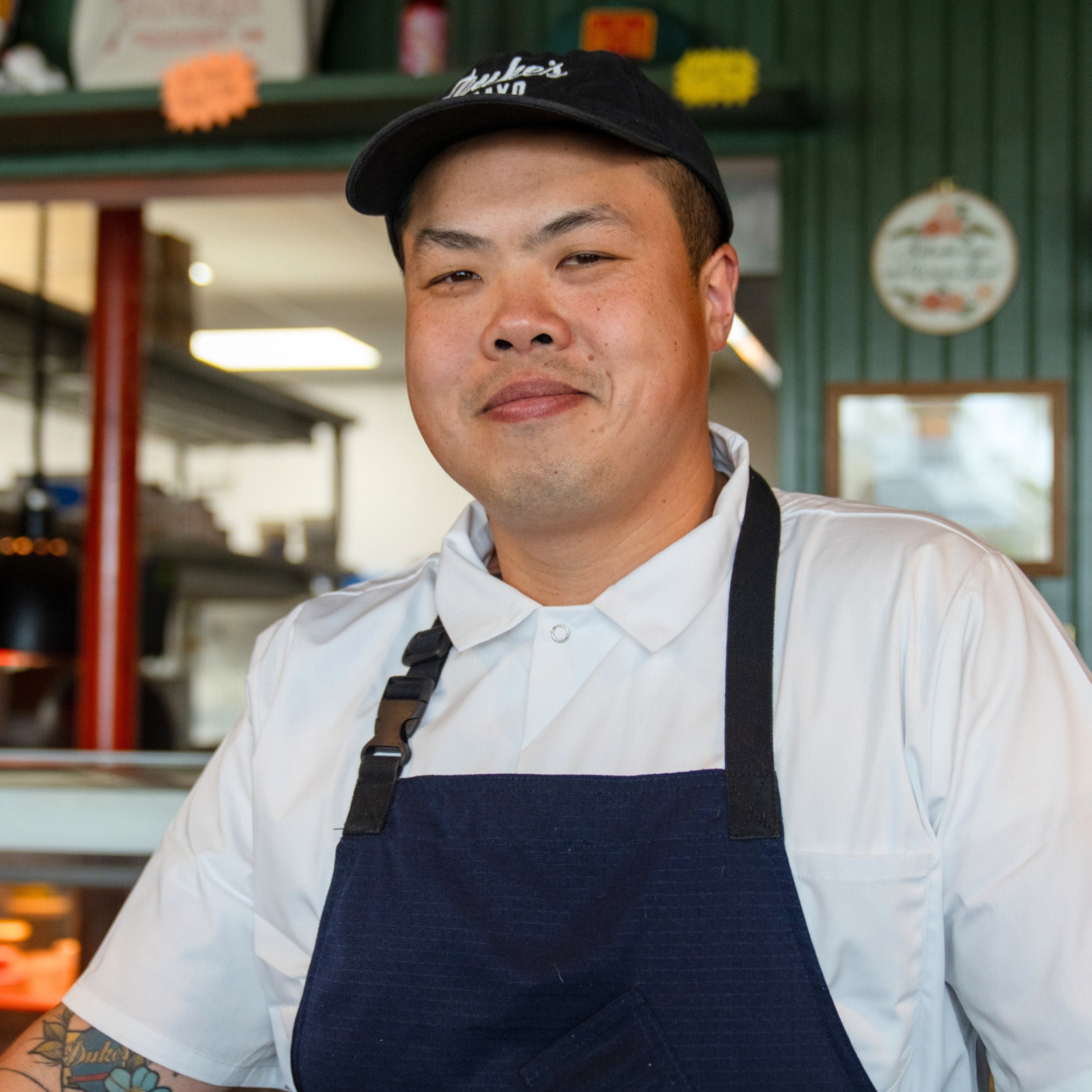
We're so excited to have Shuai Wang with us today. Chef Shuai is the Owner and Chef of Jackrabbit Filly, heritage-driven new Chinese-American restaurant, and King BBQ, Chinatown-style barbecue with southern smoke, both in North Charleston. He's the Co-Founder of Charleston AAPI Collective, Charleston's first AAPI organization, and South Carolina Chef Ambassador. Can't wait to hear more about these things. And of course, for those of you who are not up to date, he was the Season 22 finalist 2025 with Bravo's Top Chef. Welcome, Shuai.
GUEST: SHUAI WANG
Thank you, Alice. Thank you for having me.
HOST: ALICE CHENG
Thanks for joining us. I'm so excited. How did it all begin? How did you get into this industry?
GUEST: SHUAI WANG
Oh gosh, I guess I've always been surrounded by good food growing up in the Chinese household, growing up in Beijing, and just always loved eating. So I was just very passionate about food, always. I honestly did not think I would be a chef at any point in my childhood. I just happened to have taken a culinary program in high school to make up some extra credits and just kind of fell in love with it. My chef had us read the Kitchen Confidentials when it first came out. When I was reading Chef Bourdain's book, and it's one of those books talking about cooking in the kitchen and hot fires and sharp knives and going out partying, so I feel like I got into the industry for all the wrong reasons. But once I went to culinary school–which I went to the Art Institute of New York City, which was right down in Chinatown–and I just kind of fell in love with food and something that I was particularly good at. I feel like when I was growing up, I had so much ADD that I couldn't just do anything, but cooking I just felt I was in the right place. And from there on, just worked really hard and now I'm here.
HOST: ALICE CHENG
And here we are. We just condensed your whole career into one minute. And when you say when you were younger and you're cooking, were you cooking like with your family to help out in the kitchen? Was that kind of second nature and natural?
GUEST: SHUAI WANG
Yeah, I remember growing up in Beijing, and especially during the holidays like Chinese New Year, our family would get together. We would all make dumplings together. My grandma would literally roll out dough and flatten dumpling wrappers and everyone else just kind of sat around and…
HOST: ALICE CHENG
Stuff them.
GUEST: SHUAI WANG
Stuff them. Yeah, exactly. They all look very different. That was my earliest memory of helping out in the kitchen.
HOST: ALICE CHENG
And you all sit around and critique each other's wrapping skills, right? I get it, I get it.
GUEST: SHUAI WANG
My family always said that dumplings are like snowflakes, so none are the same. So that's how I teach all our cooks. Don't worry about consistency. Dumplings are supposed to be slightly different.
HOST: ALICE CHENG
It's great. Look at these life lessons from early mentors, right?
GUEST: SHUAI WANG
Exactly.
HOST: ALICE CHENG
So did you come straight to New York to go to culinary school, or were you working in the city a little bit in kitchens and getting a feel of what it would be like to do this longer term or...?
GUEST: SHUAI WANG
Yeah, I graduated high school, went straight to culinary school. Then I graduated culinary school when I was pretty much 19, because the culinary program was only 18 months. So it was really quick. I was going to school at the same time. I was volunteering at the James Beard House…
HOST: ALICE CHENG
Wow.
GUEST: SHUAI WANG
… on my days off because I wanted to learn more. I actually got my first job through the James Beard House, just cooking for one of the chefs that were local in New York City. But yeah, nothing, no restaurants that's crazy or Michelin starred or well known, you know. Just small restaurants for a very long time up until basically 2015, 2014, when I left New York City and moved down to Charleston with my wife. But yeah, it's been like a good chunk of my career in New York City.
HOST: ALICE CHENG
Yeah, and I love your being modest with, like, you just worked at small places. I mean, some really neighborhood powerhouses that have been longstanding. And we always say at Culinary Agents, like, not everyone wants to work at a Michelin-starred kitchen. Right? You know, sometimes you get different experiences working in the neighborhood hotspot or just the smaller place. Would you say that because you were in, I mean, some smaller places, but some larger places, did that give you different exposure or responsibilities that you maybe wouldn't have gotten if you chose to work at other places?
GUEST: SHUAI WANG
Yeah, I think being in smaller restaurants, like, for instance, my first sous chef job was at Joseph Leonard in the West Village.
HOST: ALICE CHENG
Love that place.
GUEST: SHUAI WANG
Yeah, and it's still open, which is insane. That's a long time ago. But I joined the team, I think, a year after they opened. I know for a fact that I didn't initially know I wanted to cook Chinese food. You go to culinary school, you learn French, you learn classic American, but you don't learn a lot about Chinese cuisine. And so I just went out thinking that, “Yeah, I want to cook French, I want to cook American.” But I knew that I wanted to cook something that's comforting for people. I never had an interest in high-end cooking or just like tweezer food.
So I joined Joseph Leonard, and because it was a small restaurant group back then and there wasn't a lot of people on the staff, I always worked super hard. I always put my head down. That's what my mom always told me to do. Like put your head down, just work hard. So I climbed the ladder really fast. I was line cook for a very few short months before I was sous chef. And then soon after that, I feel like a year, not even, after that, was the CDC at the Chez Sardine, which opened after.
HOST: ALICE CHENG
Yeah, down the road.
GUEST: SHUAI WANG
Yeah. So I feel like sometimes I wish I spent more time as a line cook, ‘cause that was super fun for me. Line cook is always fun, getting yourself in the weeds, putting yourself out of the weeds, but yeah, I climbed the management ladder super fast. I think I was with the company three years, maybe the most, and I went from line cook to CDC.
HOST: ALICE CHENG
Yeah, I love that you said sometimes you wish you were a line cook. As you look at different careers and positions and how you can progress, like once you reach management level, it's like a whole other ballgame. And then once you're an owner, it's like next level. Now you're like, wait a second. Are you getting on the line ever? No, just kidding. I'm sure you're on the line.
GUEST: SHUAI WANG
Yeah. I get on the line. I feel like I wash more dishes than I cook anymore. But I tell everyone that worked for us that no job is too small. We try not to do the hierarchy thing. It doesn't really do anything for anyone. I like to treat everyone equally because if my dishwasher wants to be a line cook and wants to learn, has the willingness to learn, then yeah, absolutely I will teach you that. There's no job too small; I'll jump in the dish pit when they need help, I'll do whatever I need to do to make this restaurant work, because at the end of the day we are just one big team.
HOST: ALICE CHENG
Yeah, I love it. Sink and swim together, right? So you had your time in New York. You had some great experiences, worked for some great businesses, and then you moved down south.
GUEST: SHUAI WANG
I did.
HOST: ALICE CHENG
So talk me through that transition, like at this point where you're like, “I want a restaurant of my own one day” or “I want to do my own thing.”
GUEST: SHUAI WANG
Yeah, after graduating culinary school, I made a goal for myself to open a restaurant by the time I was 30. That was my goal. And I think when we moved out of New York, I was probably in my mid 20s, I think. Chez Sardine had just closed. So I didn't have a job. And then I looked around and just thought, you know what? I just don't think New York was the place for me to either open a business or buy a home. I just didn't see that happening for me. Well you know, New York is everything is getting more expensive, more expensive. Everywhere is, but we just took some time off because I was jobless and came down to Charleston, visited a friend who was working down here who was my old sous chef at one of the restaurants I worked for in the West Village. And just kind of fell in love with Charleston just because it was beautiful, and it is still beautiful and it was a lot slower and just a really good change of pace of life.
And my friend was in the process of opening a restaurant himself. And he's like, “Why don't you just move down and help me open this restaurant and then figure it out?’ So I was like, “Yeah, okay. You know, I have nothing else to do.” Like I didn't think Charleston would be forever. Just come hang out for a year or two and then move on to somewhere else. But moved down here, and we met out in some bar and he's like, “The restaurant is indefinitely delayed.” So I was in the new city, no job. Yeah, and it felt like it was a great opportunity to start my own thing. Because I have always worked hard in my life, and I still do. And I just thought, if I'm going to work this hard, I should work for myself and not work for someone else. And so yeah, that's how we started our kind of restaurant journey. Just, yeah, I love randomness pretty much.
HOST: ALICE CHENG
Hey, some of the most beautiful things come randomly. And you started with a food truck at first?
GUEST: SHUAI WANG
Yeah. We did, we did. Yeah, it was called Short Grain because it was a food truck that was kind of a Japanese-style food truck. It was heavily influenced by my time spent cooking at Chez Sardine because I just really fell in love with Japanese food, especially the style Japanese foods that we were cooking, which was it was very quirky and fun. It wasn't very traditional. And so, yeah, we, and you know, we started a food truck because we wanted to do a brick and mortar, but we didn't know exactly what part of the city we wanted to open it. At the same time, we didn't want to get outside investors, so we just took whatever savings that we did have and we opened the food truck.
So now we had I think 40 grand to our name. Yeah, so we bought a really old trailer. We bought it, used a truck. And I didn't drive at all in New York because you didn't have to. I went from not driving to learning how to drag a 17-foot trailer with a giant truck and having to park that, and all that, so it was a pretty wild time. It seems like a lifetime ago that we had the food truck. So it was insane.
HOST: ALICE CHENG
Yeah, what would you say, because we often get folks who make that a goal, like, “I want a food truck one day.” What would you say was the hardest thing about setting that business up and getting it off the ground that would be different than doing a brick and mortar?
GUEST: SHUAI WANG
I think the hardest part about opening your own business, either food truck or restaurant, is just putting yourself out there. Cooking something that you're obviously passionate about, but not knowing that it will be received well or not. When we moved down to Charleston, there weren't a lot of food trucks. Definitely no food truck that was just serving raw fish all the time.
HOST: ALICE CHENG
Out in the heat.
GUEST: SHUAI WANG
Yeah, out in the August sun of Charleston serving sashimi. So yeah, I think the hardest part about just any business in the restaurant industry is just putting yourself out there. Either you're passionate about the food or wine, the cocktails, whatever it is. Obviously, food trucks cost a little bit less. I highly suggest it for anyone who's trying to start their own business, because if your concept doesn't work out well in the food truck, you can change it for a very low cost versus a restaurant. It’s hard to rebrand yourself that way. And then we also got to travel a lot, drove around all over the city, parked in all different places and kind of found our people, which eventually drove them to our restaurant. It was kind of basically like free advertising.
HOST: ALICE CHENG
I was going to say that's a very strategic way to build a following, right? And a name for yourself.
GUEST: SHUAI WANG
Yeah, it was great. We went to all the different parts of Charleston, like there's Mount Pleasant, there's James Island, there's West Ashley, like we went to all of this. So now we have all our regulars, most of them are still from our food truck days. So it's pretty great.
HOST: ALICE CHENG
Yeah, that's great. It's great. Like putting yourself out there, marketing, you gotta do what it takes, right? And while you were doing this, were you brainstorming, like, “Okay, I know what concept I want to open when I find that space” or were you really thinking–? I'm sure you were thinking about the next step. You seem like you're a go-getter.
GUEST: SHUAI WANG
I think I'm a glutton for punishment, I think, is what they call it. Honestly, I did not think about what Jackrabbit would be. We didn't have the concept or the name for Jackrabbit. For the longest time, we thought the next space, the physical space that we open, would just be an expansion or extension of what Short Grain is. I was very into the Japanese culture of izakayas and having gone to so many in New York while working in the industry. So that's what we thought we would do. Like a Japanese izakaya. And there weren't any in Charleston at all. So I was like, “Oh, this is a great concept. We'll be bringing something new.”
But you know, as we cook on the food truck and did pop-ups, my food just started slowly shifting more Chinese. As I'm trying to learn more Japanese foods, well, why am I learning more about this food when I have a whole entire cuisine or culture behind me that I very much enjoy eating and cooking, but I'm not selling them to people? So I was like, well, we should just make Chinese food. So at some point, I think our whole concept just shifted, especially when we started doing pop-ups after the food truck, we're just like, let's just make Chinese food. Let's just make our quirky version of Chinese food that's Chinese food, but it's not really Chinese food, you know? So I think it just naturally started pivoting towards what Jackrabbit Filly is today.
HOST: ALICE CHENG
I love it. So once you have the concept, did you start looking for a space? Because those pieces need to fit together too.
GUEST: SHUAI WANG
We did. For sure, yeah. I mean, we actually forced ourselves to sell Short Grain, because we knew that if we didn't sell Short Grain, we will always have this kind of backup to fall onto, right? If we didn't find a brick and mortar, we can still keep doing the food truck. But we knew that food truck limited us to only so much. We sold the food truck. We did pop us for a very long time, almost two years I think before we found the first Jackrabbit Filly space, and that's solely because we're very particular about spaces, as everyone [is.] We knew we wanted a space that had a lot of personality and a lot of history. We didn't want to go into a new building, just because that's the type of people we are. Our house is very, like, thrifted everything, you know? And we knew that we only had so much money for only so big of a space too.
HOST: ALICE CHENG
Authentic and realistic. I like that combination.
GUEST: SHUAI WANG
Yeah, we knew we wanted a neighborhood spot, because my favorite restaurant of all time is always diners. Especially growing up in New York, no matter what time you walk into the diner, you felt welcome and you can get anything you want, right? And felt comfortable, and there were no surprises. There's always just no frills and delicious. So with all those things in mind, we finally ended up in North Charleston in Park Circle in the space that used to be, I think, the first gay bar in North Charleston. It was called DejaVu II. And there was a stage in there. There was stripper poles. There was still the original tiles that was in there that was made from asbestos. Yeah, it was insane. It was crazy. And it was so small. I think it was only 1,800 square feet.
HOST: ALICE CHENG
And you walked in, you're like, “Perfect!”
GUEST: SHUAI WANG
Yeah, this shithole is absolutely perfect. But yeah, we put all our savings into it, all our money, and we spent, I think $316,000 or $360,000, tearing everything down and rebuilding and all that. So it was every single penny that we had, and we couldn't be more proud of what we built.
HOST: ALICE CHENG
Yeah, and congratulations on all of it, because sometimes when we have leaders on here, and they talk through their first restaurant they built and lessons learned and what they would do differently if they did it all over. A common one is “I spent too much money on the initial build out on things that were unnecessary.” And that was something that they were always saying, “If I did it again, I would do things differently.” So sometimes it's better to have limited resources upfront.
GUEST: SHUAI WANG
Yeah. Well, my wife and I are very, very, very crafty about that. Like we work completely opposite. We're like, “Save as much money as we can when we're building this restaurant.” So tons and tons of things in the restaurant are thrifted. Whatever work we can do ourselves, we will do ourselves. For instance, the new Jackrabbit space, every single bench table, any place that needs to be stained, were all stained by us and our employees. Just to save us some money there. We spend the money where we need to spend the money, but save the money where we don't need to be spending the money.
HOST: ALICE CHENG
Yeah, I mean, some would say that that's just called smart. But yeah, I think as a small business owner, especially when you're kind of getting the momentum and your processes in place and all that stuff, I think it's really important. It's really important. There's way too many unknowns. And if you can control your costs, that's like one thing you can control.
GUEST: SHUAI WANG
Yeah, that's something you can never control, actually.
HOST: ALICE CHENG
Yeah, exactly. Great. It sounds like you had a lot going on all together at the same time between opening your first location and then going on to Top Chef. Was that all happening at the same time as far as recording and…?
GUEST: SHUAI WANG
Oh gosh, well our journey has been really crazy. We opened November, we opened our first Jackrabbit space November of 2019.
HOST: ALICE CHENG
2019, right, right, a couple months before COVID.
GUEST: SHUAI WANG
So a couple of months before COVID. We were super busy the first November, December, January, February. Obviously the food truck worked out great because people were just coming from all over town, and all of a sudden the pandemic happened. So it hit us really hard, and something that they don't teach you in culinary school, how to deal with natural disasters or a pandemic. And so yeah, we didn't know what to do. Obviously we shut down immediately because our staff felt uncomfortable working. So I was like, well if our staff feel uncomfortable working, I can't force them to work, and if there's no staff, there's no restaurant. So we shut down immediately, we try to pay them, kept them on payroll as long as we could. We're to the point, we're at some point we just started running out of money, so we have to save some money to reopen. So unfortunately we had to let people go and they went on unemployment, but they stuck with us, because we took whatever remaining money and we started buying groceries for everyone weekly, just because everyone was in need of help.
So that was very tough. But luckily, being down here, being in the red state, we didn't stay close for too long, because we were forced to close by the state for a week only.
HOST: ALICE CHENG
Oh wow. That's right.
GUEST: SHUAI WANG
Then soon after that, it was people can do takeout. OK. And then like people were doing takeout, and like a week later and they were like, “Oh you can do distance seating now.” So we were still not comfortable. But then everyone else was doing it. So people stopped getting takeout from us because people were able to go out to restaurants again. So we just forced ourselves into distance seating, which forced ourselves into removing all our parking lot, turning that into outdoor seating. And it was just such a wild thing that I still can't believe that was part of our life just not too many years ago, you know?
HOST: ALICE CHENG
Yeah, yeah.
GUEST: SHUAI WANG
So that was happening. And then luckily, you know, we started to get busy again. And
This is also why we're terrible business owners, I think, because we realized that we have some really amazing staff, front of the house and back of the house, and in order for them to grow and selfishly wanted to keep them, the only way to do that was to expand. And that's when we opened King [BBQ].
So we had our first Jackrabbit Filly, then we spent I think about $1.4 million to open King. That we did not hold back at all on the restaurant because there was a smokehouse, there was all these other things that we didn't know about. It's a whole different concept that we didn't understand or know about. So that was definitely like a learning experience for us. So we had those two restaurants running and then six months after King was open, we had a fire at King, which forced us to shut down again and then spend more money to rebuild. And I think soon after that, four months after that, is when I went to Top Chef. And at the same time, we were rebuilding a new space for Jackrabbit. So while I was away for Top Chef, my wife was running Jackrabbit Filly, King BBQ, and building out a new space.
HOST: ALICE CHENG
Nice. Superwoman.
GUEST: SHUAI WANG
Oh my god, like, god bless her, just holy crap. And I was only able to talk to her 20 minutes a week. And then she tried not to tell me anything about the restaurant, so she didn't want me to worry. But it was just such a crazy, crazy time. And literally as soon as I got back, the next day I worked a double at King, cause we were short staffed, and then went into building out the new space. So yeah, what a wild...
HOST: ALICE CHENG
Yeah, the life of entrepreneurs, right?
GUEST: SHUAI WANG
Yeah, exactly, yeah.
HOST: ALICE CHENG
But I bet you wouldn't trade it for anything else.
GUEST: SHUAI WANG
Oh yeah, no, you know, like sometimes it gets very hard. There are days where you're like stressed out and overworked and my wife, we're constantly, “Oh, I don't want to do this anymore. When can we retire? I don't want to do this anymore.” But there are more times where you walk through the restaurant, when it's busy or not, you see all the happy customers eating and also seeing a happy staff is really amazing for me. I worked in a lot of restaurants where staffs were not necessarily treated the best. And I think Corrie and I, when we opened this business, we wanted to change the industry however we can. But yeah, there's the hard parts, but at the end of the day, it's very, very gratifying.
HOST: ALICE CHENG
Yeah, I mean, think about bringing your style of cuisine and your take on that to an area that probably hasn't really tasted that before or been exposed to that, especially with your spins. And then also creating jobs, creating jobs and you're expanding. And that's a whole thing you mentioned earlier about wanting to retain great staff. And that's a very smart strategy that people do often when they plan for growth, right? And how do we challenge our leadership team more? Open another concept, glutton for punishment. You said it, right? Keep doing it. Don't blink. You're gonna have six concepts under your belt soon.
GUEST: SHUAI WANG
No, my wife would murder me.
HOST: ALICE CHENG
Don't worry, we'll help you guys with staffing. So great. I mean, so amongst all this stuff, what are some of the things that you do to kind of keep yourself on an even keel? I don't like saying “balanced” because I'm sure you have all these balls in the air, but how do you keep yourself inspired and learning? Because it's easy to kind of go put your head down and continue to barrel through.
GUEST: SHUAI WANG
I think it's funny you say that, because I think right after the pandemic was very much that. Because after the pandemic–I feel like I can say this for every single restaurant owner–is that everyone was just trying to pay bills, trying to make money, trying to pay bills. It didn't matter what you were serving anymore. It's whatever people wanted to pay for. So you can get the paychecks and pay your bills. And for the longest time Jackrabbit Filly was very stale because I was worried about being creative, and so I just served food that I didn’t want to serve but I knew would sell, you know? That's one of the biggest reasons why I went on Top Chef.
Living in the big city, you're always being exposed to different cuisines, or restaurants are opening all the time, and so you get to have these different experiences all the time. Like flavors and techniques or whatever, and I didn't have that during the pandemic, and so it's kind of dulled out, and I felt very uninspired. But I feel like Top Chef really turned that around for me a lot. Being challenged by these other very talented chefs kind of pushed my creativity forward.
Beyond that, Corrie and I love eating out, like going to some of our favorite restaurants around town is very inspiring. Traveling is always very inspiring for me as well. We made sure that people's lives in their restaurant are well balanced as well, because that was super important for me, having felt very burnt out in New York, that Jackrabbit is only a four-day work week.
HOST: ALICE CHENG
Oh, wow.
GUEST: SHUAI WANG
Just because that was important for my staff to have a three-day off. Because I always remember coming out as a line cook, your first day you're so exhausted, you don't want to do anything, and then your second day you're doing laundry or playing catch-up or any chores, and then you might go out a little bit, but all of sudden next day you have to go back to work. So it was important for me to have that work life balance for our staff. So them having three days off and us having three days closed is nice for everyone to kind of reset, so we don't feel that burnout. So then yeah, Corrie and I, like, how much money do we really need? You know, we make enough money to pay bills and that's great. We put a little bit of it away for our retirement, and that's all we kind of need.
So four days was perfect. I tell my staff this all the time, like, I feel very blessed, and they should feel blessed that they found something they love to do. You know, either it's cooking or serving or whichever. But end of the day, none of us would do any of this if we didn't have to pay bills. Right? So you might as well work in the place that you feel like you're taken care of, and you feel seen and you feel heard and that your work life balance is nice, is well taken care of. It's not just about work, work, work every single day and paying bills and not getting to enjoy life while you're doing it. So yeah, we have three days off and feel that's a very great reset for everybody.
HOST: ALICE CHENG
Yeah. And what you just said there is so important on so many levels. I think that is a great blueprint that a lot of I would say, I don't want to say newer owners, but like, you know, there's a new wave of thinking, if you will. Especially post pandemic, pushing it a little bit more is this longevity. This is a career. If you're doing what you love and you want to keep doing it, right? It's hard on your body. It's hard on your mind. It's long hours.
GUEST: SHUAI WANG
Right. Yeah.
HOST: ALICE CHENG
And no matter how much you love something, you can't let it drive you into dark places. Having leadership who understands this and builds it into their model as they're opening new businesses is so important. And we are noticing more and more people putting that at the top of the list as they're thinking about what kind of business do they want to have? What kind of team do they want to have? What culture are we going to have? It all goes hand in hand. So kudos to you. I love hearing that because, like you said, if you have no staff, you have no business, right?
GUEST: SHUAI WANG
Yeah, absolutely. We’d have no restaurant.
HOST: ALICE CHENG
Yeah. And also, by the way, for the owners as well, right? You do no good to anybody if you're working yourself into the ground as well.
GUEST: SHUAI WANG
For sure.
HOST: ALICE CHENG
So great. On that note, we're going to go to quick-fire.
GUEST: SHUAI WANG
Okay, fun.
HOST: ALICE CHENG
What advice would you tell your younger self?
GUEST: SHUAI WANG
Oh gosh, my younger self, I think I would just tell him to stop worrying about what other people think. Be realistically you, because at the end of the day, that's what people love.
HOST: ALICE CHENG
What's your advice for someone struggling in the industry?
GUEST: SHUAI WANG
I mean this industry is tough. I can personally say we have lot of struggles. We constantly struggle at King all the time. We chose a neighborhood that's up and coming, but we wanted to do that because we wanted to, again, build a restaurant for the community where we can keep prices low. And yeah, you just can't give up. If you're super passionate about this and you love what you do, you just have to keep going forward. That's the only direction we can go. Just keep going forward. And just know that at some point down the line, that you'll look back like, “Oh man, I remember the times that we were struggling, but I'm glad that I never gave up” because that's going to be a very good feeling.
HOST: ALICE CHENG
What's your advice for fellow hospitality leaders?
GUEST: SHUAI WANG
Treat your people well. Please, for God's sake, treat your people well. There's tons of restaurants’ owners out there and I hope that they all know that you won't have a restaurant without your people. I mean when we started the food truck, it was just Corrie and I, just two people, right? And we hired someone and was like, “Oh my god, we have one employee.” But now we have, I don't know, probably like, not a lot, you know. I think it's only like 40 employees, but it's still 40 employees. And we won't have anything that we have in our lives without any of our employees, present and past. So it's very important to treat your staff well. Don't get greedy, you know? Like how much money do you really freaking need? Like you really need to open seven days a week? Do you really need to add on the extra services, extra this, extra that? Just make sure your staff are happy, and if you have a happy staff, you have a happy restaurant, then it will naturally just all work out, you know? So just treat your staff well.
HOST: ALICE CHENG
Thank you. We're going to end there. On that note, thank you so much for joining us. We can't wait to see what's next.
GUEST: SHUAI WANG
Thank you.
HOST: ALICE CHENG
Remember, success looks different for everyone in hospitality. No two paths are the same. If you have a leader or a topic you want to hear about, email [email protected].
Hospitality On The Rise is brought to you by Culinary Agents, connecting top talent with employers since 2012. Whether you’re hiring or looking for your next opportunity, join us at CulinaryAgents.com
For more inspiration, subscribe to Hospitality On The Rise and visit HospitalityCareerPaths.com, a free platform by Culinary Agents.
Thanks for tuning in! Remember to like, follow, and subscribe. And if you loved this episode, share it with someone who could use a little inspiration.