Links
Transcript
HOST: ALICE CHENG
Welcome to Hospitality On The Rise, the podcast about the people shaping the hospitality industry and their journeys. I'm your host, Alice Cheng, founder and CEO of Culinary Agents, hospitality's go-to hiring platform. And I'm here to give you your dose of virtual mentorship.
Here, we'll be sharing the stories, lessons learned, and advice from hospitality leaders who've carved out their own path to success. After all, this industry is where many get their start and go on to do incredible things.
Whether you're a pro, starting out, or just love the hustle, this podcast highlights what makes hospitality extraordinary, the people.
HOST: ALICE CHENG
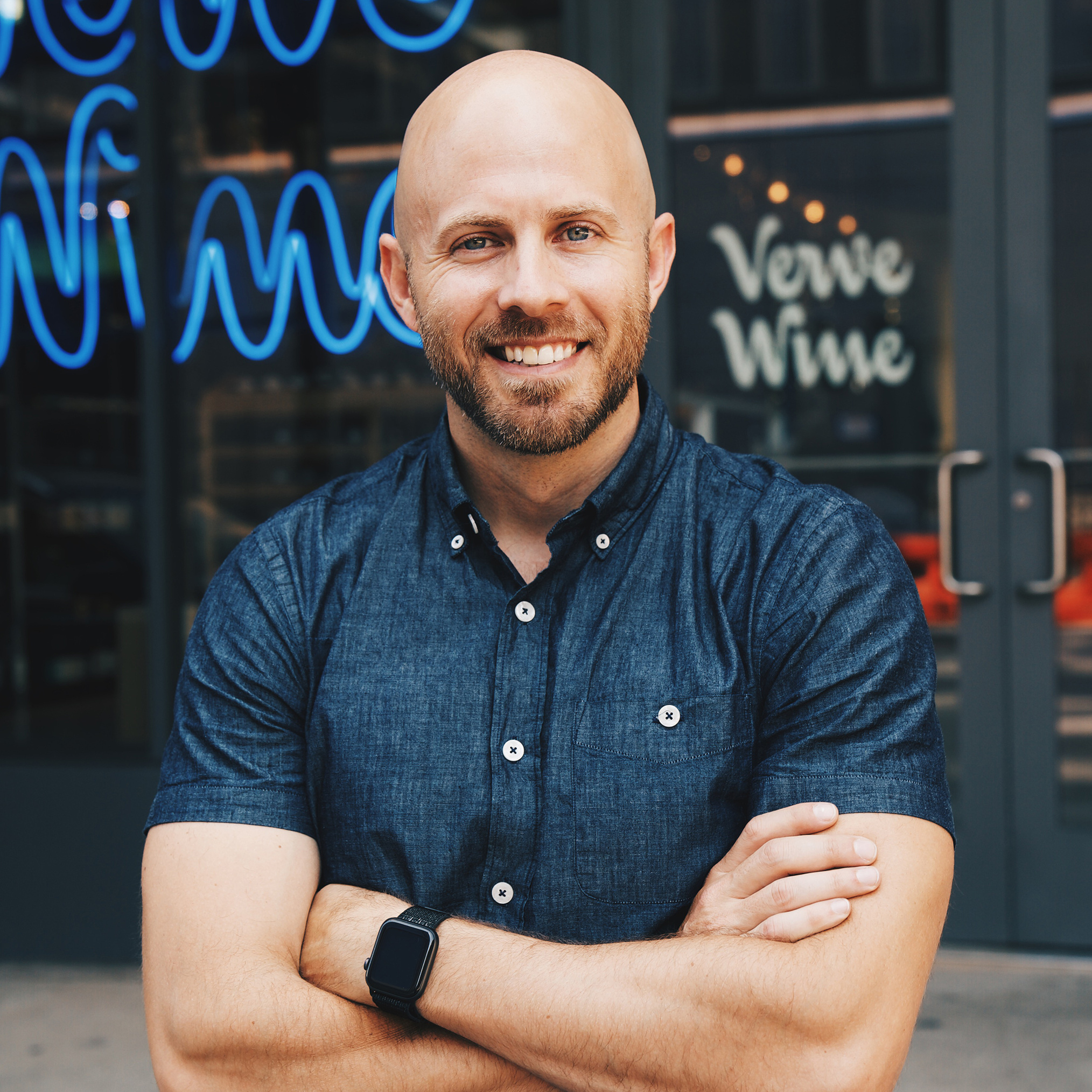
I'm so excited to have Dustin Wilson with us today. Dustin is the Co-Founder of Verve Wine in New York City, San Francisco and Chicago, the Co-Founder of Apres Cru, the Master–a Master Sommelier, I should say, since 2011. And he was in a leading role in SOMM, the wine documentary, wine documentary series. Dustin, welcome.
GUEST: DUSTIN WILSON
Great to be here. Thanks for having me.
HOST: ALICE CHENG
Yeah, I was like, let me just go ahead and hit record because I'm excited to catch up with you. It's been way too long since the last time. And the next time we'll have to be in person.
GUEST: DUSTIN WILSON
Yes, yes we do.
HOST: ALICE CHENG
But this will do for now. Dustin, I'm so curious, how did it all begin?
GUEST: DUSTIN WILSON
So for me, my hospitality world began, I think when I was either 14 or 15. I think I was 15 years old. And I worked in a little sub shop, call it a sandwich shop, in my hometown where I was living at the time because my mom refused to pay for anything for me. And she said, “If you want to drive, you need to be able to pay for your own car insurance and your own gas and all things, so go get a job.” So that's where I started, and then it kind of grew from there, and you know, I never intended hospitality in the beginning to be like a thing that I was into. It was just a job for a while, but there was opportunity to make more money in serving and waiting tables. So over time, I went from a sub shop into waiting tables.
And then it was during a job waiting tables several years later that I started getting into wine. And then wine sort of became my entry into the hospitality world as a career path, if you will. I was working at Ruth's Chris Steakhouse, I think I was maybe 22 years old in Baltimore, and they didn't have a sommelier. They had a pretty large wine program, and I kind of had to learn about wine pretty quickly and just became kind of fascinated with it.
I spent a few years there. And then when I moved to Colorado, which was a couple of years later, met Bobby Stuckey, spent time working at Frasca. That was really when it solidified, like, this is what I want to be doing for my life.
HOST: ALICE CHENG
Yeah, Bobby has that effect on people.
GUEST: DUSTIN WILSON
He does, yeah. Good or bad, he does have that effect. But you know, up until then I hadn't… I didn't come from a family background where… We didn't go to restaurants very much. If we did, it was like TGI Fridays or some Olive Garden or something like that. And my parents didn't really drink wine. I wasn't around it much. So my thought of restaurants was just very kind of passive, and it wasn't until I landed at Frasca–and the main reason for landing there was ‘cause I wanted to continue learning about wine–and I saw Bobby, and I kind of saw what he had done with his life. And this is at a time, I graduated college, I didn't know what I wanted to do and I was still trying to figure things out. And he just kind of provided this pathway that seemed really interesting. And that was kind of the moment for me.
HOST: ALICE CHENG
Yeah. And so you're Frasca for a little bit. Where do you go from Frasca?
GUEST: DUSTIN WILSON
Yeah, so I condensed that timeline quite a bit. Thar was… 10 years just went by in the last two minutes.
HOST: ALICE CHENG
So 10, okay, so let's hone in on that. 10 years is quite the tenure.
GUEST: DUSTIN WILSON
Yeah, 25 now. And so spent a few years at Frasca, started there as a back waiter, just kind of busing tables, filling water, slicing bread. Three years later, left as a sommelier. And I think I'd passed my intro and certified at that point with the Court of Master Sommeliers and went up to Aspen at The Little Nell hotel. Which was like, why did I ever leave? It was like heaven working up there. You know, it got the best of everything that I wanted in my life at the time, which was skiing during the daytime, working the floor at a crazy restaurant at night and selling amazing burgundy and great wine, and it was just the life.
Spent a little over two years up there and then left to go to San Francisco where I spent about a year working with MINA Group at RN74, very wine-centric restaurant. It kind of started/founded by Raj Parr, but under the MINA Group. It was like THE place for wine in San Francisco for several years, I think.
HOST: ALICE CHENG
Yeah, I remember that place. It was great. It had that board.
GUEST: DUSTIN WILSON
Yeah, the train (transit-style) board in the back, the last bottle board, it was like energetic. We had… We wore jeans and sneakers and rolled our sleeves up, and we're selling crazy, crazy wine on the floor. It was insane. And the place was jam-packed. It was the industry hangout. Anybody and everybody that was in the wine world that was coming through town was swinging by there. So it was a very, very cool place to be, a very cool time.
And for me at that moment in my life, I was, you know, one of the bigger things I was trying to accomplish was get through this little Master Sommelier exam that seemed to be just a little tricky to get through. You know, working at The Nell in Aspen was amazing, but I was working a lot and putting in a lot of hours, and getting the prep time to be able to study properly was tough. So RN74 offered an opportunity to kind of shed some of my additional responsibilities and just work the floor, so to speak, and get plenty of study time. And it paid off. I think I started at RN74 in like September, maybe, of that year. This was 2010, I think. And then passed the MS exam in February of 2011. So like in the first six months, knocked it out. Great.
HOST: ALICE CHENG
Make it sound so easy.
GUEST: DUSTIN WILSON
I know, yeah. That was five years. That was a five-year study and prep plan there. But then that kind of set me on the path of saying, okay, that part's done. Now I can go look for the serious job again, which then led me to New York and Eleven Madison Park in the later half of 2011. And New York is where I've been ever since. Spent about four years working at EMP, kind of during the heyday, the kind of crazy climb from… I think when I started we were at number 50 on the 50 Best list, and by the time I left it was like number three. I unfortunately left, like, a year and a half too early before they hit number one. But an amazing, amazing ride that that was and kind of opened a lot of doors for me there.
HOST: ALICE CHENG
Yeah, well I'm going to take a step back because for those who would be listening and are thinking of or dreaming of or one of their goals is to pass the Master Somm test and all the things that lead up to it. How did you find time to juggle working and studying? And do you have like one tip to share?
GUEST: DUSTIN WILSON
I don't know. I think if I'm anything, I'm very hard-headed and very… Like if I decide I really want to try to do something, will just really do it. So I remember early days writing down my schedule–you know, this is before I would just keep my whole calendar on my phone. I think we all do now, you know. But like carving out the time. Okay. When am I going to study? What am I studying? What's my syllabus? Like had it all mapped out. When do I need to be at work? Like my whole day was planned top to bottom, every day, all the time. Essentially for years on end, it was if I wasn't working, I was studying.
HOST: ALICE CHENG
And you and you probably found a network of people to support.
GUEST: DUSTIN WILSON
Yeah. And like you end up finding that group of people who you're around all the time. Everybody's doing the same thing. So, you know, when I'm not studying or working, we're in a tasting group, we're meeting up to blind taste with each other, or we're hopping on Skype or something at the time and, and doing like video quiz sessions, things like that, or getting together and just like quizzing each other. So it was very much like the culture of the people that I was around at the time that really helped to keep that in place. Because I think if I was trying to do it solo, it would have been really hard. So it was very intense focus for many years and just kind of not thinking about what else I could be doing with my time.
HOST: ALICE CHENG
Yeah, so sounds like determination and focus combined with hardheadedness.
GUEST: DUSTIN WILSON
Yeah, there's no easy path. So you just got to put your head down and just do it and grind. It's a grind. But then one day you wake up and it's done.
HOST: ALICE CHENG
Yeah, and you can move on.
GUEST: DUSTIN WILSON
And you can move on. And I remember feeling that weight lifted, and it was like, whoa. You know, the day I passed, you kind of feel this, you think that it's going to feel a certain way. You kind of walk in being like, “My whole life is going to change the moment I pass this thing.” And then I pass, you're like, okay. So, you know, you have your little champagne toast, and you do the thing and everybody's excited. But then like five minutes later, you're like, “All right, well, shit, now what?”
HOST: ALICE CHENG
Like, what am I going to have for lunch?
GUEST: DUSTIN WILSON
Let's go back to my job now? Like, what is this? What's happening? I don't feel any different. Nothing looks different. But then obviously things start to kind of change and evolve over time.
HOST: ALICE CHENG
Yeah. And then you just continue. Then you set the next goal and you crush that milestone. You keep doing that. Right. That's the beauty of it. Yeah. So speaking of which. So you're at EMP, you’re in New York. You have left EMP and you're off doing something else now.
GUEST: DUSTIN WILSON
Yes.
HOST: ALICE CHENG
Education. Take me through the times between that and Verve.
GUEST: DUSTIN WILSON
In between leaving EMP and starting Verve? Oh gosh, there wasn't a whole lot interesting going on to be honest. Verve, I started having the idea for Verve while I was still at EMP. Met my business, now-business partner while on a trip while I was still at EMP. So we started brainstorming the idea and sort of putting some thoughts around it. And it was getting to the point that between kind of building the business plan and putting like projections together and trying to look at leases and spaces and try to figure out where we're going to do this thing and how to actually get it going and searching for investors, etc., it started to become a real time-suck. And you know, working anywhere from 12 to 16 hours a day at the restaurant, trying to do that on the side becomes really tough. So at a certain point it was like, okay, if I'm going to do this, I need to just commit to it. And that was when I decided to leave the restaurant.
So basically when I left, I didn't have anything else lined up. I had a little nest egg to support myself for a chunk of time. I ended up taking a couple of sort of side hustle wine-rep gigs, selling some wine for distributor books to the folks that I knew in the industry just for a few extra dollars here and there. But basically spent all my free time working on getting Verve ready to go and getting it lined up, which we took about, call it about a year or so from when I left EMP. So was just a year of prepping and preparing for the business and the launch and how to get it going and finding the space and the investors and all that kind of stuff.
HOST: ALICE CHENG
That's exciting. Again, making it sound really easy. And I'm going to give you a little commercial here for Verve because you guys do things differently. The selection, you used to, I don't know if you still do, you had a space for education and things like that. Tell us a little bit about what you were thinking the industry was missing and how you approach that.
GUEST: DUSTIN WILSON
Yeah, the opportunity we saw was… You know, it's funny just to talk about this, like it feels like it was a lot longer ago, but we're talking 10 years ago. I knew where in New York to go get a good bottle of wine. There's a lot of really great wine shops that had awesome selections. I've always kind of lived uptown. It was always a pain in the butt that if I wanted to go get wine that I had to go all the way downtown or kind of cruise around the city to go get it. Delivery was really hard. Online experiences, ordering online and stuff was kind of, you know, you could in theory do it, but if you attempted it a lot of times the experience was really hard. The websites were ancient. You try to order something, and it was out of stock or you get the phone call two minutes later saying, “Hey, we don't have that” or whatever the case may be. It was tough. And I was like, man, why is this such a pain?
And at the same time, social media, at least Instagram, was really becoming a thing. And what I realized is that there was an opportunity with these smaller curated shop-type of businesses to leverage this new sort of digital age, lean into e-commerce, lean into social media and as a marketing platform and really be able to kind of modernize that experience a little bit. Combine that with some experiential things in the shop and the kind of the hospitality and service that I had learned about through my years and years in restaurants to create something that feels a little bit new and exciting and fun. So that was kind of the idea for Verve in the beginning. So we built the business as such. So when we launched, we had this great website, everything was online, we had our delivery stuff all, like, ready to go. And nobody cared. And we didn't really do any e-commerce business for a while.
You know, I remember many days, my early days in the store, being there alone, maybe have a couple of customers walk in, sell a few bottles of wine. I was writing all the emails, I'm doing all the social media posts, I'm trying to put on events and tastings in the shop, closing things up, sweeping, mopping, taking the trash out and looking at sales, and they're like 800 bucks for the day. And you're like, oh my god.
And like, I left my cush(y), three Michelin Star wine director gig at EMP to sweep floors and look at this and sales, this… what did I do? I made a major mistake. And, but you know, that evolved, of course. And I think people started to catch on, and we threw more and more events and as winemakers and other industry folks kind of learned that we could be a spot to host fun things and do things in a slightly different way, they were really excited about that.
We started to develop a good following on social media. And then it kind of livens the shop up. And so I think, you know, it just never goes as fast as you want it to go. Never went as, definitely didn't go as fast as I wanted it to go. But everything that we wanted to do ended up working out. It just took a while. And so that was kind of the birth of it.
HOST: ALICE CHENG
Yeah, definitely had those moments after I quit my corporate job to start Culinary Agents. I just remember sitting there and staring at my wall for a bit.
GUEST: DUSTIN WILSON
Yeah, yeah, yeah. I remember sitting at the counter where you ring people up and just like, place is empty. Haven't seen anybody in probably two hours. I'm like, oh my goodness, how are we going to pay our rent?
HOST: ALICE CHENG
And here you are!
GUEST: DUSTIN WILSON
And here we are.
ALICE CHENG
Was it 10 years later from the first one?
GUEST: DUSTIN WILSON
Almost. We're a little, like, eight and a half years, little over eight years.
HOST: ALICE CHENG
Congrats, congrats.
GUEST: DUSTIN WILSON
Yeah. Yeah. Thank you.
HOST: ALICE CHENG
And then when did you start, when were you like, okay, this is… we've got something going, we know what we're doing, we got the frameworks, etc., like let's open another one.
GUEST: DUSTIN WILSON
Well, we've been very lucky with our capital partners who've been very supportive, and we kind of came to them with the idea when we first started that we thought if we're going to lean into e-commerce, we should have something on the West Coast too. It'll help with shipping, logistics. It also helps us to get more access to wine, etc. And they really liked the idea. So even though we were still kind of ramping things up in New York, we already sort of made some plans to go expand out to the West Coast. So we started looking at leases not too long after Verve New York launched. And we actually ended up opening in San Francisco in like summer of 2018. So call it not even two years later from when we opened New York. Which looking back was maybe a little fast. We probably could have worked some things out a little better, but you know, I thought I knew what I was doing, realized didn't really know what I was doing in some respects, but again, the idea to have San Francisco and have a West Coast location and have access to more wine and more exposure and logistics and all that kind of stuff, again, panned out.
HOST: ALICE CHENG
Yeah, I mean that's how you learn, right? You're like, let's just try it.
GUEST: DUSTIN WILSON
Yeah, exactly. Yeah, you try and like, hopefully you don't goof it up so bad that it all shuts down. And then you figure things out along the way. But what I was realizing as we were building this thing is that people were really, really getting into the experiential stuff. So we were having so much success in New York. This is still really before e-commerce started to actually take off, because that whole thing was just, I think I didn't understand digital marketing well enough, as well as we were growing our following on social media and things like that. Just getting people to click through to a website and buy things online, it’s a different game than getting them to come to an event or show up at a store or buy things in person. And so we were still figuring out that game.
But what was resonating, what was doing really well, are these in-person things where we had winemakers, or I was putting on a tasting or we're doing parties. They were much more lively and fun. They were a lot less of the studious sit-down lecture-style tastings, which we would do from time to time. But it was more like, how do we make really good wine just fun and get people who like to drink wine but are maybe a little intimidated to come out and hang out and taste these things and feel welcomed? That was the big thing. And it really resonated. And so we kind of built San Francisco around that idea. So if you look at the store, the way it's designed, it's got the big table in the middle of it. And we hosted a lot of tastings and events and things there.
And then, you know, we ended up coming across an opportunity in Chicago for a new location where, with a new development that's right smack in the middle of Lincoln Park, you know, which is a great neighborhood and kind of really surrounding an area, I think an area that was very beneficial to us. And we knew we had a decent following in Chicago because we get people trying to order from us in Chicago all the time, but we couldn't get wine up there because of shipping regulations and whatnot. It's like, all right, well, maybe let's get a store up there. And so we explored that and the whole idea for Chicago then was to take that idea of experiential and just like really blow it out, like really lean into it. So that's our biggest location.
The idea in the beginning was to do a full scale restaurant in the space as well as retail, which you can do up in Chicago, and have that kind of full circle experience for guests. So you can come in, you can learn about wine, doing the tastings and the events that we throw. You can buy wine to take home. We can deliver to you. You can also come and enjoy wine in the restaurant with food, like any sort of touch point that most people would want to have with wine, you can do in that space in some capacity. So that was kind of the idea when we launched Chicago, and some of that has panned out and some of it hasn't. We're still learning, we're still learning.
HOST: ALICE CHENG
So I mean, I've been fortunate to actually visit all three spaces, and they are different and they're all special in their own way.
GUEST: DUSTIN WILSON
Yeah.
HOST: ALICE CHENG
What would you say–since you have multi-city locations, multi, like, different aspects of this–what would you say one of your learnings were for building and expanding the business?
GUEST: DUSTIN WILSON
Um, gosh, there's so many.
HOST: ALICE CHENG
I know I was gonna say one or two or 10, whatever.
GUEST: DUSTIN WILSON
You know, I think there's… I think doing this kind of thing, it teaches you a lot about yourself, I think. And it really makes you exposed and feel maybe more vulnerable than you otherwise would in the safety net of a job, let's say. Because it all kind of relies on you, the whole success of the thing or the failure of the thing sort of relies on you. Especially as you start to push the boundaries of your comfort zone and what you're good at and what you're not good at, inevitably you're going to make a lot of mistakes. Some of those mistakes are viewable by either the public or by your team or your investors or whoever the people are that are around you. And you kind of need to figure out how to be okay with a lot of that. And I think that that's a learning that I think I didn't necessarily walk into it with, but it's a very humbling experience. I think it helps you grow. I think it's a really fantastic challenge that pushes you to be better in ways that you never really thought you could get to.
But I think that that's, you know, we can talk about how marketing works or, you know, logistics of shipping wine and those sorts of mechanical things of the business all day. But I think big picture-wise, the thing that I've really learned over time is that you have to be willing to fail, okay with failing, and potentially doing it in front of others and still keep your confidence, and still keep your belief, and still keep pushing forward, and not letting that get you down.
HOST: ALICE CHENG
Yeah, I think that's great advice, especially because I mean, you are still and you were very much in the spotlight of not just hospitality, but also you were doing some television work. The SOMM documentary was very popular–is very popular–and it had several different seasons. So in a way, you have this public persona that probably adds another layer of pressure, if you will.
Like forget all the personal stuff. You know, having that level, another layer of pressure is like, “No thanks. I need to figure out other things.” But yeah, I mean, that's great. You know, all the other stuff with starting a business, growing a business, making it thrive always comes with all sorts of challenges, especially in this industry.
GUEST: DUSTIN WILSON
Yeah, for sure, for sure. And it's one of the most fulfilling things that I think anybody can do. You know, I think that it's very easy, and I'm sure you've experienced this too, to kind of feel like the weight of the world is on you, and you're just down and you feel at times like you're ready to just break or give up. And you need to be able to figure out how to just push through that feeling.
HOST: ALICE CHENG
Yep.
GUEST: DUSTIN WILSON
Pretty, really often. More often than I think most people probably think.
HOST: ALICE CHENG
And then you get used to it and you're like, “Okay, this is just, you know, been there, done that.” You know, what next?
GUEST: DUSTIN WILSON
Yeah, incredible highs and incredible lows. Yeah, yeah.
GUEST: DUSTIN WILSON
Correct. Yeah. Yeah.
HOST: ALICE CHENG
Yeah, I can tell you and you probably feel the same that I do not look back now at that time where I was staring at the wall and say that I made the wrong decision.
GUEST: DUSTIN WILSON
Right, yeah. Yeah.
HOST: ALICE CHENG
You know, that's the beauty of that journey, right?
GUEST: DUSTIN WILSON
Yep, absolutely.
HOST: ALICE CHENG
So I want to talk a little bit also about Apres Cru.
GUEST: DUSTIN WILSON
Yeah.
HOST: ALICE CHENG
So you have your businesses, and now you're like, "Well, I need to get more challenges under my belt,” right? You must have all this free time running your businesses, and Apres Cru–
GUEST: DUSTIN WILSON
Right. My wife thinks I'm insane.
HOST: ALICE CHENG
Yeah. And you have a family, let's not talk about that, but just keep piling it on.
Apres Cru–and I love you all and Sab (Sabato Sagaria) and everyone, and I've chatted with him and we work very closely with Apres Cru as you know. Tell us a little bit about how that came about.
GUEST: DUSTIN WILSON
So the story is, it was middle of COVID. And this is where you realize just relationships are so important in everything that you do. I'm gonna back up a little bit. One of the very first clients that I ever interacted with at Verve when we first started was a gentleman named Eric Engler, who's now one of our partners to Apres Cru. He lived right down the street from the store. He swung into the shop, was asking a few questions to one of the other employees that day. I think I was in the middle of writing an email or something. And they were asking about Burgundy, and it was beyond what that person could help with. So I popped up and started helping him and he bought some great wine. Shook hands. We got to know each other a little bit. Anyhow, fast forward, he became a very good client of the store, but also became a good friend and a very great business mentor over time.
And so fast forward to 2020 and COVID hits and the world's shutting down and everything's going on. And he is a lover of great wine, but he also loves to cook, is an avid chef. And I even remember hooking him up with a chef for his wife, who–I'm sorry, his wife wanted to get him a chef for his birthday one year to take cooking lessons. So I helped facilitate that. So he loves to cook. He's really into restaurants. He's always kind of wanted to get into the restaurant industry, but didn't really know how or when or what to do. And anyhow, COVID hits, he calls me up and he's like, “Hey, this is kind of a mess. Everything's kind of crumbling. There's probably some way to jump into the industry now and help and build something that could be interesting and thrive coming out of this.”
And he's a super smart guy and I just would jump at the chance to work with him on anything.
I was like, “You know what, let me give my buddy Sabato a call. Sabato’s like the best operator, restaurant guy that I know. He's amazing. Maybe we just get on a chat and call.” And that was kind of the beginning of it, was the three of us, I think, once or twice a week just jumping on phone calls and chatting with each other about what we think there could be going on here. And we ended up calling and talking to, I would say, well over 100, maybe 150 or so different chefs, operators, just industry folks from around the country, and just getting a sense of what was happening, how are they operating, what are their pain points at that time–besides the big obvious ones of course–where did they see themselves kind of coming out of this on the other side, what was going to be needed, etc. etc.
And we quickly realized that a lot of the better restaurants and the better operators were gonna survive just fine. They were figuring it out. They would push through that moment in time. But there was a real opportunity on the other side of it to potentially grow. And they wanted to be able to take advantage of that. And they just didn't know how to take advantage of that. And luckily that's where Eric is. He comes from a finance background and he helps create and grow businesses. It's really right in his wheelhouse. He kinda combined that with the hospitality experience of Sabato and myself, and that's sort of where Apres Cru was born.
The whole thesis is basically we find great operators, great creatives who have already established wonderful brands, wonderful restaurants and operations, but want to grow them, and they just need the help to be able to do that kind of beyond just the friends and family funding and figuring it out themselves, like how do they actually really grow a real business. So that's effectively what Apres Cru does. So we find those operators, those brands, we partner up with them. We help them expand by one, making sure the existing businesses run really well.
So now we've built a team of people who kind of plug in as back office services, so like finance, accounting, HR, marketing, operations from strategic and systems processes-level. All those features, the behind-the-scenes non-sexy stuff that restaurants don't, you know, operators don't really love to deal with. We provide all of that, but then we've also helped strategically expand through a mix of capital, raising capital, doing diligence on leases and deals and markets, legal work, etc. etc., to just kind of help these businesses expand and grow. And so that's kind of what we do. And it's been almost five years now, technically.
HOST: ALICE CHENG
Wow.
GUEST: DUSTIN WILSON
I think this summer is five years since we started the LLC and started running around pitching it. And it's been a wild ride. So now we have several partnerships set up, some here in New York, one currently out on the West Coast in LA. I think there's now like 15 or so restaurants or units under the umbrella. I think by the end of the year, it's going to be closer to 20. Got a bunch of cool projects coming up, and it's going faster and going wilder than I can, I personally have a hard time keeping up with it at this point. It’s...
HOST: ALICE CHENG
Amazing and look, had you not taken that leap of faith on yourself to start Verve, who knows, maybe this might have not have happened.
GUEST: DUSTIN WILSON
Yeah, yeah. It's like the juggle of time and all that. It's a complete disaster. I'm just running around trying to keep balls in the air constantly. But it's a lot of fun, and it's great doing it with good people, and it's fun to see where these things go. I get a kick out of building things and seeing what happens with them and the experiences and the people that you meet along the way and kind of what comes of it. So it's been a lot of fun.
HOST: ALICE CHENG
Well, on that note, we're going to go into quick-fire.
GUEST: DUSTIN WILSON
All right.
HOST: ALICE CHENG
What advice would you give your younger self?
GUEST: DUSTIN WILSON
Gosh, younger self. Have faith. You're gonna do okay. You're gonna be fine.
HOST: ALICE CHENG
What's your advice for someone struggling in the industry?
GUEST: DUSTIN WILSON
Keep your head down and keep pushing. Just keep working at it. And if you do the right thing and just work hard, things will come. It'll happen.
HOST: ALICE CHENG
What’s your advice for fellow hospitality leaders?
GUEST: DUSTIN WILSON
Oh gosh, you know, I had a great conversation with somebody the other day, and we agreed on this, that how important it is–and this is going to sound cheesy–but how important it is for people in whatever organization they're in to drink the Kool-Aid and get your team to drink the Kool-Aid. Not in the like just blind, following sense, but more in the like, it's so important to get people on your team that believe in what's going on, that will cheerlead no matter what's going on, that will push through problems and help to find solutions and not get too down in the dumps and go negative when things do get hard. Because inevitably they will get hard from time to time, and we'll still try to cheerlead and help push through. And the more you can kind of focus on that and team morale and motivation and keeping people excited to be pushing through hard things, that in itself I think can be so powerful in creating businesses that thrive.
HOST: ALICE CHENG
Alright. On that note, Dustin, thank you so much for fitting me into your schedule of one of the balls you're juggling in the air. We can't wait to see what you've got up your sleeve next.
GUEST: DUSTIN WILSON
Thank you so much. I appreciate it.
HOST: ALICE CHENG
Remember, success looks different for everyone in hospitality. No two paths are the same. If you have a leader or a topic you want to hear about, email [email protected].
Hospitality On The Rise is brought to you by Culinary Agents, connecting top talent with employers since 2012. Whether you’re hiring or looking for your next opportunity, join us at CulinaryAgents.com
For more inspiration, subscribe to Hospitality On The Rise and visit HospitalityCareerPaths.com, a free platform by Culinary Agents.
Thanks for tuning in! Remember to like, follow, and subscribe. And if you loved this episode, share it with someone who could use a little inspiration.