Links
- Lilia (Instagram)
- Lilia (Website)
- Misi (Instagram)
- Misi (Website)
- MISIPASTA (Instagram)
- MISIPASTA (Website)
Transcript
HOST: ALICE CHENG
Welcome to Hospitality On The Rise, the podcast about the people shaping the hospitality industry and their journeys. I'm your host, Alice Cheng, founder and CEO of Culinary Agents, hospitality's go-to hiring platform. And I'm here to give you your dose of virtual mentorship.
Here, we'll be sharing the stories, lessons learned, and advice from hospitality leaders who've carved out their own path to success. After all, this industry is where many get their start and go on to do incredible things.
Whether you're a pro, starting out, or just love the hustle, this podcast highlights what makes hospitality extraordinary, the people.
HOST: ALICE CHENG
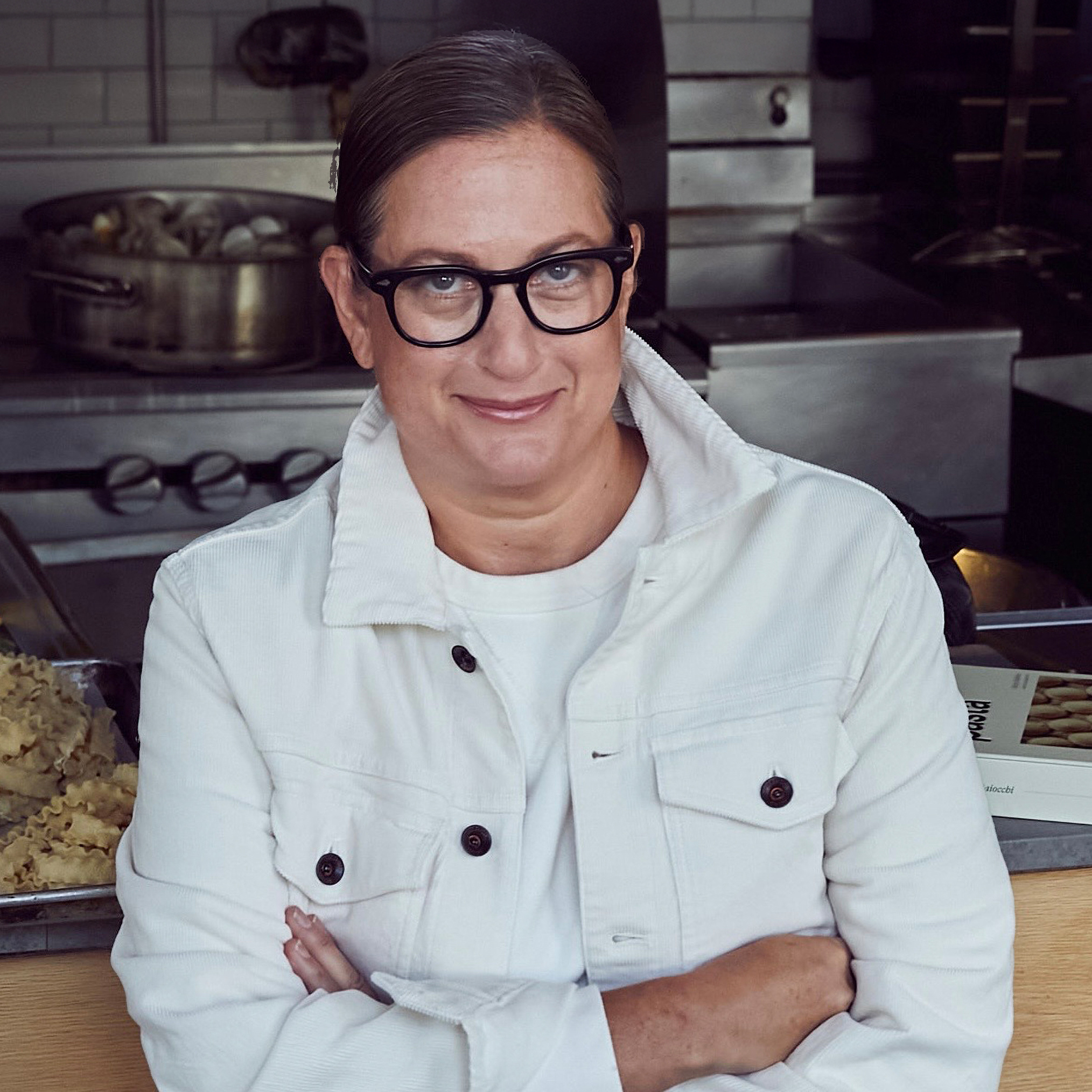
So excited to have Chef Missy Robbins here with us today. Missy is the restaurateur, author, and Co-Founder of Grovehouse Hospitality Group, which includes amazing restaurants such as Lilia, Misi, and MISIPASTA, which is a direct-to-guest dining and experiential retail. Wow, that's a mouthful. She is the 2018 Esquire Chef of the Year and 2018 James Beard Foundation Award winner for Best Chef amongst many other accolades and exciting things we're going to talk about. Thank you, Missy, for joining us today.
GUEST: MISSY ROBBINS
Thanks for having me.
HOST: ALICE CHENG
I've been very fortunate and selfishly recently been able to hear you speak about your career and some of the ways that you're looking at your leadership and the next steps that you're taking. But we're curious, how did it all begin? How did you enter this industry?
GUEST: MISSY ROBBINS
Oh my God, it was so long ago. Honestly, it really came from my upbringing and my family, my parents were both really into travel and dining. And I was fortunate enough that they took us–I have a brother–they took us along with them. So, you know, I was in France when I was 14. I ate at my first Michelin star in London when I was 12. I traveled to Israel when I was five and kind of only remember, like I remember the food, like good and bad. And then, you know, Italy in my teens. And then we also grew up in Connecticut, about an hour and a half from the city, New York, and special occasions were always had at these fancy restaurants.
I was just inspired, and I was sort of inspired by dining as a whole, not just being a chef. I went in through the route of being a chef, but I was always interested in the whole picture. You know, design, glassware, china, atmosphere, uniforms, like it all kind of fascinated me.
HOST: ALICE CHENG
Do you envision yourself having your own restaurant one day when you were young? Or was that kind of like…?
GUEST: MISSY ROBBINS
I did, but I thought it… like, I never thought that it would happen as it did. I thought that I would sort of go have a different career. I went to regular, you know, liberal arts college and studied art history and psychology and thought I'd have a career doing something a little bit more traditional and didn't know that there was real opportunity for me to become a cook. And it turned out that that wasn't the truth, and I think now in hindsight it's kind of funny that I'm like, I wanted to open a restaurant in retirement. But I'm kind of… I'm happy I did it this way.
HOST: ALICE CHENG
Yeah. And what was your first restaurant job?
GUEST: MISSY ROBBINS
First restaurant job was in Washington, DC. I went to Georgetown University and first restaurant job was at a restaurant called 1789. Very like what we called New American then and sort of mid-Atlantic DC, lots of local fish. And it was the nineties, goat cheese-crusted lamb chops and Caesar salads and plates of smoked salmon and seafood stews.
But I learned all my basic, basic skills there. Like I walked into that kitchen and told them I wanted to learn and I had no experience. And I asked them if they would teach me and they told me to show up on Friday and Saturday nights. And I was like, “Yeah, no, I'm not going to do that.” And they're like, “Well, that's what we have available.” But it was above the bar I hung out in. So I now had a back entrance to the bar, my college bar. And I fell in love with it on night one. Like I showed up, I didn't know how to hold a knife. I didn't know anything about stations or anything really, and they threw me in. Like they threw me into garde manger my very first night, someone typically didn't show up, and I worked with the sous chef side by side, and it was really cool. We did 300-something covers, and I didn't look out the clock all night and I realized that like that energy was good for me.
HOST: ALICE CHENG
Yeah, so you did that kind of part time through school or…?
GUEST: MISSY ROBBINS
No, I did it senior year.
HOST: ALICE CHENG
So you were already kind of thinking about what's next.
GUEST: MISSY ROBBINS
I started senior year second semester right after my 22nd birthday, the day after my 22nd birthday, and I had a few months left of school. And then I left for the summer from that job, and I came back and worked there for a year. They were just really great. They took me in, and I had these dreams of going to work at Charlie Trotters in Chicago and had been in contact with him. And that's how I ended up cooking my last semester senior year, is that he was like, “I really think you should get some experience before you come here.” And I ended up just kind of having to chase him. And I was like, you know what? Like, I'm happy here. These guys have taken me under their wing. There was a chef and two sous chefs and they were just like… they all were really different but all taught me something. And I've carried through a lot of what they've taught me from that very first job.
And that's how I got my start, and I'm happy I did. And I still think to this day, like having spent a few days in Charlie's kitchen and knowing a lot of people that work there, I probably wouldn't be a chef. Like I don't think I would have lasted in that environment.
HOST: ALICE CHENG
Yeah, and it's interesting. One of the main reasons we do surveys periodically at Culinary Agents and for back of house, one of the main reasons where people stay in jobs is because they're learning. They feel like they have some sort of mentorship or somebody's teaching them and they're learning. And that really is a retention mechanism.
GUEST: MISSY ROBBINS
Yep. Yeah. Yeah.
HOST: ALICE CHENG
Yeah, and that's proof. But you did make it to Chicago.
GUEST: MISSY ROBBINS
I did many years later. Many, many, many years later.
HOST: ALICE CHENG
Yeah, how has that transition– Like, you're in DC cooking, and you're enjoying and learning where you're starting to think like you want more experience in a different city, or you wanted to fulfill that, like, “I want to get to Chicago.”
GUEST: MISSY ROBBINS
Oh, Chicago was years later. I went to New York. I was in New York for nine years before that. Yeah, I, you missed a whole part. You missed a whole chunk.
HOST: ALICE CHENG
I did. I skipped the whole page.
GUEST: MISSY ROBBINS
Yeah. I was in New York from 20… I think I moved here when I was 24, 23, until 32, with a short break–I went to Italy for several months to cook. But no, I really… Yeah, DC wasn't like the culinary mecca of the world. And at the time, if you wanted to do what I wanted to do and be at the top of the game, you sort of went to New York. And I didn't have any plans of really staying here long-term. And I ended up really liking it. And a lot of my friends from high school lived here in college, and I had great jobs, and I worked for great chefs. And I went to cooking school and I ended up staying for many, many years and really only left because I got the job in Chicago. And it was the kind of job that I don't think at the time I would have gotten in New York. And so I sort of took a leap of faith and went to Chicago. I have family there. My brothers lived there for almost 30 years, with his family, and my mom is from there, and my grandmother was there when I was growing up. So I grew up going to Chicago quite a bit. It's very different living there than visiting there.
But the job was really–at Spiaggia–was pivotal to my career. I mean, I wouldn't be where I am today if I hadn't spent those five years there and really immersed myself into fine dining again and immersed myself into Italian cooking and learning from Tony Mantuano, who was the chef-partner. And I think it was like the best move I could have made. I didn't love Chicago. But it's partially because I just love New York, and I thought I could compare Chicago to New York, and that's not really the case. And so I was eager to get back, but I did stay for five years.
HOST: ALICE CHENG
Yeah, yeah. And I've heard you talk about your time at Spiaggia a couple of times, and specifically about working with Tony and for him. Do you have an example of–clearly you absorbed or some of the advice and his techniques–do you have an example of something that you learned from him that has continued to stick with you?
GUEST: MISSY ROBBINS
I mean, everything. He was, number one, he was the calmest, kindest chef-mentor I've ever had. And he was a friend–is a friend; I was out to dinner with him last night, actually. He's a great friend, he's a great mentor. He knows how to talk to people. And he taught me most of what I know about Italian food, other than reading in my time in Italy. There was a real base there, and he was a real traditionalist at the time. And really kind of was able to teach about not just fine dining and what his expectations were, ‘cause Spiaggia was really rooted in Michelin dining in Italy. And Michelin wasn't in Chicago when I was there.
And I think he just had such a knowledge. And at the time there, there wasn't Instagram, there wasn't… There was stuff on the internet, but not like there is now. So I really relied on him, and I had a huge learning curve. I hadn't worked in Italian food, except for the several months I worked in Italy. And I was not just expected to know Italian food, but I was also now running this four-star kitchen that was very fine dining, and I had been out of fine dining for a while, and I had 50 employees. And so I had to really dive in and Tony was patient and just really giving of his time and knowledge.
HOST: ALICE CHENG
Yeah, and we should hear more stories about chefs and leaders that have that demeanor and ran kitchens that way. Because during that time, not to say it wasn't common, but during that time media was kind of highlighting a different type of culture.
GUEST: MISSY ROBBINS
Yeah, and I definitely didn't have that demeanor until a few years ago. I mean, really starting with like when I opened Lillia and that was really important to me. And it's taken a lot of hard work to have a calmer, kinder demeanor and understanding and listening better. I did grow up in a world where you said, “Yes, chef”, and you kind of just did what they told you to do.
You know, kitchens have changed a lot. I'm so happy that I'm different than I was, but Tony is just naturally like that. He's just a mellow guy. Like I used to call him and be like, “Are you napping?” Like he's just like so, he's just mellow. Like that's just who he is. I'm not a mellow person. I've mellowed out quite a bit, but that's not like my natural state of being.
HOST: ALICE CHENG
Look at that leadership evolving. I love it. So take me to New York now. So you were in Chicago and then you decided going back to New York because you didn't love living in Chicago.
GUEST: MISSY ROBBINS
I really wanted to go back to New York, and at first, for a couple of years, I was trying to kind of work on my own project and open a place, and it was difficult. I was like flying back and forth to the city and looking at spaces, and I kind of didn't know what I was doing, and I was gonna have to raise money. And I was getting antsy, and it was becoming more and more challenging. And so this job appeared at A Voce, and I applied for it and never in a million years thought I would get it at all. I was Chicago. I was kind of unknown at the time. Andrew Carmelini was the chef at A Voce, and he was leaving. He was the hottest, most publicized chef in New York at the time, and A Voce was a really hot restaurant, and I guess I interview really well. I don't know.
But I, you know, they came and did a tasting at Spiaggia, and I was very open with Tony and it worked out, and it was also a pivotal time in my career. It was the first time that I was running a kitchen without a chef partner above me. And I really had to kind of lead on my own and not have that sort of backdrop of security of someone helping me. And I had to build my own team, and I had to come up with a style of cooking that was sort of all my own. And that was all really intimidating.
HOST: ALICE CHENG
Well, you did a pretty incredible job with it from an outsider looking in, if I must say.
GUEST: MISSY ROBBINS
Thank you.
HOST: ALICE CHENG
I enjoyed many a meal. When I was looking at the timeline, I was like, “You were in the kitchen at that time!” And you spent quite some time there, like a good chunk, a handful of years.
GUEST: MISSY ROBBINS
Another five years. That was like my, that was my thing. Five years.
HOST: ALICE CHENG
Five years. I like it. Mine's lucky 13.
GUEST: MISSY ROBBINS
Well, now, you know, now my job is the longest I've had. Lilia turned nine last year.
HOST: ALICE CHENG
Yes, congratulations.
GUEST: MISSY ROBBINS
This year, this year rather. Sorry.
HOST: ALICE CHENG
Congratulations.
GUEST: MISSY ROBBINS
Thank you.
HOST: ALICE CHENG
So as you're leading these kitchens, and you're–both locations or just one?
GUEST: MISSY ROBBINS
Yep, both.
HOST: ALICE CHENG
Yeah, both locations, which I think has its challenges in and of itself. Both location and just, you know, different teams, etc. And were you thinking–because this really was your own thing, but like you said, you were kind of looking for your own project type of thing.
GUEST: MISSY ROBBINS
I don't think enough, I don't think.
HOST: ALICE CHENG
You still had you want to do your own thing kind of in the back of your mind?
GUEST: MISSY ROBBINS
Yeah, I went through both. Like I was really appreciative for what I was doing at A Voce. Like it gave me an incredible platform, and there were many things I liked about it. And really my own place came from not even knowing that I wanted to be in the business anymore. I got pretty, pretty burnt out at A Voce. It was a tough environment. It was… Both restaurants were very, very busy. The leadership there was different. And I got really burnt out, and I wasn't like the best version of myself. And I kind of knew that, and I had saved a bunch of money, and I was like, “You know what? I've been doing this for 20 years. I've never taken a long break. I'm gonna take a year off.”
It was an insane line of thinking. But I did it, and, like, no one believed that I was really taking a year off, and I was like, “No, I'm going to take a year off.” And I kind of committed to that. And again, it was scary and financially not the smartest decision I ever made. And I shooed away a lot of headhunters and people calling for jobs because I was like, “I don't… I'm not doing anything right now.” And eventually they stopped calling, and that can be very scary.
But through that time, and then through a lot of meetings once kind of that year passed, and meeting with great restaurateurs and not so great restaurateurs, and really a lot of conversations with my now-business partner, Sean (Feeney), who was my neighbor and was very curious and he would ask a lot of questions. We would hang out and through that I was sort of able to say to myself, like, all right, you're 40, I was probably 43, 42 when I decided to open the restaurant, I probably 42. And I was like, all right, you know, you're 42, 43 years old, if you don't do this now, you're never gonna do it. And that was sad to me because that was like a goal I had set since I was 22.
And finally, after a year of contemplation, and I thought I might go back to school to become a therapist, I had all sorts of ideas, but I knew that I sort of had to complete this mission for myself. I also knew that if I was gonna do it, I had to do it in a way that was really comfortable for me and different than I had done it in the past. And that took some time, and it wasn't… You know, I was on the line at Lilia every night at the beginning for a long time and the same with Misi when it opened. And it wasn't… You know, I always said I'm not going to work 16 hour days anymore, and I'm not going to do X and Y and Z. And I, for the most part, held strong to that. You know, obviously you open a restaurant, you're working a lot.
But in the last few years, like how I've wanted to be has come to kind of fruition and it happened very organically. As we've built the business as our team has grown, as we have more support, it's freed me up to sort of focus on other aspects of the business and still be the creative person in the kitchen. But now I have a culinary director as of six, eight months ago, which I didn't have before. And that changes things too. So it's been an interesting kind of trajectory.
HOST: ALICE CHENG
Yeah, and I love that. I mean, this story never gets old, and we're not even getting into the details of it. But one of the things that that we see often, and I'm sure you've seen as you continue to mentor and give advice where, someone–let's call it a chef–is creative and just has always dreamed about opening something can either rush or take time or maybe get connected with the not ideal scenario or business partner because they want to move forward so badly, or they're impatient, or something seems off but it sounds good and they want to just move forward, right?
GUEST: MISSY ROBBINS
Yeah.
HOST: ALICE CHENG
What advice do you have to somebody in that scenario who just really is itching to open something of their own and has not quite found the right partner or business partners or scenario?
GUEST: MISSY ROBBINS
Yeah, I think I'd say a few things. I had this goal of–you know, I just had this conversation with someone yesterday, a former team member of ours who worked at Misi’s kitchen and worked at Lilia in the front of house. And he's really eager to kind of–he left us a year, year and a half ago–and he's very eager to open his own place. And I've sort of been meeting with him every few months and sort of looking at his business plan and his ideas.
I think I would say, you know, I thought I was going to open a restaurant by the time I was 30. I made a very arbitrary goal in my head that made no sense. And I would say just like, slow down, like, your 40s, you're still young, right? Your 30s, you're still really young. And I didn't open Lilia until I was 44. I turned 45 a month after it opened. And that to me was like, oh man, I'm behind the game. But I also believe it's like what, you know, one of the things that contributed to Lilia’s success and thereafter Misi is that I did have a different set of skills and a different demeanor and a different confidence level and the right partner and the right space.
And I think there are a lot of things that have to fall into place. It can't just be, “I'm a good chef.” And so I was fortunate also to work in bigger restaurants at A Voce and Spiaggia, where I was in P&L meetings. Like I knew the finances. I wasn't always great at managing them, but I understood what needed to happen. And you really need that as an owner. You can't–and we really try and teach our chefs and our leaders what it means to run a financially viable business and what food costs should be and holding them accountable for it and what labor costs should be and holding them accountable. And I have seen them grow in that. And sometimes it's not the fun part of the job, right? But I think there's so many aspects to just running restaurants.
And I think it's very easy to be like, “I'm gonna take that. I'm gonna take that job. They're offering me X percentage and X salary, and that sounds good because it's better than anything I had before.” Which by the way is sort of how I fell into A Voce. I wanted to come back to New York. It was an amazing opportunity. They offered me an insane salary. They offered me partnership, which really at the end of the day meant nothing. You know, it was really more like profit sharing. I had no decision-making power and the greater good of the company; I had decision making power in the kitchen.
So I think you have to really know what you want and know who you're partnering with and be patient to find the right thing because it is a long-term commitment. And sure, you can always change that commitment and leave and whatever, but like, if you really want to open a place, you want it to have longevity.
HOST: ALICE CHENG
Yeah, especially nowadays, and not just, I mean, leadership and when you have your own place and run your own business, you're thinking about everything and anything, including the food, right? The culture. How are you going to create an environment that not only diners want to come to, but people are going to want to work in, right?
GUEST: MISSY ROBBINS
Yeah, yeah, yeah. And I wish I… You know, food, I certainly think about it a lot. And I'm still very involved in the creative aspect of it and making sure things are consistent. But there's 40 other things. I mean, I've put out four fires already this morning that had nothing to do with food. So you're definitely–
And you have to want to do that, too. Some chefs don't want to do that. Like I love all aspects of it. Some are more exciting than others. Like, do I wish I could sit in my window all day in my pasta room and roll out sheets of pasta? Yeah, kind of. Some days I do. But that's not the reality I've sort of created for myself. And I think you have to really want to wear many hats if you want to open a restaurant. And there's no shame in just wanting to be a chef or in a corporate position that's really important to running a company. Not everyone is meant to open their own place. For me, it was really important to me. But for some people, they just want to be in the kitchen, and they just want to cook, and they just want to create, and that's really OK. It's better than OK. It, like, should make someone really happy if that's what they're really passionate about.
HOST: ALICE CHENG
Yeah, and I think what's great about this industry, and we talk about it all the time, is that you get your foundation, you meet people, you do a great job and you learn. There's really many, many different ways you can take your career. A lot of different opportunities that require the skills and the foundation that you get growing up through, growing up, working through this industry in various positions and roles. I think we see also sometimes people have their restaurant, and then they go back to working in a corporate environment or for somebody else and that's like their happy place.
GUEST: MISSY ROBBINS
This definitely wouldn't be my happy place. I can't imagine not working for myself anymore, but I think the beauty of what has happened to the industry, there's so much even outside of restaurants. You know, there's what you do that's very connected to the culinary community. There's recipe testing jobs. There are people who want to be influencers, and they make a living at it and they're cooking and they're making themselves happy. There's TV careers. There's like a lot of stuff out there. There's writing. There's so much stuff out there, a lot of which wasn't really available. There's tech. There's a lot of tech stuff that really wasn't available when I started cooking 30 years ago, 32 years ago. Like, you just cooked, like you either went front of house or back of house and that's what you did.
You know, I encourage people, like, it's not always awesome. Like I have a sous chef leaving who is going to, she's had this side hustle of styling and food styling for a while when she wants to explore it full time. And like, you have to give people the grace to do that. You know, I'm not thrilled that she's leaving, but like I understand it and I'm happy for her, and I wish her this best success. And at the end of the day, restaurants are not for everyone. And I've seen that more and more over the last, you know, five, six years is that I'll meet people, cooks, chefs, and I'll be like, “That's gonna be the next person.” And they find out that they just don't want to be in kitchens, whether it's a lifestyle thing or it's too hectic or whatever it is. And it makes me sad, but I also am happy that there are other avenues for people to explore their culinary interests.
HOST: ALICE CHENG
Yeah, and you touched upon it a little bit when you started talking about you were on the line every night when you first started opening Lilia and Misi, and obviously as a business owner you… typically that's the process. But over the years, as you have built your teams and your leadership and your culture, you've been able to kind of start shifting the next part of your leadership journey: mentoring, giving advice, speaking on podcasts and panels. And that's so incredibly important for many, many reasons, not just people hearing your story and your experience and your advice, but then also being somebody that folks who are starting out in the industry or wanting to come to the industry can look up to and really kind of, again, learn from what you're saying. What works for you may not work for them, but it's still a great example of one way someone has done it successfully.
GUEST: MISSY ROBBINS
Yeah, for sure. And I think you also, when you're doing those mentoring things, you really have to listen to what people want for themselves because what they want and what I want aren't the same. And you can mentor someone who doesn't want to do exactly what you want to do. I certainly have the best advice if there's someone who wants to do what I do, but yeah, it's been an exciting part of my journey.
You know, people always say, “Do you miss being on the line every night?” and “Do you miss being in the restaurants every night?” And like, there's a part of me that does, mostly the camaraderie of being in the kitchen, and even all of my kitchens are open. So, you know, it's front of house and back of house that you have a camaraderie with, but there's also, like, I know what's the right thing for me right now. And I wouldn't want to be on the line every night. And when I want to be in the restaurants, I'm there.
Last night I took some friends to get soft serve at Lilia after dinner and just hanging out outside the cafe. And I went in to ask a manager something when they were done. And I ended up talking to regulars for a half hour that I hadn't seen in a really long time. And it made me so happy. So there is a part of it that I really do miss and that those connections are hard to get if you're not in the restaurants every night, but that's just sort of like, you have to pick and choose what your time is best spent doing. And I try and schedule times to be in the restaurant throughout the week. Even if it's for a few hours, I can take a real pulse of what's going on.
HOST: ALICE CHENG
Yeah, and I think that's one of the things in leadership in general is I know a skill that I still continue to try to work on is this delegation, when you have the right– and taking a step away and kind of focusing and holding on to the most important or things that you love the most. But then really trusting the folks you've trained or you've put working there to do it for you, to do their jobs and to let them have their own say and and way because you've trained them where they understand the culture and everything.
How is that–and you mentioned you have a culinary director now–how is that process coming in, and what is that? Do you hear, like, angels singing sometimes?
GUEST: MISSY ROBBINS
Sometimes, yeah. It's good, you know, it's been interesting because I think a few things have happened. One is that obviously he's taken a lot off my plate or added to the things I wasn't doing because I didn't have time or I didn't want to do them or whatever. He's really good on all fronts. He's fantastic at mentoring. He's fantastic at the financial stuff and sort of doing analysis of where we can do better. He's really good at it, and he's really good at R&D. And we think really similarly in terms of food. But you know, there are moments where it's been interesting for me because I do have to let go. I've never had this position before. I've never even had exec chefs before. I've had CDCs, and that's a really different role, right? So if you're going to hire a culinary director, you cannot micromanage them. Letting go of some of the creative, and sort of seeing his viewpoints on stuff, even if I don't necessarily agree, there are things I just have to be like, “All right, I'm gonna let this one go.” There are things I fight them back on and say, “Yeah, I don't like that dish” or whatever, but like, for the most part, we like the same food.
And he's just been so additive. Like it's really been amazing. And I enjoy being with him all day. Like he's fun and funny. It's really nice to have someone around who really understands Italy and regional Italian cooking. He's worked in Italian food for a very long time, and he knows different things than me and more in some areas than I do and vice versa. But you know, he's also sort of like–any relationship is like, it's getting a mirror held up to you and saying, “What do I need to do better? What am I not good at?” And he's really good at a lot of things I'm not good at. And he also doesn't want to sit on podcasts and do this. So it's a really good balance and a really good partnership. It's great.
HOST: ALICE CHENG
Yeah, and you know, I think that speaks volumes to you and then the team and culture you've built as well, because–we didn't get into it in detail, but I know you and Sean talked about working together for many months and got to know each other before you actually decided to start working together. And I know, in past conversation, that same with this culinary director; you knew him before he started working with you all. So kudos, kudos to you.
GUEST: MISSY ROBBINS
Yeah, and I had only talked to two other people for that position over the last five years. And one of them much more seriously than the other. And it just was a timing thing that didn't work out for me and Sean, didn't work out for them. And I knew that this position was so specific, and it had to be–it couldn't just be a person, it had to be someone that I wanted to spend a lot of time with, that I want to go out to dinner with, that I want to talk about food with all day, that we want to explore. And so it was really important, and it all fell into place in the right way. And I think he's happy. I hope he's happy.
HOST: ALICE CHENG
Are you listening? Are you happy now?
GUEST: MISSY ROBBINS
Mike, are you out there? He seems pretty happy.
HOST: ALICE CHENG
He's happy he's not on the podcast.
GUEST: MISSY ROBBINS
And he has a lot of autonomy. It's not like I tell him where to go every day and what to do. And he's kind of finding his way and making this his own job. And because it wasn't a previous position, it works because he's like, “This is what I think I need to work on today with this person and blah, blah, blah.” And we talk about it, but for the most part, he's creating his own world. And we try and do that with a lot of people. Like we have a lot of people who, you know, we didn't have HR before COVID. And then we had someone, and now we have a different person, Isaiah, who you know very well.
HOST: ALICE CHENG
He’s great.
GUEST: MISSY ROBBINS
Isaiah, it's not like I'm calling Isaiah every day and being like, “This is how you need to do your job.” He's created it and made it his own. And we give him guidance where we think he needs guidance, but really it's like he owns that department. And he seeks guidance when he needs it. And the same with Eliza, who you know very well too, I think Eliza was our first director of operations, and she's really made it her own position. And the same thing with her. It's not like I'm telling her what to do every day. She knows what she needs to do, and she's an incredible leader. We guide her where we think she needs guidance. And it's been really cool to see all these people kind of grow with the company and create their own place.
HOST: ALICE CHENG
Yeah, I have to say it's been really cool from the outside looking in as well, because I've had the very fortunate kind of working relationship with all the people that you're talking about and it's unique. It really is. You've created a really unique, wonderful culture, and that's not easy to do.
GUEST: MISSY ROBBINS
Thank you.
HOST: ALICE CHENG
It's a culture of people who clearly are comfortable in doing what they– like, they know what's right and what needs to be done and they're figuring out and they ask questions and they're willing to try things, which is not always the case. And that comes from leadership. I think you can tell when an organization is–fear is not the word, but when people can't make decisions or they're unsure of what direction, it's definitely something that prohibits things moving.
GUEST: MISSY ROBBINS
Yeah, and as we've grown, we also rely on them to help make decisions. It's sort of as important– You know, again, I come from a world where it was like my way or the highway, and so creating this culture with Sean and living in the culture has been like, it's not the easiest thing, you know…
HOST: ALICE CHENG
Right, I was gonna say it's not easy.
GUEST: MISSY ROBBINS
It's not the easiest thing. And it's been a big transition for me because, to have sort of a lot of opinions and a lot of so-to-speak chefs in the kitchen, what wasn't always easy for me, but I like it and it's just made me better, but I work at it every single day. And I told you I work with an executive coach who really has changed my life and the first thing he taught me was like, you have to be vulnerable with your team. You can't just be this tough person that they don't know. And that was a hard transition for me, because that was not taught to me in kitchens for 25, 30 years, right? But he's been really pivotal in my growth. I don't ever not want to have him on my team.
HOST: ALICE CHENG
Well, that is also great advice. And on that note, I think we're going to move to some quick-fire.
GUEST: MISSY ROBBINS
Great, let's do some quick-fire.
HOST: ALICE CHENG
What advice would you tell your younger self?
GUEST: MISSY ROBBINS
I mean, the same thing we've been talking about, patience, slow down, don't hold yourself to the goals that maybe are unattainable. Make sort of smaller goals before you have this goal that you probably won't meet. And just slow down and sort of enjoy the process instead of just finishing the goal.
HOST: ALICE CHENG
What's your advice for someone struggling in the industry?
GUEST: MISSY ROBBINS
I think, you know, it depends how they're struggling, but I think we all have different struggles throughout the whole career. And I think it's really important to evaluate what you want out of the industry, but also it's really important to be able to talk to someone about it and find a mentor that you can really rely on, and don't be afraid of that. I see so many times people leave our restaurant and they say, “Well, I wasn't learning” or like “This job's too hard” or “I don't wanna work nights,” and they go and they find another job, and they've never had a discussion with anyone. And I think people are intimidated to talk to their superiors and their bosses, and I don't want people to view it that way. I want people to know that that is our role, is to guide you. Yes, our role is to make sure that you're performing at a very high level in our restaurants, but our obligation and our responsibility is to guide you too, and you should never be afraid to go to one of your bosses and everyone's more comfortable.
Look, there are people who are way more comfortable with Sean. There are people that have been way more comfortable with me. There are people who are way more comfortable with Mike now, the culinary director, and that's okay as long as you pick someone.
HOST: ALICE CHENG
What's your advice for fellow hospitality leaders?
GUEST: MISSY ROBBINS
I think… Listen, I don't know that I'm in a position to give advice to other leaders. I think there's lots of different kinds of leadership, but I think what the most important thing now is, is to lead with more kindness and more openness and more listening, which again, I've said I wasn't great at for a lot of my career. And I'm still not great every day. Like I said, I work at it.
HOST: ALICE CHENG
Well, Missy, thank you so much for not just many a delicious bowl of pasta, but also for joining us today and sharing your experience and your role and ability and advice. There's so many great nuggets here, and we ran over because I was like, I just want you to talk. Thank you so much. We can't wait to see what's next.
GUEST: MISSY ROBBINS
Wonderful, thank you. And congratulations to you. You've built an incredible thing.
HOST: ALICE CHENG
Thank you.
GUEST: MISSY ROBBINS
Awesome. Bye.
HOST: ALICE CHENG
Remember, success looks different for everyone in hospitality. No two paths are the same. If you have a leader or a topic you want to hear about, email [email protected].
Hospitality On The Rise is brought to you by Culinary Agents, connecting top talent with employers since 2012. Whether you’re hiring or looking for your next opportunity, join us at CulinaryAgents.com
For more inspiration, subscribe to Hospitality On The Rise and visit HospitalityCareerPaths.com, a free platform by Culinary Agents.
Thanks for tuning in! Remember to like, follow, and subscribe. And if you loved this episode, share it with someone who could use a little inspiration.