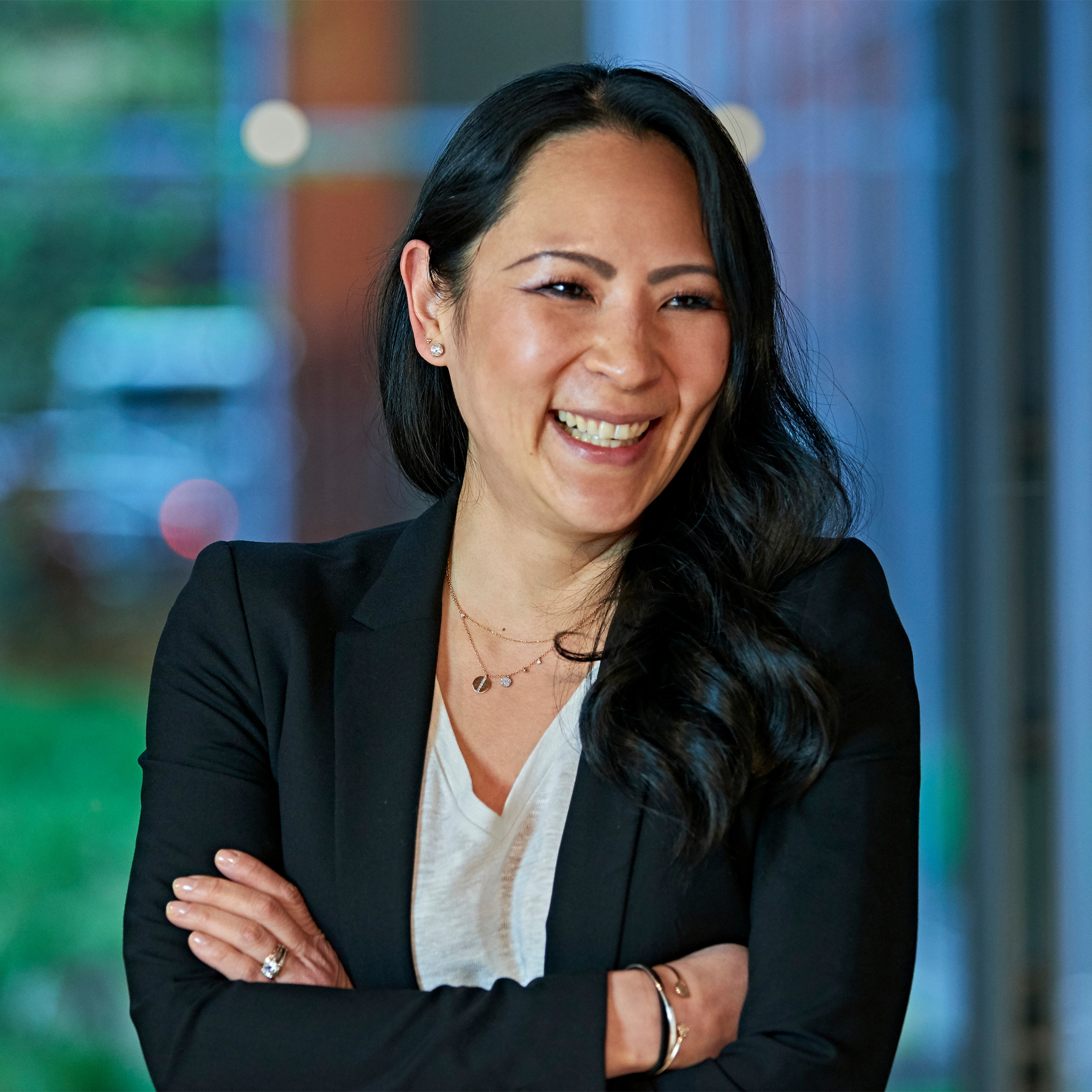
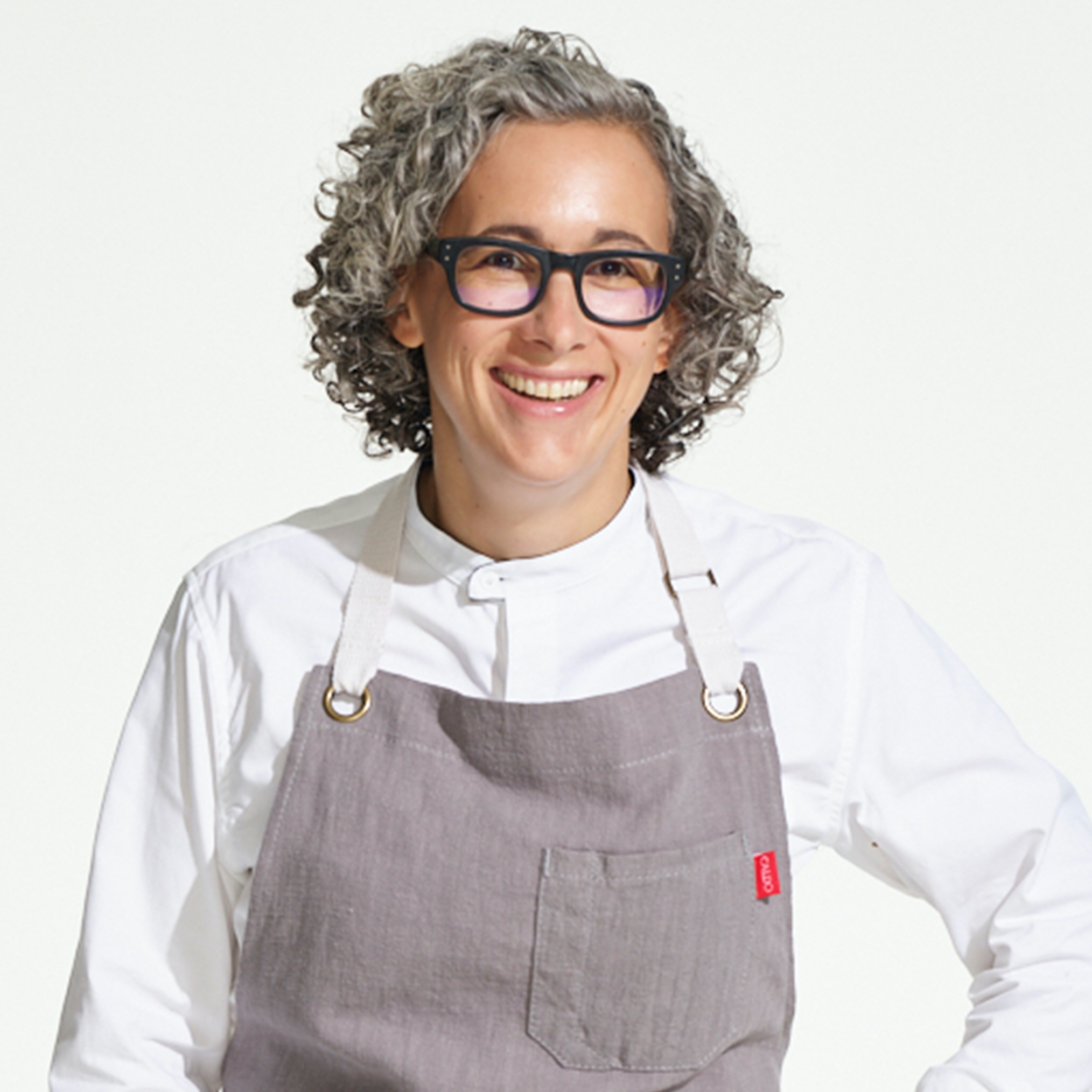
Hillary Sterling’s journey is both unexpected and inspiring—from getting grounded as a teen and stumbling into restaurants to becoming the Executive Chef of Ci Siamo, one of The New York Times’ 100 Best Restaurants in New York City in 2024. A multiple-time James Beard Foundation Award semifinalist, she honed her craft at renowned spots like Mesa Grill, Lupa, A Voce, and Vic’s before leading Ci Siamo to success. Her hands-on approach, commitment to mentorship, and philosophy of “slowing down to speed up” define her leadership style.
In short, her accomplishments are a testament to the personal and transformative power of food.
Links
- Chef Hillary Sterling's Hospitality Career Path
- Cookbook: AMMAZZA (Coming Soon!)
Transcript
HOST: ALICE CHENG
Welcome to Hospitality On The Rise, the podcast about the people shaping the hospitality industry and their journeys. I'm your host, Alice Cheng, founder and CEO of Culinary Agents, hospitality's go-to hiring platform. And I'm here to give you your dose of virtual mentorship.
Here, we'll be sharing the stories, lessons learned, and advice from hospitality leaders who've carved out their own path to success. After all, this industry is where many get their start and go on to do incredible things.
Whether you're a pro, starting out, or just love the hustle, this podcast highlights what makes hospitality extraordinary, the people.
We are so excited to have Chef Hillary Sterling here with us today. She is the executive chef of Ci Siamo. That's part of Union Square Hospitality Group here in New York City. #13 on New York Times/Pete Wells - The 100 Best Restaurants in New York City in 2024. JBFA semifinalist - Best Chef, New York State - 2024, ‘23, ‘20, ‘25. You know, I lost count because I've got good juju feelings for this year.
But anyway, I'm going to stop there. There are countless things to highlight. We're going to have Hillary just take us through her career and share with us some of the things she learned along the way. And with that, Hillary, how did you get started?
GUEST: HILLARY STERLING
Oh my God, hi. How did I get started? It's a terrible story, but a great story all at the same time. I threw a party and got grounded for the summer. And the only way out of the house was for soccer and if I had a job. And the closest thing I could walk to was a restaurant. So “here we are.” Ci Siamo – that’s actually what it means.
I worked at this restaurant called the Blue Marlin, and I worked in front of the house, vacuuming the carpeting in the morning, and dusting the shelves, and filling water, and using this pepper mill whenever I was told to go over, and carrying a tray, and clearing tables. I remember my first shift I came home with $80 in cash, and it was like, whoa! I, like, blew my mind at 14.
And my parents took all the money when I came home. They totally understood that that was a good idea, and I appreciated it many years later. And I just kind of fell in love with it. And I spent from 14 on working in restaurants, in the summers.
My mom was a bookkeeper for a catering company, on 49th and Madison. So after school, if I didn't have soccer, I would go and help her do her invoices and collate things and was immersed in this kitchen culture. The back end of it. So I saw the front of the house. I saw the back end. I never actually was in the kitchen, but I always enjoyed cooking at home.
And then after college, I went to school for business. I was working in a company–in the logistics firm moving freight to point A to point B–essentially in logistics. So now I just move food from point A to point B, same concept.
And the Cordon Bleu School of Chicago was around the corner from my office at the time, and I decided that if I was gonna open my own restaurant one day, I should learn how to cook. Professionally. Whether I was gonna cook or not, I just wanted to make sure I knew how to do everything in those walls of that restaurant, because I worked for a woman named Nancy Neff, who owned a restaurant called the Murphy's Pub in Montauk in New York. And I came in one day for my bussing shift, and she was in the kitchen cooking. And she was older at the time, and she's still alive right now. I'm guessing she's in her 80s. And she was cooking burgers & fries and, like, sweating. And I just remember this moment of being like, “Nancy, are you okay? What can I do for you? What happened?”
And she's like, “Shane called out sick.” And we all knew that he was not sick, but it was a really fun party town, and we had a great time back then. And she had no choice, but it's her restaurant and to open. That moment stayed with me for so many years, and I was like, “Okay, if Nancy knew how to cook those burgers and knew how to do that stuff–and she operated this restaurant and did all of those things–that that makes a great restaurateur.”
So I decided if I'm going to open my own restaurant around one day, I should know how to do everything in it. Then I went to culinary school at night, and 25 years later, I'm still in. So I knew the day I put those chef whites on–albeit, you know, black and white checks and a floppy baker's hat and all those things–I knew I was kind of hooked.
HOST: ALICE CHENG
Wow. And at such an early age, knowing that one day you wanted to own/run your own restaurant, that's big. And here you are today. I mean, so many things can happen in between. And for some people, it doesn't pan out the way, and their dreams change, and their goals change. So you're in culinary school, you finish. Now what?
GUEST: HILLARY STERLING
Well, at the time in Chicago, you had an option of Trotters, Blackbird, or Tru. Those were the restaurants to work in. Like, avec just opened. And this was in 2001 or so, 2002? So I ended up coming back to New York. I mean, in hindsight, I wish I would have worked at Trotters, but I don't think I could afford to do it. My rent was, like, $600 a month, and I think they were paying, like, $7 an hour or something crazy.
So I came back to New York, and I spent the summer in Montauk working out there again. And I worked three jobs from… I think it was May 1st to October. And then I decided to get on a plane and go travel. So I worked the front of the house. I worked the back of the house. I worked whatever I could work that summer to save money, so I could go and travel. That's what I did.
And a friend of mine from culinary school wanted to go with me. So we flew to Ireland where I had some friends, and flew to London where we were basically couch surfing. And then he looks at me and he's like, “Let's go to Milan.” I said, “Okay.”
And so we get in the airport in Dublin, and he tells me doesn't have any money. And I was like, “We've only been gone for a week and a half, and we haven't paid for housing. We've been sleeping on my friend's couches in London and Ireland.” And he's like, “I don't have any money. I have to go home.” And I was like, what? I was devastated.
And I got on the plane anyway, and I'd never traveled solo before. And I remember getting into Milan–and it was dark and raining–and trying to find a place to stay with no smartphones, only a book. Remember those days?
HOST: ALICE CHENG
I do! I actually do.
GUEST: HILLARY STERLING
And it was dark, and you didn't have any way of reading it, and I was so lost, and I didn't know any Italian, and I didn't have any lira. And, like, it was just one after another.
I remember calling my sister the next day from the internet cafe being like, “What do I do?” And she's like, “Go to Florence”. She hates when I tell this story so much. Because she traveled abroad during college, she said, “Go to Florence. I remember that there was a lot of college students there. Maybe you'll meet people.” And I was like, okay.
But I was so stubborn that I was like, “I'm gonna go to the Duomo in Milan. I must go to the Duomo. I must see it. I'm here. I can get past this. I can do this.” And I went and climbed to the top of the Duomo and looked around, and it was just like, “Oh my God, I can do this.”
And then I spent almost seven months alone traveling until my money from my short order cook, and bartending, and frying fries, and all that stuff ran out. And then I came back here, but I ended up falling in love with Rome, and still to this day, I have such a strong affinity and love affair with Rome.
And there's something about it when you land there, and you get to that place, and the smells, and the noises, and just the energy. I used Rome as my home base for those six, seven months. So I'd go travel, go to places, because Ryanair at the time was, like, one pound wherever you wanted to go. So I'd be like, “Okay, where's Ryanair going to today?” And I'd pick a flight and I'd go. I explored Spain and France, and I just kept going.
And I ended up meeting a bunch of people; we traveled on and off together over the course of those months. “I'll see you in Paris.” “I'll see you here." And it became this little community. I totally understand when people go and travel now and meet people. Those relationships were amazing. When I did that documentary, Her Name is Chef, he wanted pictures of that. So I Facebook-messaged all of those people. And every single one of them went to their garages or went to their attics and found pictures from that trip and sent them to me. This was 20 years ago!
HOST: ALICE CHENG
That's amazing.
GUEST: HILLARY STERLING
And it was just a really magical trip of exploring and food. Then when I had 300 bucks left in my bank account, my dad sent me an email saying, “I think it's time to come home.” So I did.
HOST: ALICE CHENG
Wow. Wow.
I wonder if people still do that? I hope they do. I mean, can you imagine? It's kind of the quintessential example of “Use technology. Use technology, but don't let it cloud your whole experience and what the possibilities could be.” With not only meeting people, but also getting the real experience of travel and all that. But yeah, I'm so jealous.
GUEST: HILLARY STERLING
Yeah, it was magical. I wouldn't be who I am if I didn't have that trip. If I wasn't vulnerable, if I wasn't nervous and scared. Now, I mean, ever since then, I have no fear of traveling alone. I love it.
But it really was so pivotal. People just meeting other people. I was so sheltered. I mean, I know I went to school. But, you know, I traveled with this Israeli woman, this kid from New Mexico, this woman from Australia, and New Zealand, and this guy from Canada. And this little group just became a group. And we each pushed each other to continue to go on and to keep finding that next adventure. Then I came back, and I entered an ad on Craigslist and started working.
HOST: ALICE CHENG
For the record, this was before Culinary Agents!
GUEST: HILLARY STERLING
Yeah. Way before, I answered that ad on Craigslist. For Mesa Grill, for Bobby Flay. And I had no idea what I was doing. I know I cooked, and they took a chance on me, and I stayed with them for almost three years. Became a sous chef, worked at Bolo and Mesa Grill.
And then one day on my day off, I was sitting at the bar at Lupa, having those beets with pistachio butter and a spritz. It kind of made me long for that travel again, finding it within those walls. So they had a sous chef job open. I applied. They hired me not because of my Italian knowledge, but because I could expedite. Because if you could do 400 covers at Mesa Grill, you know, expediting pasta… Which is not correct by any means. I've never been more humbled, in those first few days of working at Lupa.
I remember calling my dad being like, “Oh man.” There's a couple of pivotal moments in my career where I stood in Union Square, and I called my dad and was like, “Oh man. What am I doing? I just overcooked a hundred of something and I'm so bad.”
And he would just listen and be like, “It's okay. You're gonna have good days. You're gonna have bad days.” And would just talk me off that ledge, and cooking pasta professionally was something I never knew I needed in my life. But once I found it, I realized that that's what I was here to do. It was so amazing, and the magic, and the noise, and the flavors… it just brought me back to Rome every time. So working there was so magical. Yeah, that's a good place.
HOST: ALICE CHENG
Yeah, I mean, it's amazing how food really does that to you. I think back to the scene in Ratatouille when Anton Ego takes a bite of, you know, the ratatouille and takes him back to his childhood. And I'm not just saying this, but I get those feelings when I eat your food by the way, because I also love Rome, and I love Italy. When you get that, you just want to hold on to it.
All right. So you're in Lupa. And you're running… you’re number two in the kitchen, running the kitchen.
GUEST: HILLARY STERLING
It was great. I loved it. It was my favorite job. Nothing wrong with any of the other ones that I had. Really, it was the biggest education I had in terms of food. Then I worked for Jason Denton at the time. So he wanted to open Bar Milano, which was a specific Northern Italian restaurant, which then allowed me to study and learn a different area of Italy. Unfortunately that restaurant didn't make it, but it was [a] beautiful, beautiful restaurant when it opened, really honoring true Italian food. Only Northern Italian wine list. Oh my God, it was gorgeous. And that closed.
And then I did a really amazing stint at Marlow & Sons and Diner, where I was a tournant, and it was just a couple months where I just needed a break from being a sous chef. And I met some great people there–that magically are all still chefs now. And, I think everyone there was in this pivotal point of their career of what's next. And we all ended up on the line together on Friday, Saturday nights at Diner. And it was just a blast. And Sara Kramer from Kismet was the sous chef that was leading this line at the time. And we're all 30, and she was 21, and we're just cooking, and it was a really fun time.
Then I got the job at A Voce, working for Missy Robbins, where I signed on as a sous chef but soon became the chef de cuisine there. I stayed with her for four years, basically specializing in regional Italian cooking, and then after that, I left to do consulting and travel again. I longed for that. Where I opened a couple of different restaurants for people, and then I went to Asia for a month and Italy for a month, and then I came back and opened Vic’s for six and a half years. I was at Vic’s. This is crazy. Yeah.
HOST: ALICE CHENG
Vic’s. I have very special memories of sitting outside in freezing cold weather during the pandemic and eating that delicious, delicious fried chicken.
GUEST: HILLARY STERLING
It was so good.
HOST: ALICE CHENG
It was, like, a family event every weekend. We're like, “All right, we're going to pilgrimage from Midtown East,” walk all the way down–because that was our exercise in the freezing cold–sit on the metal chairs. Thank you for the little blankets. They were very helpful.
GUEST: HILLARY STERLING
It was necessary.
HOST: ALICE CHENG
And just all order fried chicken and have wine. I mean, it was just amazing. Those are actually the fondest memories that we have of that time.
GUEST: HILLARY STERLING
That fried chicken came out of a love affair of Nashville hot chicken, and how did I make it Italian?
HOST: ALICE CHENG
Yeah, it worked.
GUEST: HILLARY STERLING
It worked. I miss it. People still ask me for it.
HOST: ALICE CHENG
Yes, I was just going to.
GUEST: HILLARY STERLING
I don't make it at Ci Siamo, but the recipe will be coming in our cookbook eventually in the next year or so. So you'll be able to do it yourself, which I don't really suggest you want to do.
HOST: ALICE CHENG
I think I'm going to hard pass on that.
GUEST: HILLARY STERLING
I'll give it to you. Don't worry.
HOST: ALICE CHENG
OK, so now you're at Vic’s, you're running your tight team. You're also jack-of-all-trades, which is obvious and apparent from your experience. So many things and–you know, it's not about me, but let's make it about me–your tricolore, your rainbow cookies. I mean, come on. Is that in the cookbook?
GUEST: HILLARY STERLING
It is in the cookbook, yeah. My dessert section will be very small, but that will be one of them. You know, it became an accident. We were doing this rainbow cookie dessert thing for Easter one year, and the prep guys cut them the wrong way. Like, hour before service started, and I was like, “Okay, never mind. Let's just make cookies and give everyone a cookie today.”
And that's what happened. We were supposed to make these beautiful, rectangular cakes with just a little bit of almonds, and cover them in chocolate and pâte à glacer. And then they were just cut the wrong way. And I had to pivot, which, as chefs, we do frequently. And I said, “You know what? Let's just cut them all the way. You did it.” And then eventually it just stuck. After a year of Ci Siamo people asking, I finally brought back them in a different shape, but they are still the same. And, we have been going through so many of them. Like, the team can barely keep up.
HOST: ALICE CHENG
Yeah, My favorite, absolute favorite.
So perfect segue. Now you're in Ci Siamo. Take me there. Opening to you. I mean, the sheer volume. Amazing. It's just mind blowing.
GUEST: HILLARY STERLING
Ugh, the volume. I mean, you know, it's so funny. Every once in a while, people ask me, “Have you turned around and looked at this dining room and taken it all in?” And there's just the mass amount of people and the noise. And a lot of times I'm training everyone to tune the noise out. That's kind of one of the things I talk a lot about in the kitchen: just tune out the noise, focus on our day, focus on our projects.
So Ci Siamo was a project that I was really nervous about doing because it was on 31st and 9th, and I've never worked above 26th Street–that was even a stretch in 20 years–and on the West Side, and in a neighborhood that didn't exist, on the second floor. I mean, we can keep going with this. This is during a pandemic. This is just a recipe for disaster. And we just kind of sat there and just kept building it.
And we were working out of Marta at the time, and there was this hotel room that we were working in that was like an office. Room 206. And so much of this was built in there, in these stale four walls of me dreaming again. And I had a hard time opening this restaurant, mentally, understanding what this restaurant needed, right? A lot of times the restaurant will tell you what it needs. I know that sounds a little crazy, and that kind of evolves over the time during your opening.
But building it, I was like, “Okay, this is a blank canvas. What do I want to cook?”
“What is Ci Siamo? Who? What?” You know, it was one of those moments. So I remember walking home one day–and I live in Williamsburg–and I was walking home from Marta, because I was, like, I'm just stumped.
And… I sat down on the way. Actually, I had a beer. I stopped at a beer garden outside and had a beer. I was going through my old pictures of all my travels and realizing that I was like, “I want to cook that. I want to eat that again. I want to feel that sunshine on me in Piedmont having that pizza with salsa verde and anchovies. I want to tell those stories.” And I kept finding these dishes and being inspired by my travels that I'd forgotten how much I loved.
And the menu kind of opened up for me and started showing its true colors. And then we started putting it in place, and it started developing. And Danny asked myself and Megan Sullivan–who was the GM at the time opening Ci Siamo with me–to make sure we spent a lot of time in the space alone. Like, one night sit down at one of the tables, the one that overlooks the courtyard–which was totally under construction at the time–and have a bottle of wine, and fall in love with the space. Right?
Because you can tell when the space and the concept do not mix. It was so important to me for this to be fluid.
From the maitre d, who was a guy I'd worked with at A Voce, he'd been in business so long.
To the bar team, that every drink went with the gnocco fritto and the wine.
And the feeling.
And the desserts for Claudia Fleming
It was just this magical moment. All of a sudden, it just came together, and everyone had the same vision, and we were fluid.
It took a while. Don't get me wrong, there were a lot of freakouts along the way. There was a lot of ups and downs. And I'm saying that, in hindsight, three and a half years later, I've been like, “Yeah, it was so easy. We just did that.” That's not at all what happened. It took time, but it was pretty magical and poetic along the way.
HOST: ALICE CHENG
Yeah, it's pretty magical and poetic to dine there, by the way. In case you wanted my feedback on that. My husband works nearby, and he always reports back to me, and he had dinner there just last week. And I always make him walk around with a bag of Sharpies in his work bag. And he didn't have any of these. And I was like, “You cannot go there and not have Sharpies. Forget it. You’ve got to hide from Chef.”
[He was like], “I don’t have Sharpies with me.”
I'm like, “Look in your bag, look in your bag!”
GUEST: HILLARY STERLING
It's okay. Next time.
HOST: ALICE CHENG
Anyway, they're coming. Don't worry. You know I'm good for them. So incredible, and, you know, I'm not just saying that it is truly one of my favorites. Your cooking, everything you said really comes through everything you do. And that makes you as an individual special, and your food and everything you touch special. So thank you for sharing that. That is really incredible.
I want to dive into some of the lessons learned, advice. Is there something that you look back and you think, “I should have said yes to that”? Like an opportunity that might have come up through your travels or anything that you can think of?
GUEST: HILLARY STERLING
I think there's some things that I should have said “no” to that I didn't, that I wasn't strong enough to say no to.
I think…You know, as much as I want to look back and say there's things I didn't do because I didn't say yes, because of fear, I'm sure there are things that I didn't say yes to, and there's risks that I didn't take. As much as I like taking risks, and I feel like we do that every day, I do play it safe sometimes. I do prefer the stability of it. I know we work in restaurants.
I think, you know, not being true to who I am as a chef. And I view myself as an Italian chef, and I'm 100 % not Italian. I'm really not Italian. I know I'm not. I'm staring at the Lower East Side right now, and that's where my grandmother was born. And so I know who I am, but I've fallen in love with Italian food, history, and culture. So I honor it in that way.
And I have cooked other things in my career. Never truly understood maybe why I wasn't so good at it, or why my heart wasn't in it. And I think finding that thing that really gets you excited, [like] “Yeah, I can go and cook.” I can't cook American food; that I just can't do. But I can sure take on Middle Eastern, or French if I really had to try and dig deep, but why do that to myself, you know, when I need to be inspired to cook?
And not to push things, not to rush things. I think that's one of the big things, that I wish people would slow down to speed up, which we talk about in the kitchen a lot. Especially with our volume, right? We have to slow down to speed up, otherwise we'll just get run over. So I don't think there's any opportunities that I didn't say yes to. I think I had opportunities, and I said “no” a lot, until the one that felt right came up.
HOST: ALICE CHENG
Yeah. Clearly where you find inspiration and where you're learning is through your travels and your experiences, and you bring that back. And you have such a large team that you're leading now, not just a large space / high volume, a large team. And with that comes lots of different skills and personalities. What are some of the things that you do to motivate your team? Like, how do you usher them through their career? Whether it's a stopping point or it's something that they want to do longer term.
GUEST: HILLARY STERLING
It's a great question. There's, like, 72 people on my team. Sometimes it doesn't feel like that. Yesterday I opened; I had someone on vacation, and I was like, “I'll open the restaurant.” And the team loves it. I come in. A 25 year old sous chef running and having fun and being like, “What are we going to make today?” And let's keep that energy up, and let's move, and let's show you guys what you're actually capable of.
I think that's one of the things that set those examples really high. I know I am–which is crazy–I'm 46, and I feel like I have the energy of a 25 year old. I ran six miles this morning, I've been up since 5:30, I got my son to school, I've done all these things. And sometimes I need to show the team that they are capable of so much more than they let themselves believe.
And I am always looking at the team and trying to train my replacement. I'm looking at all of them, and, like, I'm not leaving Ci Siamo. Don't worry, that's not what I'm saying. I'm saying someone has to take my job one day, right? Someone's gonna have to do that, or I'm gonna have to train someone to help them take some other chef job, or do all those things. And my job is to train them to be chefs. If they wanna be chefs, I will train them. If they wanna be line cooks forever, great, I'm gonna make you the best line cook ever. And it's really, like…
I stop in my tracks all day long if someone's doing something that's kind of silly. And I give them an example. I was like, “If you're going to the train or you're going to the coffee shop, are you going to walk around the block three times before you go down to the train?” And they're like, “No.” I'm like, “Well, that's what you're doing right now while you're peeling these carrots.” And I give them these sometimes really crazy analogies, and it makes them stop and think. And sometimes they say, “Yes, chef.” And I know they have no idea what I'm talking about, but hopefully one day that moment will resonate with them, and they'll think about it. So I think that's really… it's about being hands-on with them
HOST: ALICE CHENG
Yeah, and I've seen and heard and witnessed you; this is like your M.O. This is not something that you've recently learned. I feel like it's part of your leadership style, and when you were in your previous kitchens, I know. And just passing conversations with you about talent and how you approach things, and that's great. I think that also allows a leader to have a little bit of comfort, and if something happens and they can't be in the kitchen, or something unexpected happens, they know the team is prepared to step up.
I was going to ask a little bit about how you maintain work-life balance in such a demanding industry. I think waking up, and going for a six-mile run, and doing jumping jacks, and having family life. I mean, that kind of sums up a lot of things.
GUEST: HILLARY STERLING
I mean, don't be fooled. I have definitely made mistakes, and I'm working on rectifying those things. So being home more. And my son can talk, right? And I love being with him. He loves coming to the kitchen and the restaurant. He sat in the kitchen table right in front, for Thanksgiving, yelling, “Mom, I want pasta.” And the whole team was just laughing, and we were having a great time. For them to see me as a human being at that moment also helps connect. Right?
And he came back in Christmas, and then they were like, “The pasta's ready, don't worry.” And they were all ready for him. And we treat kids–as you know–we treat kids in the restaurant like regular people. And this Christmas and Thanksgiving, they all had goodie bags when they walked in the door. And every kid that walks in the door was given a goodie bag before they sat down at their table. Because it's so important to expose kids right now to that.
But no, I'm working on work-life balance. I signed up for a half marathon coming up so that I know that I have to do it. I like doing triathlons, but it's really hard. And I do fail frequently at it. You know, last week I think I got in a 20 minute workout.
HOST: ALICE CHENG
Yeah, 20 minutes, better than nothing. You know, I think that's the constant evolving / being flexible. And at the end of the day, making sure that you still have some time for yourself in the grand scheme of things is the goal, right? What's next for you?
GUEST: HILLARY STERLING
We are finishing up my cookbook at the moment,
HOST: ALICE CHENG
Woohoo!
GUEST: HILLARY STERLING
which has been a blast and really many years of work. This process started, I think it was in 2017. And it's taken three times to get it right, for a publisher to be interested, and I think this one will stick. I'm working with a woman named Theresa Gambacorta, who has written many cookbooks and used to live in Rome and understands me. And she spends an hour with me, or two hours with me, in the kitchen every week. She comes to Ci Siamo, and we cook together. And we’re actually on the last two weeks of recipe testing, which is pretty amazing.
It's a book that takes you through my career, my home, the things I love to do at the restaurant, the seasons, and all the holidays: our Mexican Thanksgiving tradition, and our Passover traditions, and the matzah. And kind of bringing it all together in a way that I'm super excited to see it on paper.
Yeah, that's the immediate coming next. It’s great. I'm super excited about it. I'm really nervous to see it all in print. But yeah.
HOST: ALICE CHENG
I'm so excited. Highly anticipated by me and many, many others.
GUEST: HILLARY STERLING
There’ll be one on your way, don't worry.
HOST: ALICE CHENG
I love it, I love it. So, you know, someone listening is like, “OK, I would love to do these things. I would love to travel. I would love to work in New York even.” You know, we're nationwide, have folks in large metro areas and smaller metro areas. Do you have any advice for those who are kind of in it and trying to figure out “How do I get to the next step?”
GUEST: HILLARY STERLING
Be patient. I know it's really hard.
You know, we're summing up my 32-year kitchen career in 30 minutes right now, right? So I've been working in kitchens for 30 years, and I strongly suggest people are patient, and they try things. Go to a job and stay for a year, and try out to work all their stations. Check the different foods that you want to see.
Save up money, right? Like that summer that I spent six months working–whatever it was–to go spend six months away, I took any job that I could have. I was a short order cook. I poured Guinness at night on Mondays. Like, it didn't matter. There was no ego. It was about the end result and how to get there. And what are you going to learn from each job, right? Social skills of bartending–big fan of. I mean, you can talk to anybody. That's great.
My dad always told me to read the sports section before my shift, full-well knowing that I was going to have to talk sports that I had no idea what we were talking about. I was like, “All right. Cool, Dad. Thanks.” And it worked. Like, “The Mets won today. Great. Good job.” It started the conversation.
I think letting your path kind of unfold, instead of drawing it yourself–that line is going to be up and down and curved, and there's going to be all different paths and bumps–and to be okay with that, and learn from the good stuff and the bad stuff.
HOST: ALICE CHENG
Yeah. Side note: your dad sounds like he's got the best book of advice ever.
GUEST: HILLARY STERLING
Yeah. My father, we lost him a couple years ago–
HOST: ALICE CHENG
I'm sorry to hear that.
GUEST: HILLARY STERLING
No, he just had a spirit for life, and he loved us. We lived in the same house that my father grew up in, growing up in Brooklyn. So we had my grandparents there too, and having all of that family together. My dad, he was retired when I started cooking most of the time, and he was up late, and I was calling him, and he would talk to me off a ledge. And my dad, in his last couple of years of life, would text me every morning and say, “Good morning, Chef” or “Good morning.” He was really, really a proud dad and loved that I was a chef.
They gave me the opt-out of going to college and to stay in working restaurants, and I chose that path. Which I will say is my next point of advice: running a restaurant is running a business, and I think a lot of the younger chefs out there are forgetting that. That it is really important to understand an Excel spreadsheet. It doesn't matter how great your food is. If all the other numbers don't work, you will not be successful.
So understanding that, and we do a lot of teaching in the kitchen. We teach our team how to read PNLs. We teach them about how much that quart of cream costs, and how much eggs are right now, which are crazy. And I think that's part of their education, right? They're not just coming to me to learn how to cook. And for my crazy amounts of energy, they're coming for me for an education. And I make sure they understand what they're signing up for.
Because at Ci Siamo, if you love it, you will be so successful. If you are afraid of it, it'll swallow you up. It's so busy. But if you tune out that noise and focus on why you're there, you'll really just lean in and enjoy it. So study. Your education doesn't stop.
HOST: ALICE CHENG
Wow. Wow. I love that. I am. That would have been a perfect place to end, but I have quickfire questions for you.
GUEST: HILLARY STERLING
Awesome.
HOST: ALICE CHENG
OK, first one, what advice would you tell your younger self?
GUEST: HILLARY STERLING
… That's not so quick. “Don't be so loyal.”
HOST: ALICE CHENG
Ok. I like it. Deep. What's your advice for someone struggling in the industry?
GUEST: HILLARY STERLING
Take a break. Don't run, but take a break, and do something fun. The moment I became a line cook after being a sous chef for six years was the best three months I had in my career.
HOST: ALICE CHENG
And what's your advice for fellow hospitality leaders?
GUEST: HILLARY STERLING
It's not black and white. Let's teach all the gray.
HOST: ALICE CHENG
I love it. I love it. Chef Hillary Sterling, thank you so much for your time and your advice and for summing up your very, very rich history & cooking in a short time here. Thank you. And we can't wait for this cookbook to come out shortly.
GUEST: HILLARY STERLING
Thank you so much for having me.
HOST: ALICE CHENG
Remember, success looks different for everyone in hospitality. No two paths are the same. If you have a leader or a topic you want to hear about, email [email protected].
Hospitality On The Rise is brought to you by Culinary Agents, connecting top talent with employers since 2012. Whether you’re hiring or looking for your next opportunity, join us at CulinaryAgents.com
For more inspiration, subscribe to Hospitality On The Rise and visit HospitalityCareerPaths.com, a free platform by Culinary Agents.
Until next time, keep rising!