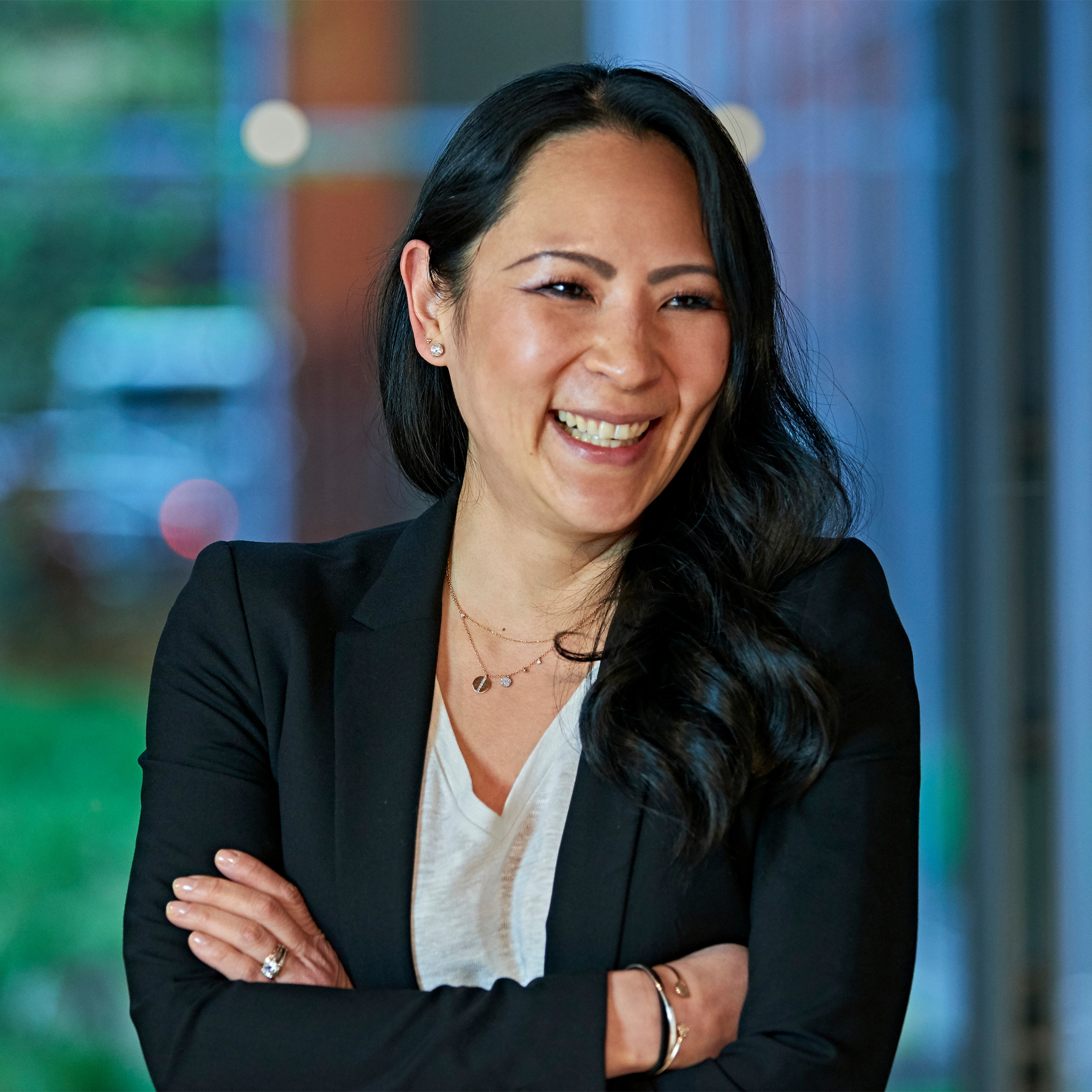

On this episode of Hospitality On The Rise, host Alice Cheng chats with 2025 JBFA Winner Bobby Stuckey — Master Sommelier, restaurateur, endurance athlete, and champion of what he calls hospitalian culture. From his early struggles with dyslexia to becoming one of the most respected figures in hospitality, Bobby shares a refreshingly grounded and candid look into how service, leadership, and a life lived with purpose can create something truly enduring. Whether you’re in the weeds or dreaming big, this conversation will leave you rethinking what hospitality really means.
Links
Transcript
HOST: ALICE CHENG
Welcome to Hospitality On The Rise, the podcast about the people shaping the hospitality industry and their journeys. I'm your host, Alice Cheng, founder and CEO of Culinary Agents, hospitality's go-to hiring platform. And I'm here to give you your dose of virtual mentorship.
Here, we'll be sharing the stories, lessons learned, and advice from hospitality leaders who've carved out their own path to success. After all, this industry is where many get their start and go on to do incredible things.
Whether you're a pro, starting out, or just love the hustle, this podcast highlights what makes hospitality extraordinary, the people.
HOST: ALICE CHENG
We're so excited to have Bobby Stuckey here with us today. Bobby is, amongst many things, a Master Sommelier. But also–and you're going to have to correct me if I'm wrong here, Bobby–has a background in being a professional cyclist, has run many marathons, and also participated in completed triathlons in the past. We've got punk rock enthusiast–we're going to cover all these during the show–an advocate for hospitalian culture–hospitality as a lifestyle–and a TEDx Speaker. Amongst other things, including 2025 James Beard Foundation Award Semifinalist for Outstanding Restaurant, 2019 James Beard Foundation Award Winner for Outstanding Service, and 2013 James Beard Foundation Award Winner for Outstanding Wine Program.
So I know I'm just covering the surface here. Bobby, welcome. Thank you so much for joining us.
GUEST: BOBBY STUCKEY
Thank you so much, Alice, for having me. Excited to be on with you.
HOST: ALICE CHENG
Yeah. And I feel like, as I was looking through some of these notes, I feel like you've had a couple of different careers that kind of manifested into the current one that you've been in for quite some time. Tell me, how did you get started in hospitality?
GUEST: BOBBY STUCKEY
Well, I'm very lucky to be severely dyslexic and was a very struggling young kid in high school, and I got kicked out of Jesuit school, and I was bussing tables. And I really–how do I say this–wasn't that I wanted to be a bad student, I just really struggled. I'm in my mid-50s, so we didn't really even understand dyslexia and students that don't fit into the bell curve like we do now. Like there's a lot–I mean, it's still hard for kids like this, but there's just so many more different avenues for them. And I had a job busing tables, and it wasn't like a light switch went off and said, “Well, damn, I'm gonna do this the rest of my life.” But what happened was it was the first time that I was getting positive reinforcement out of the household because I didn't get it at school. And I really liked it. And it really was something I could do. And I loved bussing tables, I loved expediting, all those things.
As my adolescence became a young adult and things like that, I went off to college at NAU in Flagstaff, Arizona. I kept waiting tables. And I just loved everything about the restaurant industry. It's interesting to have a career that I've been in this industry so so long. I started bussing tables in 1983, I was bussing tables last night. So that's a pretty long stretch. I still love it as much as I did when I first began it. I also realized the importance of this industry and what it can mean to so many people and why it's so important and so fulfilling and can be a lifeline for people for a myriad of reasons.
Either you're someone like me and this is the one industry that you really fit and flourish in? Or what if you're new to this country and you don't speak the language? The restaurant industry is there for you. What if you're in an industry that has a recession, you get laid off? We're there for you. There's all these things about the restaurant industry that I really love, and I love them the same as I do now as I did in 1983.
HOST: ALICE CHENG
I love that. It truly is one of those… probably the only industry that's like always there for you.
GUEST: BOBBY STUCKEY
Always.
HOST: ALICE CHENG
Even if you leave it for a little bit because you went off and did something else, it's still there for you when you decide you want to come back. So when did you realize that this could be a profession?
GUEST: BOBBY STUCKEY
Well, you had mentioned cycling earlier. In the early 90s–I was going to college in the late 80s, early 90s–I was waiting tables. I was doing triathlons, and then I converted to racing bicycles, and I was just good enough to get a–like I raced as an amateur in Spain, came back–and was just good enough to get a domestic pro contract in the United States. And that's not very luxurious. Being a domestic pro, like I was the bubble guy on the team. Maybe one of last three guys picked up that season for a couple years. But I really loved it. I loved it a lot. But I kept working in restaurants the entire time.
And during that same time period–you know, this is before the internet and before there's so many things–I found a brochure on my boss's desk in the back of a restaurant in 1992, and it was for the Court of Master Sommeliers. We didn't have TV shows like SOMM or The Bear, any of these things. It was strictly a blue collar profession that I enjoyed doing. I was racing by bicycles domestically as a pro, and I was going to wine class on Wednesdays. I was off on Wednesdays as a server, but I would train in the morning, then go to wine class. And I was like, “Wow, I really love this. This is a different way to express hospitality.”
If you were good at the wine list, you could add an extra layer of hospitality to your guests. That's how I looked at it. I didn't really understand the term “sommelier.” And I saw this brochure for the intro level, and I asked my boss and he's like, “Oh you really like wine. You should study for that for the next couple of years and then go take it.” I know I took it in fall of ‘94. It was the end of the cycling season, and I had to fly to San Francisco from Arizona to take it. I remember sitting in that class for I think it was two or three days, and I was like, “Wow, this is something I could really focus on.” It gave me something to focus on and it was great, really helped me a lot.
HOST: ALICE CHENG
Yeah, and you went all the way with it and was 1994 certified and then 1998 Advanced Sommelier diploma–I did my research–and then Master Sommelier in 2004, is that correct?
GUEST: BOBBY STUCKEY
Yeah, 21 years ago.
HOST: ALICE CHENG
And that's, for those of you listening who may not know, that's like the highest achievement in the world of studying.That's why they call it Master Sommelier. It's a very difficult achievement for many and something that a lot of people strive to get.
So you have these certifications, you have a specialty and focus in wine and you're still serving and bussing. And now you're continuing down the path of “this is my career. This is something I'm going to focus on for the long term.”
GUEST: BOBBY STUCKEY
Yeah, and I went back to work for a couple that were–I was their busboy in the mid-80s. I was their punk rock busboy in the 80s, and I went back down to Scottsdale to work for Thomas Kaufman and Chrysa Robertson at Rancho Pinot. I really think so fondly of that restaurant, and he was really great to nudge me to go be the assistant somm at The Little Nell in the mid-90s, and then I ended up becoming the wine director there. But all along, I kind of looked at being a sommelier as… To me–I've always felt this way–it needs to be just an extension of the other basics we do on the front of the house from bussing, maitre d-ing, serving, all those things.
And my wine team at Frasca Hospitality Group, really led by Carlin Karr–she's been with us 13 years and she leads the whole somm team. And our lead somms, like at Frasca, Jeremy Schwartz, who's been with us 18 years, they all kind of fall into this same philosophy. So our company is very much like, yeah, you might be a sommelier, but you might be the one–like last night I came around the corner and Sean Perez, one of the sommeliers in our group, he had taken the squeegee and he was washing the windows at Sunday Vinyl. Like that's what we all kind of…
And it's great for our team. Sometimes some people coming from outside our organization kind of hesitate because they're used to, “I've become a sommelier, I don't do that anymore.” We're a much different group of individuals that are working as a team together in that sense.
HOST: ALICE CHENG
Yeah. That's part of your culture of the teams that you've built in all of your establishments, which is something that is difficult to not only create that and have that organically be part of the fabric of your businesses. but also to teach that and have people experience it and then take that with them if they decide to stay and they move within your organization or if they go to another organization and keep the learnings and the teachings with them.
GUEST: BOBBY STUCKEY
Yeah, and it's not without fraught either. I think we go through this maybe once every few months, because staffing restaurants, it's like ebb and flows; everything's great, you're fully staffed, and then three people fall in love with people outside of state or whatever, things come up.
We have this approach at the FHG organization–Frasca Hospitality Group–that everyone starts front of the house in an entry-level position and moves through the ranks. It sounds beautiful. I think it is beautiful. There are a lot of people from the outside who vehemently hate it. They like to talk about it until they want to enter our organization, and then the first question is, “Can you make an exception for me? I'm so experienced in this” and whatever. And it's not for everybody. It really is a different approach that we have, and we revisit this constantly. We have found that every time we do hire from outside and we think about making an exception, we usually find out that that is not the best for the whole organization.
HOST: ALICE CHENG
Yeah. Well, I mean, I think sticking true to the vision and goal and keeping consistent is part and revisiting it, right? It’s part of, again, the culture and what makes you all so special.
I want to take a step back, because I don't want to skip over the fact that you went from Little Nell to then go to beautiful Yountville, where you also met your current business partner as well. So how was that transition?
GUEST: BOBBY STUCKEY
I mean, if I think back, I loved my position at the Little Nell. I worked for a general manager of the hotel named Eric Calderon and my food and beverage director Coni Thornburg–I'll see her actually this weekend. She's the managing director of Ojai Valley Inn. I'm speaking there this weekend. I get to see her. Those two were so instrumental to me. They took a young sommelier and they really gave me a great tool set, and it was wonderful.
Going to work for Laura Cunningham and Thomas Keller was super exhilarating. This is 25 years ago. And to watch Thomas and Laura lead our teams, I learned so much. I got a text from Thomas Sunday night, and it was just so thoughtful. Just out of the blue. I had just flown back from La Palais. Quite frankly, I was eating–a friend of mine is Ethiopian, and his mother-in-law made this beautiful Ethiopian dinner. My friend Anton. I was talking to my wife, listening to some vinyl, my phone texts. And it was Thomas, and he had sent a text about something that was on the pass at French Laundry. I think about how much he gave all of us, and I can imagine this whole quarter of a century since then. The 30 years that he's had the French Laundry, he and Laura Cunningham gave everyone–if you wanted to accept the tools he was giving you, he was giving you the most incredible toolbox. I wish he would write a CEO book because he really taught everyone, if they wanted to pay attention, what they needed to do. Not just to be an owner if you left him, just to be focused on the fundamentals. And it's so key. It was awesome.
HOST: ALICE CHENG
And it sounded like it gave you the tools that you needed to break off on your own.
GUEST: BOBBY STUCKEY
Yeah, I would probably still be working for Thomas Keller had–
You know, my wife's mother had passed away. Her dad was living in Golden, Colorado, and that was really the progenitor for us to leave. I look back on it now. I was a reluctant entrepreneur. I was a champion of being a sommelier, and I loved doing that for Thomas. I think if that inflection point hadn't come, I would probably still be in Yountville working for Thomas and Laura. And I think that is a really beautiful statement because either or would have been great, you know?
HOST: ALICE CHENG
Yeah. And I love that you said–I've never heard that before–a reluctant entrepreneur, because oftentimes when you talk to entrepreneurs, they cannot wait, they're jumping out of their skin to go do their own thing. It's like a race to the next step. And so it's a really different perspective. I mean, obviously it's a lot of work. It's very hard to be an entrepreneur and to start your own thing. I believe Frasca just celebrated its 20th anniversary last year, which is no easy feat. How did you and Lachlan decide this was a partnership that was going to work?
GUEST: BOBBY STUCKEY
You know, Thomas had an incredible team there. Lachlan had been there. He was at that point where you either went into sous chef management or you go do something else, and he was up for an adventure. He and I would ride bikes together. He, Nate Reddy and I would spend time outside of work together, and he just went for it with us and it was great.
HOST: ALICE CHENG
Yeah, and here you are.
GUEST: BOBBY STUCKEY
Yeah.
HOST: ALICE CHENG
Five restaurants in?
GUEST: BOBBY STUCKEY
Yeah
HOST: ALICE CHENG
And I don't mean to just skirt over the fact that you're also a co-founder in Scarpetta Wine Company, as if you weren't busy enough.
GUEST: BOBBY STUCKEY
Yeah, but in all due respect, we find a balance as partners because we have a third partner, Peter Hoglund, in the restaurants. Really, Peter and I run the restaurants with Lachlan checking in with us and helping out. And then Lachlan really runs Scarpetta and our importing company, Benvenusa, with me helping out there. So… It works and it's not like I would never claim I'm running Scarpetta, that's solidly Lachlan doing that. Solidly him having me help with that, and so it does let me focus on one part of our organization.
HOST: ALICE CHENG
Well, that's the beauty of partnerships, right? Partnerships that work. You're all, I'm sure, on the same page of who needs to be where, when, and you divide and conquer, right?
I love that you are talking a little bit about mentorship and reflection. I would also say you have been regarded as a great mentor to the industry as well. I know that between your speaking engagements, publicly or just what you share on social media, you have this–we like to say at Culinary Agents–this virtual mentorship kind of effect, where maybe people haven't worked with you or for you, but they get the residual benefits of what you're sharing and what you're putting out there. And I think that's so important in hospitality, especially because it's not an easy place all the time. And there are a lot of ebbs and flows in general.
GUEST: BOBBY STUCKEY
For sure. For sure.
HOST: ALICE CHENG
And you find quite the balance. You mentioned a little bit about the partnership, but also personally, you've also been an advocate of this hospitality lifestyle, which extends beyond just work. How do you continue to keep that balance for yourself, and others?
GUEST: BOBBY STUCKEY
Well, this is where I'm a little contrarian, and I hope someday it's starting to percolate in my direction, but it's been a solid 26, 27 years of not that.
As we started to begin the conversation, I love this industry. It is incredible. Are there hardships with it? A little bit, but sometimes I think we make it harder than we need to. And what I mean by that is if I work nights and I work Saturdays and I work holidays, it's hard on somebody in your family. It's not just me, everyone's gonna go through this. And restaurants aren't treated fairly.
If you're an emergency room surgeon and you decide to work weekends because you get paid triple in emergency room surgery, your mother-in-law is gonna think you're a hero. If you're a restaurant person and you work Saturdays, your mother-in-law hates that whole idea. It's just a fact of life. So that is a little bit harder. There are things that are more difficult.
But we've done–and I put part of the blame on how we romanticized some things over the last 30 years. I think part of it, food journalists, for a long time, starting with Marco Pierre White, and the famous photos of him smoking a cigarette and talking about doing cocaine in London, to up until just recently, everything has been glamorized about going out for drinks, and this, and the party boy chef, and all that. And that is just bad journalism. And it's just too low hanging fruit to sell.
I remember once I had someone on an exit interview to HR saying that they thought I would build better culture if I went out and had drinks with my staff on Saturday nights, which is so not what I do. And I look back on that and I go, why would this person think that? Why would anyone think that is good for our industry?
Well, the reason is, and rest in peace, Anthony Bourdain was a brilliant person, but his whole vision sold that a lot. There was so much journalism to the bad boy chef. We had Kitchen Confidential, the rise of Anthony Bourdain, an amazing human, but that did romanticize those things. And I've heard it, because I'm someone who works with my staff shoulder-to-shoulder on the floor. It's not like I'm an owner in an office. I don't even have an office.
So I think what happened with our industry is we really glamorize that. No one wants to glamorize a neurosurgeon party; that's a taboo. You don't want that. Well, we shouldn't glamorize that in restaurants. And in 1999, when I worked at The Little Nell, I decided not to go out after work.
HOST: ALICE CHENG
Period. Full stop.
GUEST: BOBBY STUCKEY
Period. And it's not that I'm a prude. I like drinking wine, having a beer like anybody, but I stopped doing that. And it was amazing how much easier the industry became. You slept better. You got up for those morning runs better. If you were studying for your MS like I was, it was easier to do that. You came into work charged up every day. It's amazing if you treat yourself right, this industry is much easier than you think it is. And that's what I love about this industry. We can make it easier. It's really quite a simple fix. It's amazing how many people hate that idea and don't want to do that. They just think differently than I do. I'm not saying I'm right or wrong, but it's working fine for me.
HOST: ALICE CHENG
That's also a key thing, find what works for you, right? And evangelize it to the extent when people are asking you for advice, what works for you. I think actually that the scales are tipping more towards your philosophy over the past handful of years for various reasons, you know? I think that also goes in line with this industry being more and more… I don't want to say “accepted,” but more and more as a profession. As people are here and they're focused on skills, they're focused on finding their areas of expertise for working for specific employers and individuals that they can learn from. There's so much learnings and lessons and experience that's out there that if you aren't paying attention, you could miss that opportunity.
And so I purposely asked you that question because I have heard you say that at events before and on a speaking panel that I moderated years ago, and it stuck with me. I think there's a time and place, and it's up to the leaders of the industry to find and make those judgments for themselves.
GUEST: BOBBY STUCKEY
Yeah.
HOST: ALICE CHENG
So fast forward, you have your multiple locations and restaurants now. You have multiple teams that are spread across a couple of different areas. It's not just one location that you're bussing tables at. What are some of the ways that you keep the team motivated and inspired?
GUEST: BOBBY STUCKEY
Well, A) I've got to be there for the managers, right? Because the managers are dealing with different… it's whack-a-mole. There's a different drama or a different conflict or a different just speed bump. Both front and back of the house, every different restaurant will have something going on at a different time period. You never have all five restaurants, six restaurants, smooth sailing for four months at the same time. It just doesn't work that way. And so you need to be there for those managers, so they can ask for help, so they can have someone to lean on.
Because in any business–my dad was an entrepreneur and he had an insurance business, my mom had a catering company–the higher you go up the food chain, the less people you have. It's lonelier. You have less people that you can vent with or bounce ideas off with. That's just a fact of life. So you got to be there for that management team. And I think that's really, really key.
And then what I try to do–and look, I have 250 employees, I've gotta run the company, but I also carve out time to be on the floor with my line-level team.
I get my schedule emailed to me on Fridays, and it’ll tell me my itinerary for the week, and it'll be like today, I start with you at 10 A.M., and then I've got my agenda for today, and then everything will stop around 3:30, no meetings. Then I'll have my espresso. I'm very particular how I have my espresso. My team knows. I'll have it then, and then I'll sit down and watch whatever restaurant I'm scheduled in, I will sit in and listen to their pre-service. Then I will work service with that team.
I don't try to be in a car and go into five restaurants. Like I almost left Tavernetta last night because I wanted to see someone up at Frasca. I said, “Nah, I'm just gonna stay at Tavernetta” That's it. You know, I'll walk over to Sunday Vinyl if I'm at Tavernetta, because they're right next to each other. But that was a Tavernetta night. Tonight will be a Frasca night. Tomorrow will be an Osteria Alberico night. Now, I won't stay till the bitter end, but I will stay long enough, usually until you see the reservation seated or close to, and then be with the team through that push, through those turns, and be there with them. So there's no one in the company that can't say, “Oh my gosh, I don't get to…” if they want to, bus tables side by side with me, shoulder-to-shoulder. That's just part of the DNA. So leadership gets a piece of me, all the way down to a dish person gets a piece of me.
HOST: ALICE CHENG
I love that. And I would argue the exit interview of the person saying that you should drink with them, and you have employees who probably value more that you're working the floor with them.
GUEST: BOBBY STUCKEY
Totally. I did call someone out yesterday. I go, “Guys, you just had me clear the bar,” ‘cause the bar gets really busy, and there's these big tubs. I don't know, I saw it. So I went and picked it up, walked it to the back, unloaded it and broke down everything in the dish station, talking to the dishwasher, came out. There was another one! I picked it up and rolled it back. And one of the people working with me, they're like, “Bobby, we didn't mean for you to get both of those back to back.” I'm like, “You're telling me. I'm the 55 year old guy lugging these things around. What are you doing?”
HOST: ALICE CHENG
And then poof! Another one appears now.
GUEST: BOBBY STUCKEY
I think I lined them up just to see how many of them I would keep rolling back with. They're like, “Oh my God, he just did two. We better stop.”
HOST: ALICE CHENG
So we've kind of covered your whole timeline here. I'm going to hone in on one of these quotes, back to a little bit of the wine stuff. “The best advice I received was in 1995 from Tom Kaufman. ‘If you're going to be a young sommelier, treat the wine budget for the company you work for like your own checkbook.’”
GUEST: BOBBY STUCKEY
100%.
HOST: ALICE CHENG
That was a quote that you shared with us on our Hospitality Career Paths. And I picked that one because I like to remind everyone that at the end of the day, this is a business also. And I think a lot of people who are looking at it as a career and looking at their next step, they're thinking, how can I gain the skills that will prepare me to run a business if I'm not getting that where I currently am or in the position or working for the people that I am?
Do you have any advice to somebody who wants to be an owner-operator one day but is kind of still in the” getting there” phase.
GUEST: BOBBY STUCKEY
Yeah, this is kind of two mentors’ quotes combined to one that are so perfect. So Thomas–both named Thomas–Thomas Kaufman told me to treat the wine like your own checkbook, which is so true. And that goes for chefs too. Look, don't call yourself a chef if you can't figure out your food costs, cost of menu, and lead your team. If you can't do that, you're just a cook. Not derogatory, but a chef means that you can do that. And that's really important. A sommelier that can't hit his cost of goods sold with his wine and do something great for both–a sommelier has to do something great for the guests, taste great wine that provides for a value, do great things for the restaurant and great things for their teams that they're leading. If you can't do those things, you're not doing your job. So those are two things that I think are really important.
Then Thomas Keller taught me something really great, and it hangs in our back wall at Frasca. We have it framed and in Tavernetta. “Treat it like it is yours and someday it can be.” And that's the other thing I tell young people is like, “Would you do that if you owned it? Well, you won't know how to be an owner unless you practice it before you do that.”
And that's really, really key. And I see that in so many things. We have a saying, “Do the job you want before you do it.” There's so many people, they want to just, when I say, trampoline to the next thing. Trampoline generation is not the right answer. Every generation has its faults and every generation has its strengths. Sometimes socio-economic things changes things and lets people trampoline quicker or whatever. But at the end of the day, you've got to do what you want before you get it. And that's really important. Those are the things I wish people really worked on.
HOST: ALICE CHENG
I love it. Thank you. On that note, we're going to go to quick-fire questions. All right. What advice would you tell your younger self?
GUEST: BOBBY STUCKEY
How young?
HOST: ALICE CHENG
Come on, Bobby, you're not that old.
GUEST: BOBBY STUCKEY
No, I mean, do you want teenage Bobby as a busboy, waiter Bobby in college, young sommelier Bobby? When?
HOST: ALICE CHENG
Young sommelier Bobby.
GUEST: BOBBY STUCKEY
Young sommelier Bobby. I think what I would tell myself is pay attention to everyone who's your coworker. ‘Cause there might be a food runner or even a line chef from the kitchen that wants to move to the front of the house that can be the next superstar, and you have such an opportunity to positively affect so many different people. And realize that everyone's eyes are on you at all times, so lead with grace and class so you can help other people become great leaders.
HOST: ALICE CHENG
Love that. What's your advice for someone struggling in the industry?
GUEST: BOBBY STUCKEY
Be honest with yourself and your loved ones. If you truly love the industry, sit down with your loved one. Let them know that. Don't beat around the bush, that, “Oh my god, it's gonna change if I do something else.” No, this industry has things that are hard about it. Let's strip away as many of the hard things as possible and be honest with the things that are left. Like strip away if you're maybe going out too late, not getting good enough rest. But you know what, at the end of the day, it is still the restaurant industry. You're still gonna probably have to work nights or longer shifts and things like that. But parse it down to that and be honest with your loved ones.
HOST: ALICE CHENG
What is your advice for fellow hospitality leaders?
GUEST: BOBBY STUCKEY
Don't turn the switch on and off. Just leave it on. You can't be authentic about hospitality if you're just doing it guest-facing. You have to do it all the time, from when you walk in the back door and you see the person delivering your fish order, or your coffee order, your alcohol order, or the Ecolab guy who's fixing your dish machine. You gotta be hospitable to everybody.
HOST: ALICE CHENG
I love that.
With that, Bobby, thank you so much. I think about some of the advice you gave here and also about the time that you actually came into the early offices of Culinary Agents. And I even have proof. I took a picture of you pretending or trying to code. And we may or may not still have that line of code.
But I thank you from the bottom of my heart and from the team. Your unwavering support have always been, from day one, showing us hospitality, sharing your advice, and really just encouraging us. We're 13 years in now and just getting started. And we're so honored that you took the time to be on Hospitality On The Rise.
GUEST: BOBBY STUCKEY
Oh, big hugs.
HOST: ALICE CHENG
I hope to see you soon.
GUEST: BOBBY STUCKEY
Great.
HOST: ALICE CHENG
Thank you.
HOST: ALICE CHENG
Remember, success looks different for everyone in hospitality. No two paths are the same. If you have a leader or a topic you want to hear about, email [email protected].
Hospitality On The Rise is brought to you by Culinary Agents, connecting top talent with employers since 2012. Whether you’re hiring or looking for your next opportunity, join us at CulinaryAgents.com
For more inspiration, subscribe to Hospitality On The Rise and visit HospitalityCareerPaths.com, a free platform by Culinary Agents.
Until next time, keep rising!