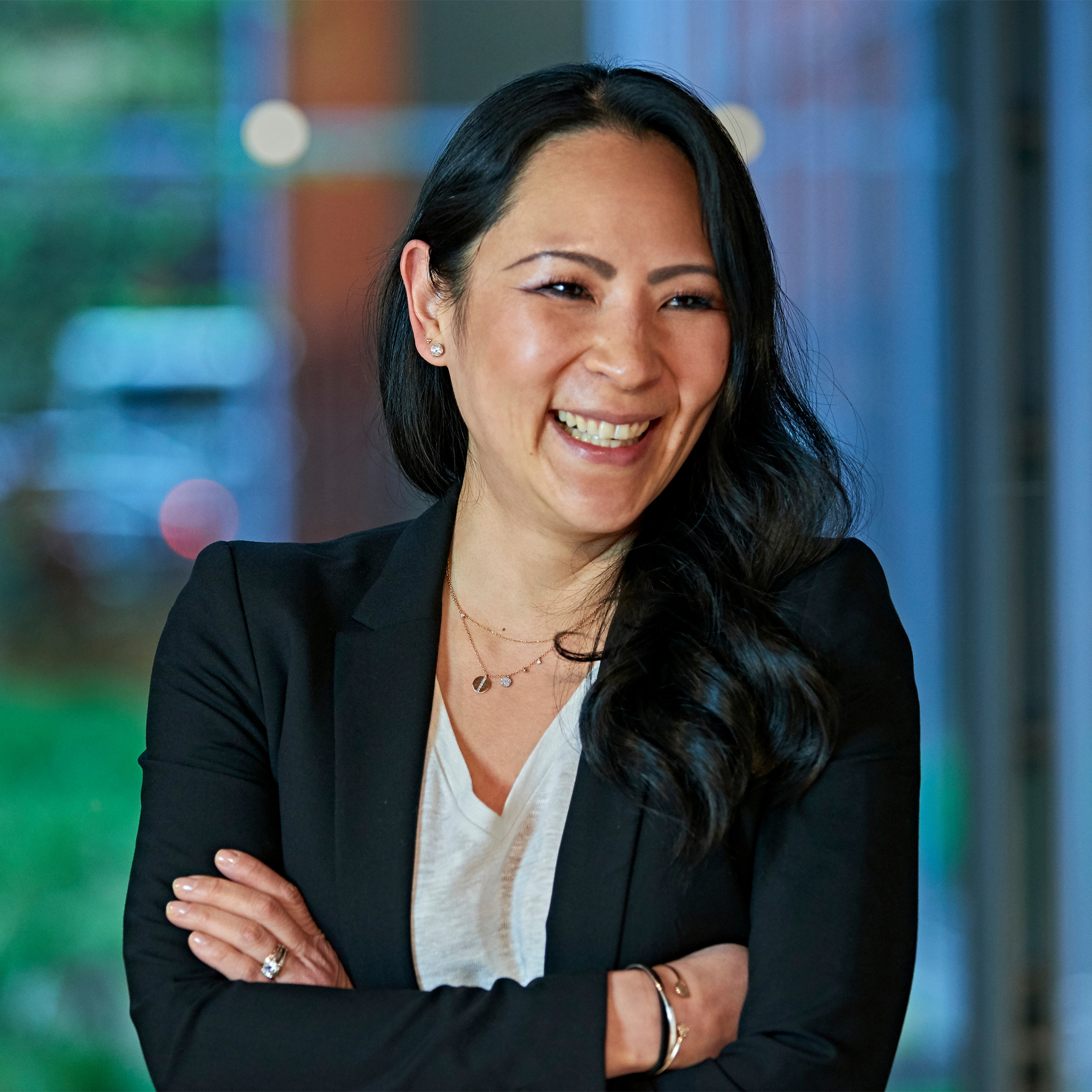
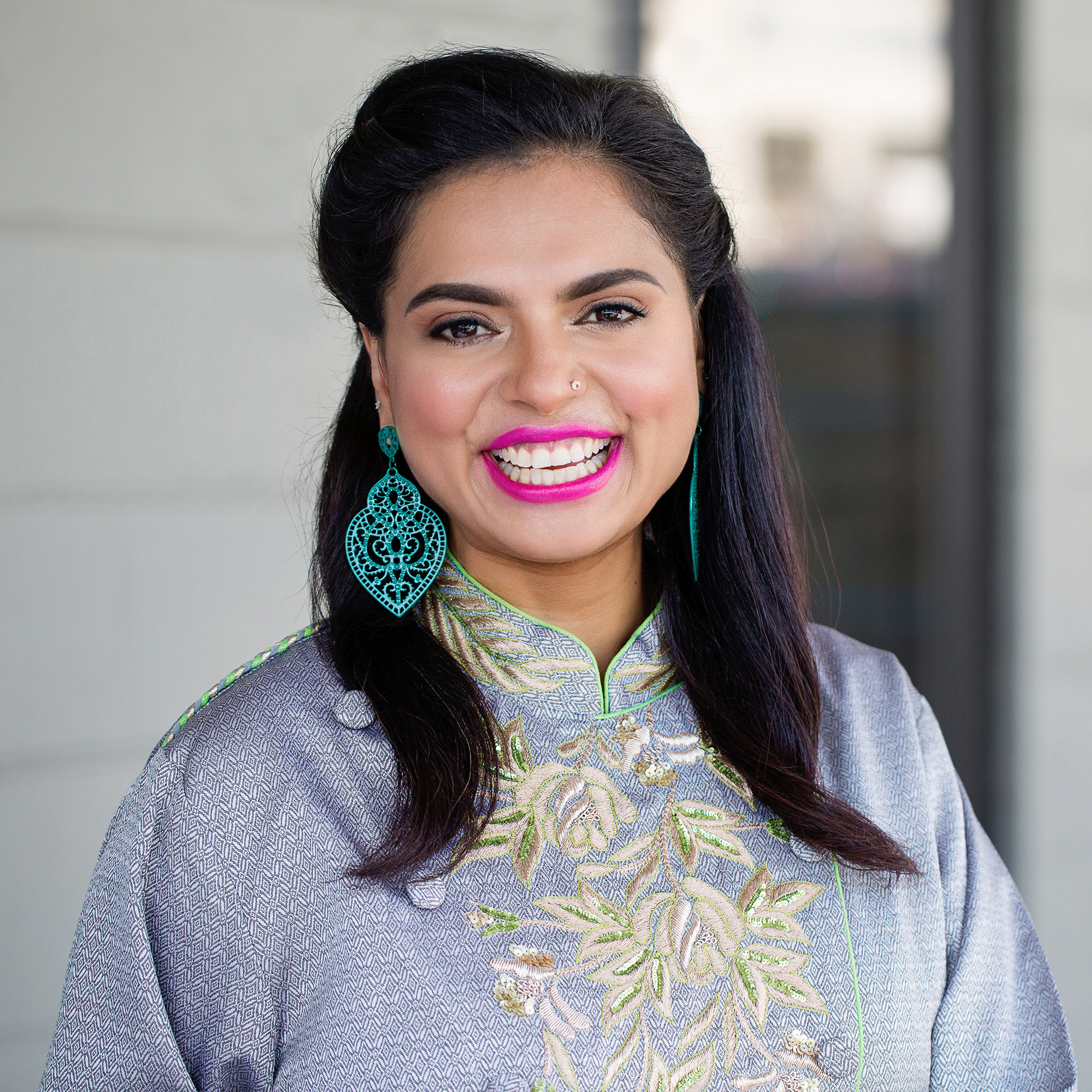
On this episode of Hospitality On The Rise, host Alice Cheng has a candid conversation with culinary force Maneet Chauhan — President and Founding Partner of Morph Hospitality Group and the only two-time Tournament of Champions winner. Celebrated for her warmth, wit, and unstoppable drive, Maneet shares her remarkable journey from a small town in India to the national spotlight in the U.S., balancing the demands of restaurant life, television, authorship, and entrepreneurship. Hear her unfiltered insights on resilience, leadership, embracing failure, and why authenticity remains her greatest asset. This episode is a powerful reminder that Maneet Chauhan isn’t just rising in hospitality — she’s redefining it.
Links
Transcript
HOST: ALICE CHENG
Welcome to Hospitality On The Rise, the podcast about the people shaping the hospitality industry and their journeys. I'm your host, Alice Cheng, founder and CEO of Culinary Agents, hospitality's go-to hiring platform. And I'm here to give you your dose of virtual mentorship.
Here, we'll be sharing the stories, lessons learned, and advice from hospitality leaders who've carved out their own path to success. After all, this industry is where many get their start and go on to do incredible things.
Whether you're a pro, starting out, or just love the hustle, this podcast highlights what makes hospitality extraordinary, the people.
HOST: ALICE CHENG
So excited to have Maneet Chauhan here with us today. Maneet, every time I see you, I just want to smile, and I have an ear-to-ear beaming smile–because that's usually what's meeting me as well for those of you who are listening and not watching. Maneet is the President and Founding Partner of Morph Hospitality Group, a collection of wonderful restaurants based in Nashville, as well as I think other projects, which we will hear about.
She is a regular on the television circuit: Food Network as a TV show judge, as well as contestant and champion for Food Network Tournament of Champions–I feel like I have to have that voice every time I say that–season two and season five. Winner of James Beard Award of Excellence, a media award, as well as cookbook author, Flavors of My World, as well as some other things, but we'll get to all that during the show. Thank you so much, Maneet, for coming and sharing your expertise with us.
GUEST: MANEET CHAUHAN
Thank you so much for inviting me. It's always a pleasure seeing you and just chatting with you.
HOST: ALICE CHENG
Yeah, let's just have a chat. We're just having a chat...
GUEST: MANEET CHAUHAN
I know!
HOST: ALICE CHENG
But not really chatting today because nobody wants to hear me talk. We're here to hear about how you got started and your career journey because it's so so inspiring. So how did you know that this was the industry for you?
GUEST: MANEET CHAUHAN
You know, it's really interesting when people ask me that question, I try to pinpoint that one moment where I thought that this is what I want to do. But I think it was just an evolution of small steps that made me realize this is what I wanted to do.
So I grew up in India in this really small town, my dad an engineer, my mom principal of a school, and everybody in the community that we were growing up in was starting to be a doctor or an engineer, or if you're really thinking outside the box, maybe an accountant or a lawyer. And over here, I was that renegade who really was never into studying. I struggled through school, right? Because it never was something that I was fascinated with.
And somewhere along the way, as a young kid, my love was always into food. So when I would finish dinner at home, I would go over to my neighbor's houses, tell them that my parents hadn't fed me, so can I eat with you guys? And it was amazing because where I grew up, there were people from different parts of India, and each state, each region has a very distinct cuisine of its own. So what was being made at our house was not being made by our neighbors. So I would get to eat all of these different dishes, see different techniques, which I didn't see in my house.
Later on, I realized that it was that very powerful connection that I could have a conversation with anybody over food. And I didn't need to know the same language. I didn't need to have the same beliefs. I think that was something where I really started seeing that food is something that I wanted my life to follow.
Then my older sister when she went to do her undergrad, every time I would go to meet her, I would take food. And I soon realized I was the most popular kid on campus and I didn't even go to school there. And I was like, aha, this is what I want to do. And there were a lot of naysayers–not my parents, they were very, very supportive, have been, always will be. But there were people who would come and say, “If she studies hard enough, she can be an engineer.” And they're like, “Back off, let her do whatever she wants to do.”
I did my undergrad in hotel management in India because at that time there weren't culinary schools per se, did my externships in some of the best kitchens in India, and then just before I was about to graduate, I asked one of my chef instructors which was the best culinary institute in the world to go to? And he said, “The CIA, the Culinary Institute of America.”
That's literally how–you know, this is pretty much 47 years that I'm telling you in 47 seconds kind of stuff.
HOST: ALICE CHENG
I love it.
GUEST: MANEET CHAUHAN
But that's it. I came to the CIA, graduated, worked at–my uncle and aunt were opening an Indian restaurant–worked there for around a couple of years, went to Chicago, worked there, New York, worked there, and then moved to Nashville to open my first restaurant around 10 years ago. So yeah, that's pretty much a nutshell of what the journey has been.
HOST: ALICE CHENG
You make it sound so easy.
GUEST: MANEET CHAUHAN
It was anything but. It was anything but. I think I strongly believe that anything worth achieving in life, you need to go through the downs because what you learn from your failures is so much more potent and powerful than what you learn from your successes. If you keep on getting successes, you'll take it for granted.
But it's the struggle, you know, when they say “it's the fire that makes the gold,” that's what it's all about, you know. It's the 90% of the… you know, when we talk about the tip of the iceberg, everybody sees the tip of the iceberg, right? It might be beautiful and gorgeous, but it's the 90 % of the sweat, the tears, the heartbreak, I think, which forges the strong people, and I think that's what's very important. And that's what I keep on telling people, like, don't be afraid of failures, actually welcome them because what you learn from it is so much, so much stronger than your successes.
HOST: ALICE CHENG
I love that. And I'm actually going to dive deeper into that because when we talk to leaders, and then you in particular–I even started off the show by saying, every time I see you, I have a big smile on my face. ‘Cause that's the first, I mean, that's honest. And that just came out of my mouth. But you talk about the struggles and the real life of opening businesses, hiring teams, deciding to move to or relocate for opportunity, etc.
You’ve had a lot of experiences in different cities, a lot of great culinary cities, and you decided to set up broader shop, I should say, in Nashville. Can you talk a little bit about some of your experiences working in some of these other cities?
GUEST: MANEET CHAUHAN
You know, you soon realize that business is not–I mean, it's very important the city that you are in, right? But it also comes down to your mindset, right? You look at a city and you figure out why you are in the city and why you love the city, right? There is a certain reason why the city is beloved by so many people. And then you pay homage to it, right?
Because it's not that the city is so lucky to have you. No, it's usually the other way around, right? You are lucky to be in the city. And as long as you have that mindset, then you're able to give to the city. And once you start giving to this place, you start getting it back. So be it the team members that you get, right? And a lot of these cities, a lot of the team members are not like Nashville.
Nashville , there is this amazing saying, if you find anybody who's been born and brought up in Nashville, you found a unicorn. Because there are not many people who have been born and brought up over here and who've stayed back. There are a lot of people who've gone and then they come back, but that's what it's all about. So I think to us, what has really worked is that we found ourselves in a city. We are grateful to be in the city. Now let's figure out what is that makes the city so beloved and embrace that, right? Like over here in Nashville we have Chauhan's ode to Nashville. It's our it's it's our love letter to you.
I think that's what really really works, but in the end of the day it also is your mindset that I am arriving into a city, let's make the best of it. Let's give it the respect that it is due. And I think that goes a very long way. A lot of times people go to a city and say, “Oh hey, we have arrived.” In upset, right?
HOST: ALICE CHENG
Yeah. And they're met with both not just the actual city, but also the people, right? The community. We hear oftentimes or almost all the time, business owners that come into a community, they want to foster that community and make it even stronger. And I have had the very lucky fortune to visit some of your locations. And I will tell you, that street and the energy is popping. I am sure that the city is very grateful for what you bring to it.
So as if running restaurants wasn't enough, didn't keep you busy enough, you have, I want to say, almost multiple careers here. You have been on the television circuit for quite some time. How did that come about? Like, how did you get into that?
GUEST: MANEET CHAUHAN
You know, I think the best analogy I will say right now is… businesses right now, to run a business, one of the most important parts of running a business is having a social presence, right? Like a social media presence. When I started in TV, I'm talking about 2007, social media really wasn't that big. And a part of what you are doing, media was a part of it, right? So if you're working at a restaurant, the chef goes for the morning shows and does a demo and people see the demo and then they come to your restaurant, right? That becomes a part. That's a part of the PR. That's pretty much how I stumbled on it. When I was in New York, the PR company came up with the opportunity to do Iron Chef.
And I mean, when Iron Chef originally had come to America, I was at the CIA and we were all like, “Wow. One day I'll be on it,” right? And then you get the opportunity and then not only that, you get the opportunity to go against Morimoto, right? Also, the fact is, I think my philosophy in life has always been “if you get a toe through the door, blast the door open,” right? I mean, why not? You have an opportunity, make the best of the opportunity, right?
My progression into television has been very organic and very natural. It wasn't something that I HAVE to be on TV. That's not how I started off. I started off with “I've got to be the best at whatever I do.” And I think people see that. So in the sense that I did Iron Chef, and the producers, they saw me, they must have liked what they saw. So they invited me to be on Next Iron Chef. From there, I was invited to be a guest judge on Chopped, which was, I think, season two or three. And then the next season, I was invited to be the permanent judge on Chopped. That's pretty much what the evolution has been.
But it's not been that I've been passive and like, “OK, if anything comes, it comes. If it doesn't, it doesn't.” I do reach out to people. I'm like, “Hey, guys, if there's any opportunity, I would love to do it,” and that's literally been the evolution. My first time on television was competing against Morimoto, and I love telling people I came a respectable second among two people, better than saying I lost.
But then at that time, I realized I was a good competitor. But now I have become, even if I say so, a formidable competitor, because over the years I have analyzed what I do good and what I do bad. And I have learned how to edit. Right? And that's why TOC (Tournament of Champions) not once, but being the only two-time champ, it's a great high because it shows that under pressure and under crazy circumstances, I can still produce things which are incredible and amazing. And I think that's what makes it so much fun.
HOST: ALICE CHENG
I love it. I love it. When opportunities present themselves, take your risk and make the most of it.
GUEST: MANEET CHAUHAN
Grab it by the horns. That's what it's all about.
HOST: ALICE CHENG
That's right. And be yourself, and be dedicated to it, and do the best you can, and opportunities can follow. And oftentimes they do. And if you're going to be second to anyone, let it be Iron Chef Morimoto.
GUEST: MANEET CHAUHAN
That is so true.
HOST: ALICE CHENG
You know, I think that's one of the–side tangent–that's one of the draws so much with these cooking competitions too, because at the end of the day, you're competing. It's not all for show. You actually have to create something.
GUEST: MANEET CHAUHAN
And it's interesting, the more time you spend in front of the cameras, the more you start completely putting it off, or saying that, “Hey, this is a really cool move you need to see.” Then you start talking to the camera because it's amazing. People come to the restaurant. They've seen everything. There are kids over here in my son's school who has stats. I'm like, what? So it's really, it's interesting. And I love the fact, like to me, I think the best compliment that I ever get is when people say that I can sit with my family and watch this. There is very little nowadays that you can sit with the family and watch, but knowing that you're a part of that, something as wholesome as that, I think that that really makes me really happy.
HOST: ALICE CHENG
Yeah, yeah, no, that's true. Because especially family programming these days, the algorithms, they get around any block, right?
GUEST: MANEET CHAUHAN
Uh-huh, uh-huh.
HOST: ALICE CHENG
And you mentioned social media. As you mentioned, it's hard enough to have a business, but then to look at all the different pieces. And in this age that we live in, it's like next level. You are very excellent at your social media. I say this not because you're on the show and not because I love you, but I find myself watching them and laughing to myself, and I'm like looking around, and hopefully nobody's watching me. You have this real, like… you're sharing, you're sharing behind the scenes. You're like, here's me before, here is after. You're kind of inviting the audience in, and that's got to be a lot, time-consuming. There's some skill involved there as well, because you're doing some fancy things. How do you balance all of these pieces?
GUEST: MANEET CHAUHAN
You know, I always joke–or actually I'm serious. I'm not joking. I'm serious. The reason why the number of people who tell me they're like, “We love your befores and your afters, and you turn and then all of that.” I think a lot of that is when I look at my videos or even if I'm doing some cooking videos, right, simple cooking videos and stuff. I think that the reason why people like it is because they're so badly-produced. Right? It's because I am doing it. I mean, it is like this is what it is. Right. It's not overly-produced. Initially I would be like, “Should I have somebody doing this for me?” And then I realized that it's all about connecting with people. And what we are connecting with is the realness of it.
I mean, in the end of the day, this is who I am, okay, I enjoy doing it, and I really don't take a lot of time in doing this. It's so funny. All the people who do my HMU and stuff, they know it. And even before I walk in looking like a cat which has been out in a thunderstorm, like completely, and I'm like, “Before we start, put the camera in front of me, record. Great.” After we are done, I'm like, “Ta-da!”
It's done. It's done, it's edited in two minutes, and it's out. I don't overthink it because what you realize is once you start overthinking it and you start thinking of the algorithms and all, that's not my forte. I'm a chef. That's who I am, ok? And I know when to keep in my lane. And that's not mine. There are professional social media people outside who do absolutely spectacular, stunning work. Not me. All I'm doing is I am sharing who I am.
I had a really good moment. There is a little bit more to it than the befores and afters. It is that I want people to see that you need to be really comfortable this way, and you really need to be comfortable this way. You do not need to hide yourself behind anything, right? That's the messaging that I want to put across. And it's fun. I actually thoroughly enjoy doing it. I know that I'm really bad at it, but somehow it resonates with people, and I'm happy with it.
HOST: ALICE CHENG
Absolutely. I don't know if you're watching it because it's badly-produced–because I think they're really great–but I think it's the authenticity. It really is like, you're just here. Here I am. And yes, I think it fits into the overall brand, if you will, because people see you on television all fully-presented by the team.
GUEST: MANEET CHAUHAN
I have glitter from my head to my toes. That's who I am.
HOST: ALICE CHENG
Yeah. And I think it is important for people to see that A) you are the same on and off camera. I can attest to that. And that's great because they're able to kind of connect with you in a different way. Whether or not it's intentional, it's brilliant.
GUEST: MANEET CHAUHAN
Thank you.
HOST: ALICE CHENG
So keep doing it because I, as a consumer, enjoy it.
GUEST: MANEET CHAUHAN
I love that. Thank you so much.
HOST: ALICE CHENG
The other thing that I'll kind of bring together here is that yes, you have this media presence. Yes, you do this fun stuff on social media, etc. And you're a business owner, and you have a obligation to further push that and get people into the restaurant and discover, and you're creating jobs for people, but you are also heavily involved with supporting the industry. And you make time to mentor, to share, to make sure that the people who are working in the industry and who want to work in the industry are motivated. I mean, you're taking the time to speak to us here, so thank you.
I wanna highlight some of the things, some of the CIA awards that you've gotten also. What are some of the ways that you keep your team motivated?
GUEST: MANEET CHAUHAN
I think it is just to be authentic and genuine and give them the respect that they are due. I mean, in the end of the day, you've got to reali–I realize I'm not perfect. I'm far from perfect. I make so many mistakes in life.
So you need to give yourself the grace that it's okay to make mistakes as long as you do not keep on repeating making the mistakes. Give yourself the grace for that, but also give your team the grace for that. Right? I mean, a lot of the people who are working for us, a lot of them have never worked with Indian food before. I've grown up with it. Why would my expectation be that they know it as well as I do? The fact that they're taking the time to learn a new cuisine shows me how much they respect the cuisine. And I should be grateful for that.
And then a lot of times over the years, to me some of the most frustrating parts of working for someone used to be when I was expected to do something without being given the tools to succeed. How? Right? Just be reasonable with yourself and be reasonable with your team. To me, I think that is very, very important. Respect is the underlying thing of everybody who works with me. But then I think also the big thing is that you need to push your team because they are capable of so much. Right? But push them in a positive manner.
Okay, it's like your kids, right? Your kids at times, they're like, “I can't do it.” Of course you can do it. “I can't do it.” Of course you can do it. “I can't do it.” Okay, try it. Right? You'll fail, you'll fail. That's fine. Right? So you need to, to me, I think that is the bottom line. Respect and the belief in your team that they can succeed even when they think that they cannot. I think that is very important.
HOST: ALICE CHENG
Yeah, and I think for those who are looking to kind of start out or advance their career working in certain kitchens and stuff, I love that point you had about learning a new cuisine. If somebody is interested in working with you because you are an expert in this cuisine, and they want to learn from you. And that is that's one of the main reasons why people look for the jobs and the employers that they do, is they want to keep learning.
And I think that that's so important to continue to foster and stay connected to the folks that are wanting to get into the industry, who want to further develop and then who want to grow their careers. And as you're demonstrating by just sharing random thoughts–or not random–sharing your own experiences, you can work in restaurants, you can own restaurants and businesses, you can go on television and be a TV star competitor as well as judge. Or you can not do that and focus on other things. I think the opportunities are limitless, right?
GUEST: MANEET CHAUHAN
Agreed.
HOST: ALICE CHENG
Just go to the door and kick it open.
GUEST: MANEET CHAUHAN
Totally. Blast it open.
HOST: ALICE CHENG
[LAUGHING] Blast it open.
You know, I'd say throughout your time here, obviously you have a big community that
surrounds you in different pockets. What advice have you received from past mentors that have really stuck with you?
GUEST: MANEET CHAUHAN
One thing about me is that I consider anybody and everybody around me a mentor because learning is an everyday process. I would be the last person to say that I know everything. I don't. I am still learning every day. But I do think that to me, the one thing that really resonates with me is resilience. It is “you will be knocked down.” You will be. It's not a “may.” You will be. It is up to you how you get up, you shake off the dust and keep walking and get ready to be knocked down again. It's completely fine.
So I think resilience is something which is, you know, it's the tenacity, it's the audacity, it's the resilience, which I think is something that I've learned from past mentors which just keeps me going one step in front of the other. And sometimes the steps might be heavy, but you still have to keep on walking ahead.
HOST: ALICE CHENG
I love that. And they could go up and down and sideways. But how do you keep inspired and learning and growing? Because that's such an important part…
GUEST: MANEET CHAUHAN
I think over the times it's become the attitude of gratitude. I mean, it's like where I am, I'm very grateful for the opportunities that I have gotten. I mean, it's not that I'm underestimating or undermining what I have done. I've put in a lot of blood, sweat and tears, but I got the opportunities, and I took the opportunities, and I did not squander those opportunities. So I think it is the attitude of gratitude.
HOST: ALICE CHENG
Yeah, I love that. I love that. What's next for you? What are the secret things you're planning that you want to share with us?
GUEST: MANEET CHAUHAN
Well right now we've got two restaurants in Nashville: Chauhan Ale and Masala House and Mockingbird. Last year–actually beginning of the year before that–like end of the year before last, we opened a place in Disney Springs called eet By Maneet Chauhan, which I'm actually really excited about because it is getting Indian flavors and foods to mainstream America, which has always been my goal, is to make Indian food a lot more accessible and acceptable and loved in America. And that's one step closer to that, so I'm really excited about that.
You know, the usual TV, and a lot of I'm doing a lot of events which is exciting because I get to meet people. At times when you're behind the camera or you're in the restaurant, you miss that human interaction, so to me that is important because that's how I feed my soul. So I'm doing a lot of events, and yeah just taking each and every opportunity which is coming by my way and celebrating it.
HOST: ALICE CHENG
And given that you do all these events and you travel and all of that, what is your secret to balancing out work and life or just molding it all together?
GUEST: MANEET CHAUHAN
Balance is a myth. The only balance which exists is maybe in the kitchen, the balance scale. I'm just kidding. I don't think I balance at all. I absolutely don't think I balance at all. But what has worked for me is the fact that the moment that I find myself in, gets 200% of me. It's not short-changed. I think that's what works for me. And we make the best of it.
Next week or this weekend, we are going on a cruise. I'm working, but the family is coming along because I'm not working 24/7. Whenever I'm working, I'm working, but when I am back, I am enjoying with them. So I think that's what it is. To me, I think “balance” is a word that comes into play when you're not enjoying what you're doing. But when I'm thoroughly enjoying and loving what I'm doing, then I don't need the balance. I'm happy being completely unbalanced, I guess.
HOST: ALICE CHENG
Yeah, if you're doing what you love,the lines are blurred, right? And everyone has their own way to reconnect themselves to what they love. And then from there, build your ecosystem around it. And your common thread with it, with seizing the opportunity is also focusing on what's in front of you, right? You're not squandering your opportunity or not squandering the time that you have with your family or whatever else you're doing. And that's great. It's something I think everyone continues to try to find: what is their personal kind of happy place?
GUEST: MANEET CHAUHAN
So true.
HOST: ALICE CHENG
Well, we have a couple of quick fire questions here.
GUEST: MANEET CHAUHAN
Let's do it!
HOST: ALICE CHENG
Since you're so competitive, I love this. Take your time with these answers. What advice would you tell your younger self?
GUEST: MANEET CHAUHAN
Don't be so afraid of mistakes and failures. Being afraid of mistakes and failures at times prevents you from making a decision or taking a step, which you might regret later on. So just jump into the deep end and you will learn how to swim.
HOST: ALICE CHENG
What's your advice for someone struggling in the industry?
GUEST: MANEET CHAUHAN
Go ahead and compartmentalize your feelings. In the sense that struggling in the industry is completely fine. It's important. That's your right to passage. But don't let that struggle go ahead and bring you down. It is easier said than done, but it's a mindset.
When you're like, “OK, I'm struggling. This is fine. And this is going to go towards building a stronger future for me.” So struggles are normal. And it's not just this industry. Any industry you are in, you will struggle. Life, you will struggle, but it's not something that should be a full stop, that “Oh I'm struggling in the industry, let me go to another industry.” Any industry you go into, you will struggle. So love what you are doing because that is going to make the struggles easier.
HOST: ALICE CHENG
What's your advice for fellow hospitality leaders?
GUEST: MANEET CHAUHAN
I think empathy. I think we need to start developing a lot more empathy. We've been there. We've been there. Let's not forget about the fact that we've been there. Just our team. Yes, at times it's dealing with kids, but let's go ahead, and anytime we want to say something which we know that we shouldn't, just take a deep breath and think of the time that you were there. Or try to empathize yourself being in that person's shoes. You don't know what they are going through. So empathy, empathy.
HOST: ALICE CHENG
I love it. On that note, Maneet, thank you so much. It's so nice to see you. Thank you for taking the time to share a little bit about your journey truncated in a small your whole life's journey, and the invaluable advice that you have for the industry.
GUEST: MANEET CHAUHAN
Thank you so much for having me on.
HOST: ALICE CHENG
Remember, success looks different for everyone in hospitality. No two paths are the same. If you have a leader or a topic you want to hear about, email [email protected].
Hospitality On The Rise is brought to you by Culinary Agents, connecting top talent with employers since 2012. Whether you’re hiring or looking for your next opportunity, join us at CulinaryAgents.com
For more inspiration, subscribe to Hospitality On The Rise and visit HospitalityCareerPaths.com, a free platform by Culinary Agents.
Until next time, keep rising!