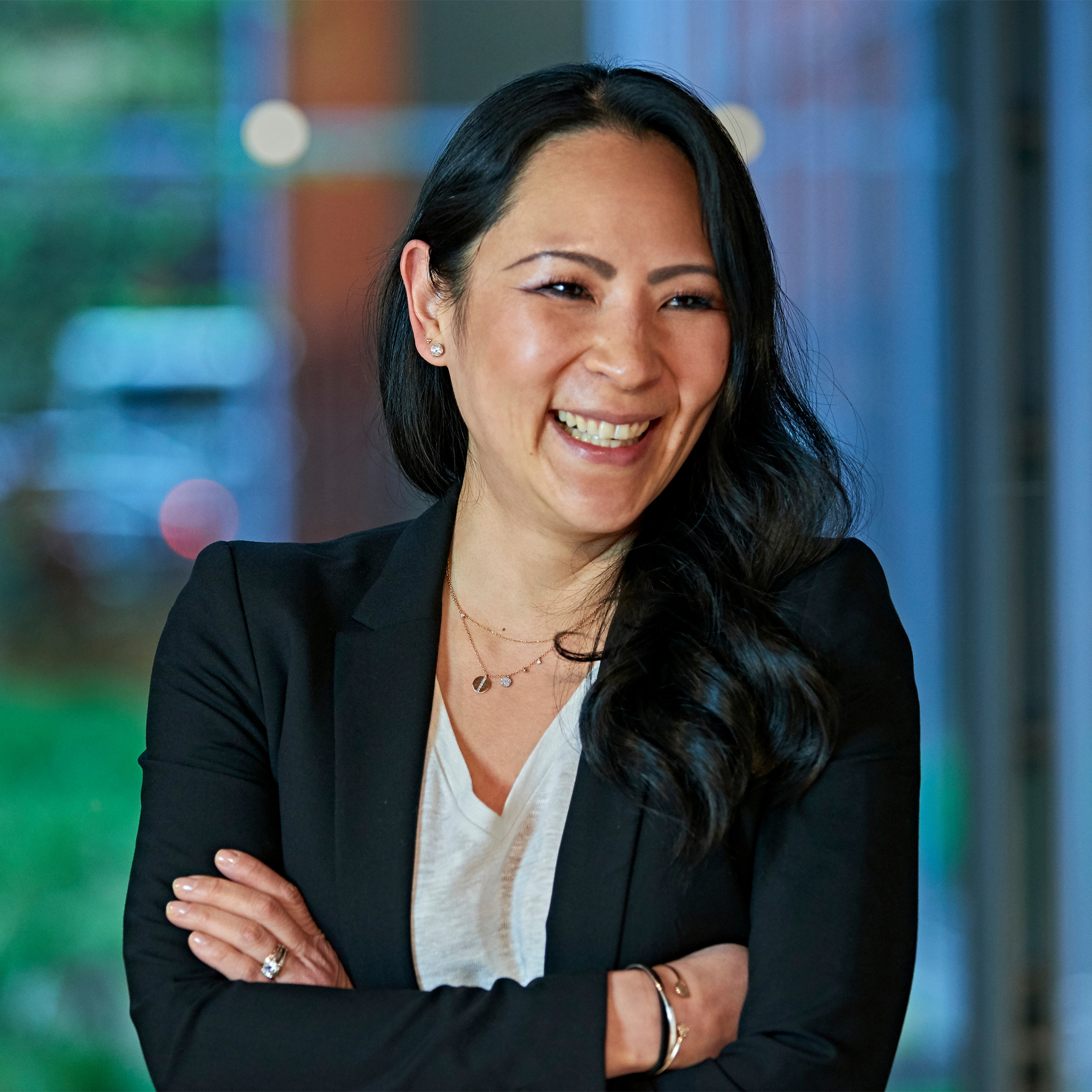
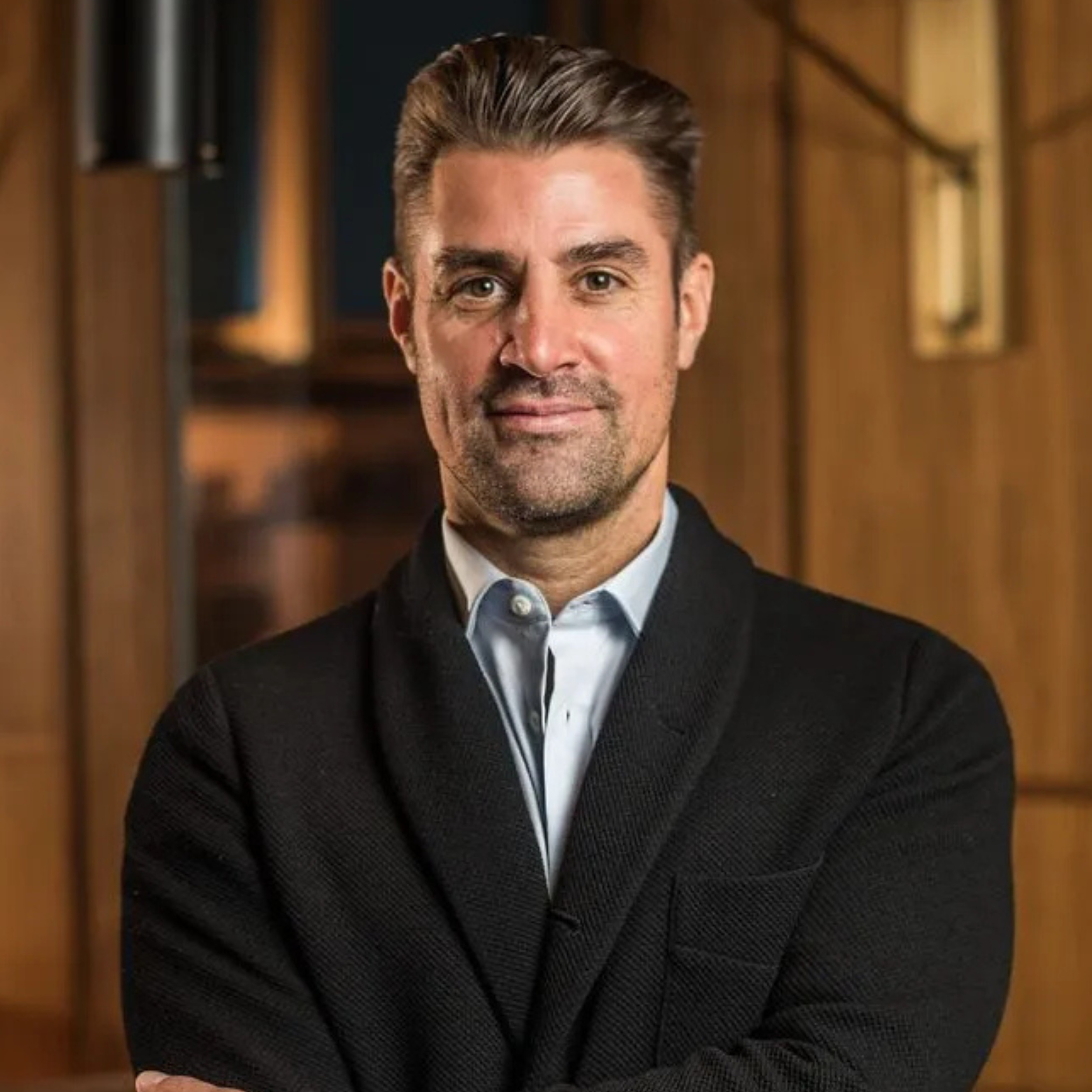
On this episode of Hospitality On The Rise, industry powerhouse Kevin Boehm, Co-Founder and Co-CEO of BOKA Restaurant Group chats with host Alice Cheng. From dropping out of college, lying on his resume and opening a six-table restaurant in Florida to co-leading one of the most respected hospitality groups in the country, Kevin shares the raw, unfiltered story behind his rise. He opens up about early failures, building lasting partnerships, evolving through personal wellness that led to launching one of his newest ventures, BIAN. It’s a conversation packed with hard-earned wisdom, hilarious origin stories, and a powerful look at how personal transformation can fuel professional success. This is an episode every hospitality leader—and dreamer—won’t want to miss.
Links
Transcript
HOST: ALICE CHENG
Welcome to Hospitality On The Rise, the podcast about the people shaping the hospitality industry and their journeys. I'm your host, Alice Cheng, founder and CEO of Culinary Agents, hospitality's go-to hiring platform. And I'm here to give you your dose of virtual mentorship.
Here, we'll be sharing the stories, lessons learned, and advice from hospitality leaders who've carved out their own path to success. After all, this industry is where many get their start and go on to do incredible things.
Whether you're a pro, starting out, or just love the hustle, this podcast highlights what makes hospitality extraordinary, the people.
HOST: ALICE CHENG
We're so excited to have Kevin Boehm here with us today, Co-founder, Co-CEO of Boka Restaurant Group, with over 40 restaurants that he's opened over the years in addition to a wellness-to-be conglomerate, let's say, because I think there's more than one location. And we're going to hear all about it. Kevin, thank you so much for joining us.
GUEST: KEVIN BOEHM
Hey, what's up? How we doing?
HOST: ALICE CHENG
What’s going on?
GUEST: KEVIN BOEHM
I'm happy to be here. Thanks for having me.
HOST: ALICE CHENG
Yeah, you know, I was just thinking 11 years ago or 12 years ago–this is our 13th year, and I think we met in my first year of Culinary Agents–we did start a little video mentorship thing, and it was the very first recording in your office. We were on like a couch
GUEST: KEVIN BOEHM
Oh yeah!
HOST: ALICE CHENG
And it was super dim lighting. The camera didn't work. I mean, shot on like an iPhone 6 or something. Anyway…
GUEST: KEVIN BOEHM
Yeah. Scrappy beginnings, you know? I've got lots of scrappy beginning stories.
HOST: ALICE CHENG
Yeah, yeah. Exactly. And that's why we have you here, because we want to hear all about it. So without further ado, love to hear about how all the things got started, how it's going, and what you've got up your sleeve.
GUEST: KEVIN BOEHM
Woo, that's a big question. The whole thing probably got started 34 years ago when I dropped out of college. I was one of those guys who kind of knew what he wanted to do at a very early age. I told my mom and dad that I wanted to open up my own restaurant when I was 10. Didn't really start thinking seriously about it until I got away to college.
I jumped in my beat-up tin can of a Jeep–it was actually a Suzuki Samurai–in 1991 and drove south. I was tired of the cold weather, and I wrote a fake resume, this beautiful piece of fiction that I wrote that had all restaurants on it that had mysteriously gone out of business so they couldn't call for a reference check. And I got a job working at a restaurant called The Beach House. And it didn't take me long to figure out that I'd found my people.
I was like, “Man, restaurant people are cool and sort of dangerous,” you know. I was like, “These guys!” and so I was addicted and that led to me saving up enough money with my girlfriend at the time to open a little six-table restaurant in the panhandle of Florida, in seaside Florida, which has become very, very popular since then. The road is called 30A. I think we were the 10th restaurant on that road, and there's probably 800 restaurants on that road now.
HOST: ALICE CHENG
Wow.
GUEST: KEVIN BOEHM
That's how it all got started. So I ended up opening up four restaurants in the south. The ultimate goal for me was always Chicago. I had grown up in downstate Illinois. I was enamored with Chicago. I would every so often come back and have dinner just to show myself that I wasn't ready to open a restaurant there yet. It's kind of like when you're in smaller markets, and you're trying to figure out whether you can hit a major league curveball or not. And I would go down in New York or go down in Chicago and I'd be like, “Okay, I'm not ready for THAT yet.” And then one day I just figured that maybe I was. So I had coffee with a guy who had a mutual friend and introduced me to, and that was Rob Katz.
And we had a cup of coffee at Nookies in Old Town here in Chicago, and we were supposed to meet for 15 minutes. We met for four hours and just said, “What's the worst that could happen? Let's open up one restaurant together.” And that was Boka.
HOST: ALICE CHENG
I love it.
GUEST: KEVIN BOEHM
That was 22 years ago. And just like when you're dating someone, business partnerships has this feeling-out process where you try to figure out if they're the right person or not. So
Rob and I spent six months trying to figure out if we could both compromise and if we were on the same page with things. We figured out real quickly that we agreed 97% of the time, which I believe really is the secret to a good partnership. If you're constantly having to navigate decisions all the time, it's not going to work. But him and I agreed most of the time.
And the 3% that we didn't agree on, nobody drew a line in the sand. Here Rob and I are 24 years being partners now.
HOST: ALICE CHENG
That's so incredible. That's so incredible.
GUEST: KEVIN BOEHM
And we still like each other and go out to dinner and all that sort of stuff. It's fun. So we kind of built this architecture then to becoming Boka Restaurant Group, kind of sitting across the bar every night as we closed out of Boka and said, “Man, wouldn't it be a gas if we could partner with a bunch of different chefs, and that would allow us to do all kinds of different concepts and we could just be really creative.” And that was the idea. I guess we manifested it sitting there at the bar, drinking tequila at 2 o'clock in the morning in 2003, 2004. And here we are. Companies, 3000 employees now, and almost 30 restaurants. And we'll be in five or six different states now.
HOST: ALICE CHENG
That's so incredible. Partnership is so important. I would say the foundation for the group that you've built, not just with Rob (tell him I said hi by the way), but with all of your chef-partners and your growing partnerships with hotel conglomerates, with your own personal projects, etc. What's the key to that success, right? You said that 97%, 3%, that's already a little nugget there.
GUEST: KEVIN BOEHM
Well, yeah, joint ventures are not easy. I mean, look at every rock & roll band in history. It's like, everybody does things differently and has different things that are important to them. And I think the key is the ability to understand somebody else's motivation for why they're doing something. We spent all this time in life saying, “I can't believe” or “I can't understand why so-and-so would do that.” But we're all different. We're all wired differently. So getting those things on the table and constantly talking about them and not having too much judgment about those things, I think that's how you get there.
I think that as long as you all want to get to the same place and you're rowing in the right direction, all the little stuff can be figured out. I think the problem is when two people want completely different endings. That's going to make the process be difficult. And I'm all about process. There's no destination in all this crap, you know. This is what I do every single day. So if I don't enjoy the process, we're doing it wrong.
The first step is make sure you know who you're going to be partners with; is the foundation of that person somebody that I like and respect and has integrity and all those things? And if that's all true, the rest of it can be worked out. Rich Melman has that great quote: “You can't do a good deal with a bad person.” It's 100% true.
And occasionally you can be tempted by something, like, “God, I know this person's not great. But man, this is a really good offer to do X.” I'm not tempted by those things anymore, but I have been in the past and I've learned my lesson. So, fortunately, the chefs that I'm partners with, the people in our C-suite that I've worked with–some of them for two decades–are people that I really love and respect. It's great to be able to walk into work and have that kind of feeling and that kind of energy. It's contagious.
HOST: ALICE CHENG
Yep. Tell me what were some or one of the biggest lessons learned throughout this process? It's easy to talk about your copy-paste situation right now. Not that easy, obviously, but you're 40+ locations in. So you figure out your process. But as you were starting out in second location, fifth location, etc., what were some of the things that you learned along the way?
GUEST: KEVIN BOEHM
Well, it's a great question because every time you add a couple of restaurants, it's a different company. And so you keep trying to do the same things that you did before. And you're like, “That might have worked with two restaurants, but it doesn't work with 11.”
I think you can go through each of them. The very first restaurant I learned that there are bad sizes to restaurants, and six tables is a really bad size. If two people don't show up for their reservation and you have six tables, you're kind of screwed. You might not eat the next day. That one was truly the bachelor's degree in everything that can go wrong in restaurants. Every day was just like, “I'm never going to do that again.” I mean, the oven blew up in my face on our first service and I went to the hospital. So, I mean, that was lesson one.
The second place that I opened was a wine bar/sushi bar/rock & roll bar. And I learned at that place that a hundred wines by the glass without a true Cruvinet system is pretty dangerous. You're constantly looking and you're like, “I better sell this Jack London by the glass tonight, because I opened it two days ago and that bottle cost me like $19.” So constant inventory pushing, and the booking of live music in there was also a crap shoot. Never knew what you were going to get, musicians showing up on time. I created a very difficult place for myself.
And sushi. The waste can be a terrible thing if you're not constantly looking at all that and keeping hospital corners of waste.
Then when I moved to Springfield, Illinois and I opened up a restaurant with actual real employees… My first restaurant was a staff of two, the second restaurant was a staff of four, and then moved to Springfield, Illinois and I had a staff of 40. Then you figure out that teaching is so much more important than executing. You're trying to do everything yourself, and I was trying to wrap my arms around everything and not share enough with people. So I think that's really where I learned that if you're not teaching and you're not sharing every line item of the P&L with everybody, then you can't really ask them to do these things unless they really understand it.
Then I went to Nashville and that's where I learned all the most lessons I ever learned because I failed. If we're a good detective and we can look at ourselves in the mirror, which I really had to after that experience and figured out where I got my feathers too high up in the air, but it was perfect because it led me to Chicago. But man, every day is a learning process because the model keeps changing, and the industry keeps changing, and the motivation.
HOST: ALICE CHENG
Yeah, and the people keep you on your toes.
GUEST: KEVIN BOEHM
People keep you on your toes. Well, the people want different things too. When I first started at that restaurant that I first worked at, everybody in that restaurant wanted to be screaming crazy busy every night. They liked the intensity. You know, we only got mad when we weren't sweating and going 90 miles an hour with our hair on fire, but not everybody likes that today. It's a different lifestyle. People want more balance, and they want more ease.
This industry has been turned on its head several times. So I think that's why it's been so hard for restaurants, the old school restaurants that I saw and grew up with, to also be part of the new school. I'm really impressed when you see a company like Lettuce Entertainment You that started in 1971 still being so vital. What that shows you is they've had the ability to be self-critical and to evolve and constantly look at what they're doing and change it.
That's the key, man, is to be able to look and say, “We stink at this. Let's be better at X.” So we do a lot of that. We hire people that are squeaky wheels too. The people that are on our C-suite, our directors, our VPs, they're people that are not afraid to get into a meeting and say, “This sucks, let's be better,” you know?
HOST: ALICE CHENG
Yeah, and thank you for sharing because we too often hear all the positive stories and celebrate them, which we absolutely should continue to do, but not often enough do we hear about the failures or the lessons learned, the way that somebody has gotten to all the accolades and the awards. So it's nice to know that you are human, Kevin.
GUEST: KEVIN BOEHM
Well, listen, I am very human… You do enough of these things and you're really taking it to the edge and you're really trying and you're taking chances. Some will not work. It's just a fact. It's a very difficult business. And sometimes you are one block or a price point that's 10% too high or the wrong concept at the wrong time away from it being a success. It's so tight. Great design, great hospitality, great food with a foundational business support system that's underneath it. It's really easy to say. It's only four things. It's really hard to do and to execute.
And for a big company, every time you go out and do more, if you're not adding people or people aren't getting smarter, then you're just watering down the culture and all that sort of stuff. So that's the difficulty when you want to grow.
HOST: ALICE CHENG
Yeah, and I'm going to latch onto that because I feel like there's something in the water in Chicago. The restaurants and also the sheer size of them and the fact that so many of them are under these partnerships and umbrellas, whether it's Lettuce Entertain You or Boka, etc. There's a lot of different groups.
GUEST: KEVIN BOEHM
Hogsalt, One Off Hospitality, Gibsons Group.
HOST: ALICE CHENG
Yeah, exactly. Yeah, it's one of the cities where you can point to groups that really have multiple, multiple locations that, you know, are seemingly living their own best lives, right? They're like co-existing and successfully.
So I want to talk a little bit about the growth of your team and the culture over the years, because that is probably one of the most challenging things as well, right? Continuing to motivate, to promote, to excite while you have these sub-brands, if you will, the partners that you have. What's your trick there?
GUEST: KEVIN BOEHM
Well, first of all we're lucky because because we have grown, it creates new positions. We have about 80 people in our corporate office, and there's a place for somebody to go within our own company. That's the hard part with just having one place. You have the most incredible general manager in the world and you have one restaurant, it's tough to find a space for them if you're not creating a bigger company. So that's certainly helped. Our model where we give the chefs in our company real equity in the individual LLCs has allowed us to keep these partnerships with these chefs alive and do multiple restaurants with them. So that certainly helps.
We always say the first step is, like, you want to grow within our company, be great and you'll rise. And if you look at it, the CEO of our company started as a bartender. Abby Kritzler, who's our Chief Culture Officer and Executive Director started as a cocktail server at Landmark. Jami Madonia, our CFO, started as a consultant in our financial department. Taylor Crowley was doing events at the Hotel Lincoln. She's now our Chief Marketing Officer.
So we've been able to grow from within. And it's a great thing to point to when people started the company, that they're not looking at everybody that's in our C-suite and they're all people that came 15 years later. They're not; there are a lot of people that were able to move and navigate through our company. So I think that's one of the hallmarks of what we've done hiring-wise is say the sky's the limit, man.
HOST: ALICE CHENG
Yeah, absolutely.
GUEST: KEVIN BOEHM
And that's the only way that we get there is like, talented people stay with us and want to stay with us, and we'll provide new jobs for them. We also look for talent in unusual places. The VP of Business Strategy worked for Microsoft for a decade. And she was just more intrigued by the restaurant business than she was the tech business. So we've had some people from different educational backgrounds who've ended up in our restaurant group. I think the restaurant business has become much more sophisticated over the last 30 years. The people looked at it, and they're like, “Wait a second, if I approach this from a more intellectual standpoint, you can really be successful in this business.”
Because we always talk about how fraught with peril the restaurant business is, right? And it certainly can be, but it can also be an incredible business. So through three decades, it's been hard as shit, but like we've been able to make hay, because we've surrounded ourselves by really smart people.
HOST: ALICE CHENG
Yeah. And I can attest to you take risks and adopt technology like Culinary Agents where it makes sense. I mean, one of the things that we've seen over the years, because we push heavily, is the professionalism, the “This is a career. If you want it to be, it can be. And here are examples of how people have done it.” And we're seeing more and more of that just permeate throughout all positions and attitudes in the industry and examples such as yourself, and Rob, and the leadership team that you have just are great beacons of inspiration.
GUEST: KEVIN BOEHM
I love looking at the timelines on Culinary Agents for people, because you see this crazy circuitous route to where they got, and I love restaurant history. I love hearing about who was on the line at Stars in San Francisco in 1990. Dominique Crenn was a sous chef and Steve Ells from Chipotle was on garde manger. I love looking at where everybody cooked before and it's interesting.
HOST: ALICE CHENG
Yeah. It does a lot to not only inspire folks who are thinking about entering the industry, but those who may be in it and are a little stuck and trying to figure out how to get to the next step. So thank you for being such a big supporter of that. And as a partner for many years, I can attest to your teams are really awesome.
GUEST: KEVIN BOEHM
Aw, thanks
HOST: ALICE CHENG
And I do not encourage or condone people to lie on their resumes, by the way, for the record.
GUEST: KEVIN BOEHM
I don't either, but it worked for me. [LAUGHS] You know what's funny is that interview, this guy–the general manager's name was Mike Bell, and Mike had asked me, “Kevin what's your favorite grape varietal?” and I was like, “That's a great question Mike.” I didn't know what he meant, and the owner was walking by and she's like, “I like this one Mike, hire this one,” and kind of gave me a little pinch on my cheek, and he was like, “I guess he got the job.”
You know my first step was to go to the bookstore and figure out what he meant by grape varietal.
HOST: ALICE CHENG
Pretty sure they knew. Pretty sure they knew.
GUEST: KEVIN BOEHM
Yeah, Then I bought a bottle of wine at the Jr. Food Store and bought a wine knife, and I just went home and kept sticking the cork in and like trying to figure out how to open it.
HOST: ALICE CHENG
And here you are today, a handful of years later. What are you, like 25 now or something? You, like, reverse-age every time I see you.
GUEST: KEVIN BOEHM
Oh my gosh. Well, please I turned 55 this year, Alice. 55 years old.
HOST: ALICE CHENG
No way. Well, you know, I'm going to segue that into your balance and health and wellness portion of your life, because whatever you're doing, please share with inquiring minds. As if these 40+ restaurants and businesses weren't enough, a handful of years ago, you decided to open something lifestyle-wellness. Tell us a little bit more about that one.
GUEST: KEVIN BOEHM
Yeah, even though I've been able to navigate the business world in these last three decades, the most difficult challenge for me was navigating happiness. I [have] been bipolar most of my life, not diagnosed because I refused to go to a therapist or do any of that sort of work. I had a very strange sort of traumatic childhood. When I got into my early 40s, I started really making wellness a priority in my life and hitting the gym more and that sort of thing. As I got into my late 40s, early 50s, mental health was just as important for me. Mind, body and soul, I was doing all these things in my life, but I was going to like 10 or 12 different places to do it. So I had a therapist, and I had a private yoga instructor, and I had a membership to a gym, and I got acupuncture and all this stuff. And I was like, “Man, what if I could help create a place where all this stuff was under one umbrella?”
And that's kind of what BIAN is, it's spelled B-I-A-N, named after a doctor in 600BC who was the emperor of China's doctor. And his name literally means “to transform”. So we created this place that's kind of like Soho House meets Mayo Clinic meets a gym and a spa. We have seven doctors in-house, full-time internist, doctor of Chinese medicine, Ayurvedic doctor, naturopath, psychiatrist. I was kind of building a place for myself, to see if I could finally find happiness. It certainly helped.
The restaurant business sort of saved my life. I was looking for, like, a replacement family for myself. And I kind of found it in the restaurant business, but I needed more help than that as I got older. It degenerated in me. I'm the happiest I've ever been in my life right now. But it came with a lot of effort. So BIAN is emblematic of who I became and who I evolved to in life. There are certain rules and things that I follow now that I need to follow to be a happy, centered person. And if I'm a happy centered person, I'm going to be a lot better at my job. I always have to remember that that's true, not just in me, but all the people that work in our restaurants.
Yeah, it's been a transformative last three years for me, between going to this incredible place called the Hoffman Institute, and doing ayahuasca and doing therapy multiple times a week, and getting on medication for the first time in my life, and stopping drinking, and a lot of things that were so additive to my life and completely changed the way that I live it.
And so I'm glad I had BIAN as a backstop for all that.
HOST: ALICE CHENG
I love it. Thank you for sharing.
GUEST: KEVIN BOEHM
Sure.
HOST: ALICE CHENG
I think it's proof that you can live the glitzy, can't-get-table-at-the-hottest-spot, owner of many, many locations and constantly serving other people and making sure they're having a great time and they're taking care of both guests as well as your team, and doing the work on yourself is priority.
GUEST: KEVIN BOEHM
Yeah, I would completely constantly deplete myself though, and so I believed that manic moments were happy moments. So I would create a restaurant and open up a new restaurant, you'd get that huge adrenaline rush from an opening, and I'm like, “This is happiness!” and then you would crash and you just want to do it again. So my own mental problems kind of fueled my ambition. So I may be not quite as ambitious as I used to be in this happier state, but that's okay.
HOST: ALICE CHENG
I don't know about that, I see the roster of what's coming up, so...
GUEST: KEVIN BOEHM
Yeah, you know, I mean the company is bigger than myself or Rob at this point. It's a living breathing thing.
HOST: ALICE CHENG
But isn't that kind of like the goal, right? You set it up.
GUEST: KEVIN BOEHM
It is, it is to create something that gets set up and then it doesn't need you to push it and move it every single day, even though you're an important part of it.
HOST: ALICE CHENG
Yeah. That's like leadership goals. In many aspects of any type of business, to have that constant stress of being the bottleneck or the only one or the control, you know. I know even for me as I'm getting older is like, enjoy it when I'm like, wait, I can take a walk for 30 minutes and not have to, you know, check my phone because something's on fire.
GUEST: KEVIN BOEHM
Yeah, I mean listen, that's right. We only get one spin at these things. So set a New Year's resolution. I sit down every year, and I kind of write my goals for the year, my rules for the year. And so I'm like, I'm 54 years old. I kind of know what works for me now.
So most of the time when I'm unhappy or life's not working, it's my own fault. And I can look at that sheet. I keep that laminated sheet in my kitchen and I look at it and I'm like, “Yeah, bro, you're not following the rules. Maybe if you do what you know, you know you need to be in the gym at least six days a week, or you get temperamental or you don't feel quite right.” So as long as I'm following the rules, I'm good.
HOST: ALICE CHENG
Yeah, I love it. I love it. I'm going to segue into because I've always personally also admired, on top of all the things that–you know, it's always easier outside looking in, but you have a very wonderful gift of word. You write really well. You've been a guest writer for many different popular publications. And I heard a little birdie told me that there's a book coming.
GUEST: KEVIN BOEHM
There is. Yeah, I wrote an article a few years ago, and and I think it was I think it was an Esquire article. And I started talking to a literary agent through that, and he said, “Hey do you have any you have any ideas for a book?” and I had shared a few with him, none of which he liked. And I said, “I do have a book–I do have an idea of something, but it's very personal.” And he said, “This is the book.”
So for the last four years, I've been working on it. It comes out in the fall. It's called The Bottomless Cup. It comes out in Abrams Press. I'll just share the first line of the book, which is
“In the summer of 1989, halfway through a Western Omelette and a cup of coffee, I found out that I wasn't really Kevin Boehm.” So I'm not gonna explain that right now…
HOST: ALICE CHENG
Ooh…
GUEST: KEVIN BOEHM
It starts with the mystery. And so, yes, I have a very, very strange family background.
HOST: ALICE CHENG
Well, I for one am very excited to read it.
GUEST: KEVIN BOEHM
It's three stories. It's basically that story, the restaurant stories, and this kind of wellness journey that I've been on. But one of the great joys of my life was writing this book. I've loved, loved, loved the process of it.
HOST: ALICE CHENG
And it sounds like and seems like it went hand-in-hand and fit into your whole introspective, “let's work on…” and you sound like you're putting in the work.
GUEST: KEVIN BOEHM
Well, I got to write a book. I got to write a memoir while I was living it. You know, things would happen in my life. And then I got to sit down and write them. It wasn't just a lookback. It was a lookback, and then all of a sudden, I caught up to my present life at the end of the book. A lot of things just happened to happen while I was finishing the book. And I had to change the ending like three times because the ending kept changing. And so such is life.
HOST: ALICE CHENG
I love it. I vote for putting all three, maybe you release the other endings like as a follow-up or like a membership-only, you get access to the other endings. Anyway, I won't put you on the spot anymore. What I will do is kind of circle back to you in leadership and hospitality and give you some quick-fire questions.
GUEST: KEVIN BOEHM
Sure.
HOST: ALICE CHENG
What advice would you tell your younger self?
GUEST: KEVIN BOEHM
Oh my God, I’d tell myself not to take it quite so… No, I don't want to say that. It's not that I would tell myself not to take it seriously. I would tell myself not to worry so much, not to produce so much cortisol, and not to wake up with a panic attack every morning. Like, yes, it pushed me, but it was super unhealthy. I wish I could have found some more balance and just been kinder to myself in the early days.
HOST: ALICE CHENG
Got it. Everyone should be kind to themselves. I like it. What's your advice for someone struggling in the industry?
GUEST: KEVIN BOEHM
Well, it's a pretty broad question, but to me, the first thing you have to do is write down what your problems are. The brain tends to catastrophize if you don't fill in the blank. I remember years ago, a guy who used to work for me called me and he was like, “I'm so overwhelmed! There's so many problems. I don't know what to attack first.” He was opening a restaurant. I was like, “No, there's actually a finite number of problems.” I was like, “I'm going to hang up on you. I want you to call me back when you know how many problems you have.”
Two hours later, he called me and he goes, “Kevin, I have 137 problems”. I was like, “Great, great, we know the number to it. It's not endless.” I go, “Let's start chopping some off.” I worked with him on a few, and I go, “Now you're on your own.” But this business, there's so much coming at you all the time that sometimes you gotta slow the game down and you gotta sit and you gotta be strategic in the morning and you have to map out.
The first thing you have to know is, where do I wanna be? What's my intention and where am I trying to get to? And then you backcast it instead of forecasting it. He's like, this is where we are. How do we get there and let's go backwards. Sometimes it's just so much information, there's so much sense of urgency in this business and “I need you right now” that it's hard to sit back and strategize how we get out of the shits, man.
And you need a good mentor or a good friend that you can bounce ideas off of. There's maybe nothing more important than that. I'm so happy to have great industry friends. Will Guidara and I talk every couple days and brainstorm about stuff. Donnie Madia and I are very, very close. I have Rob.
There's a great Aaron Sorkin-penned parable, which is: a guy falls into a hole and a doctor comes by, and he goes, “Doctor, I've fallen in the hole.” And the doctor writes a prescription. He throws in the hole and he keeps walking. And then a priest comes by and he goes, “Father, I'm stuck in a hole”. And the priest writes a prayer down and throws it in the hole and keeps walking. Then a friend comes by. The friend jumps in the hole with him and he goes, “What the hell are you doing? Now we're stuck in here together.” And he goes, “Yeah, but I've been down here before and I know the way out.”
There's a million people who've been in that hole before. And I've talked to Danny and Richard Coraine at Union Square Hospitality. I've talked to Melman. I've talked to so many people who've helped me over the years when I didn't know what to do next or I was panicking. So don't panic, strategize, find a friend.
HOST: ALICE CHENG
I like it. What's your advice for fellow hospitality leaders?
GUEST: KEVIN BOEHM
Be great. Greatness is really hard and it has a pay-in process. But the reward on the other side of it is massively worthwhile. My mom said, “If anything comes too easy to you in life, be skeptical of it.” She told me that in, like, 1987. I had no idea what the hell she was talking about. I SO know what she's talking about now. Life is like a pension. It was like when that oven blew up in my face, I was like, well, maybe I'm on the right track, you know?
It's like, to be great, it is gonna put you through your paces. But like I tell my kids all the time, “Earn your time off.” When I used to get to Sundays, and I knew that I had left it all out on the floor, I really enjoyed whatever I did on Sunday nights, whether it be eating dinner or watching White Lotus, you know? It's like, it’s earning your time.
Most people think that happiness comes from pleasure. Most of happiness comes from self-respect and the idea that you did a job and you did a job well done, and the self-esteem that you get from that is where a lot of people and most people find happiness is certainly where I came from. So put in the work, man, and then good things will happen.
HOST: ALICE CHENG
I love it. Thank you so much.
On that note, Kevin, we are looking forward to all of these. We didn't get into them. Maybe there's a part two to this podcast, but all of these upcoming projects, your book. Thank you so much for sharing your advice and your experience. And I look forward to seeing you soon.
GUEST: KEVIN BOEHM
Yeah, just Zarella coming soon. Pizza Place. Lee Wolen, Chris Pandel, 531 North Wells, where GT Fish used to be. And then we're doing a new restaurant with Brian Lockwood, who is the Chef Cuisine of Eleven Madison Park, called Gingie, also on Wells, coming soon. Thank you for having me.
HOST: ALICE CHENG
Thank you.
And you have Elliott Astor right now in Florida and Valley Goat.
GUEST: KEVIN BOEHM
Yes. Yeah, lots of stuff. Yeah.
HOST: ALICE CHENG
I love it, I love it. Thank you. Stay tuned for more. Thank you, Kevin.
GUEST: KEVIN BOEHM
Thank you, Alice.
HOST: ALICE CHENG
Remember, success looks different for everyone in hospitality. No two paths are the same. If you have a leader or a topic you want to hear about, email [email protected].
Hospitality On The Rise is brought to you by Culinary Agents, connecting top talent with employers since 2012. Whether you’re hiring or looking for your next opportunity, join us at CulinaryAgents.com
For more inspiration, subscribe to Hospitality On The Rise and visit HospitalityCareerPaths.com, a free platform by Culinary Agents.
Until next time, keep rising!