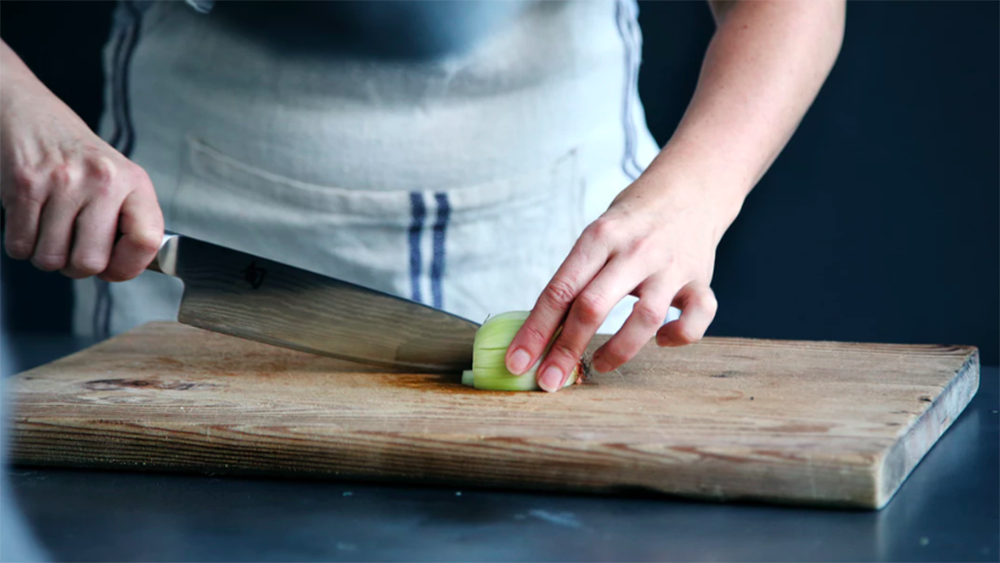
William H. McRaven said, "If you can't do the little things right, you will never do the big things right." The square-off, julienne, brunoise, paysanne, chiffonade, and other cuts are some of the essential building blocks to every dish in the kitchen, so whether you're looking to make professional meals at home, take the first step toward becoming a chef, or you (or someone you work with) need a refresher, here is a quick review of the most popular knife techniques and how to perform them.
Square-Off
The square-off is the first step and the base to the julienne, batonnet, baton, brunoise, medium dice, and large dice. To square-off your vegetable peel and remove the ends of your potato, carrot, turnip, eggplant, etc. Then slice one end to produce a flat surface. Lay this newly cut flat surface on the cutting board and continue to slice and square the remaining three sides. The final product will look like a 3-dimensional rectangle or shoebox.
Julienne, Batonnet, Baton (stick-cuts)
The julienne, batonnet, baton are all terms to describe the same type of cut. The only difference between them is the thickness. To create the stick-cut, cut your squared vegetable lengthwise to form long thin rectangles. Next, take those thin rectangular slices and cut lengthwise again to create small rectangular sticks.
- Julienne - A thickness of 1/8"
- Batonnet - A thickness of 1/4"
- Baton - A thickness of 1/2"
Brunoise, Medium Dice, Large Dice
Like the stick-cuts, the brunoise, medium dice, and large dice are all similar cuts, the main difference being the thickness of the final product. To create these cuts, bunch your julienne, batonnet, or baton together with your hand and cut widthwise to create small cubes.
- Brunoise - A thickness of 1/8"
- Medium Dice -A thickness of 1/4"
- Large Dice -A thickness of 1/2"
Paysanne Cut
Some dishes and aromatics require short cooking times and call for ingredients to be thin to ensure even, quick-cooking. To create the paysanne cut, after creating the desired stick-cut thickness (julienne, batonnet, baton), thinly slice one end of the stick-cut widthwise to produce a thin 1/8" square.
Tourner/Tourne (Turned Cut)
After squaring-off your vegetables, cut the longer rectangles into 2" segments. Use a tourner or paring knife to cut seven sides into each segment to create a football-shaped final product. The Tourner cut is primarily used for presentation.
Chiffonade (schiff-o’nod)
Chiffonade is for items such as herbs or leafy vegetables. Start by stacking the items you are looking to cut, then roll your stacked items into a cigar shape. After you have rolled the herbs or leafy vegetables thinly slice widthwise.