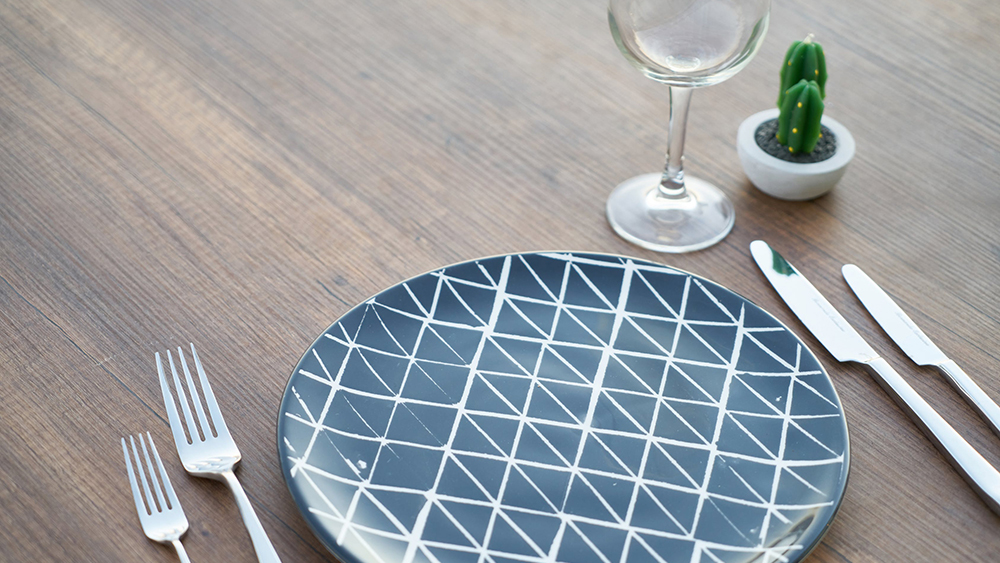
The saying "you never get a second chance to make a good first impression" holds true for restaurant customers with the table being the focal point. While each restaurant will have its own variation on setting the table, this seemingly simple responsibility is one of the most important tasks a server has. Here are some best practices to set a table for an informal dinner setting.
Plates
When dressing the table, plates should align with the middle of the chair and be one inch away from the edge of the table with the cutlery set on either side. If you are setting a bread plate, place it to the top left of the main plate.
Napkins
From Elegant to Haute Couture, there are hundreds of ways to fold a napkin. Regardless of the folding style preference, make sure the napkin is folded neatly and without any extra creases or stains. Then place the finished napkin to the left side or on top of the plate based on the standard at your restaurant.
Flatware
Most restaurants will preset two forks (appetizer and main course) and one knife for guests and then provide the appropriate flatware for dessert, if ordered. The dinner fork and knife are placed closest to the plate with the fork on the left, knife on the right. The bottom of the fork and knife should be level with the bottom of the plate. The smaller appetizer fork is placed to the left (on the outside) of the dinner fork. If a spoon or appetizer knife is part of your table setting this will be put to the right (on the outside) of the dinner knife. Ensure all forks and knives are clean and polished before being placed.
Glassware
The wine glass is set on the right-hand side of the plate above the knife, with the water glass placed just behind it to the right. If your restaurant also has red wine glasses preset on the table, place that glass to the left of the water glass, forming a triangle. Ensure all glasses are clean and polished before being placed.