In recent years, diversity and inclusion have become key components of company culture that job seekers look for when applying to jobs. To get an industry-specific perspective on leading with diversity and inclusion, we asked Michelle Herndon, the Director of Diversity, Inclusion and Community at BOKA Restaurant Group to share her expertise on the topic.
Key Takeaways
- While diversity often happens organically within a company, inclusion takes effort so that more and different voices are heard.
- Making diversity and inclusion part of your company culture is a different kind of work. It's important to understand that this work is messy and can be uncomfortable.
- This work takes time and doesn't have a finish line. To make diversity and inclusion part of a company culture, it needs to be infused in your everyday operations and conversations.
- Listening is a crucial part of the work.
- Companies in this industry have the unique opportunity to turn their hospitality inward to provide support for the individuals who make up their teams.
- Through training, you can provide a toolbox of resources to lead and connect with all individuals on the team, preparing and inspiring them to choose their own paths, whether that be in hospitality or elsewhere.
- Even if you don't have a dedicated HR department, as a first step, identify your pillars and assess whether your operations and culture align with them.
- There are many free, online resources available.
Q&A with Michelle Herndon
What is the difference between diversity and inclusion?
The path to diversity is completely different than the path to inclusion. The path to diversity can be intentional, but it could also happen organically. What typically doesn't happen organically is inclusion. That is an effort in most companies. It can be easy to see diversity in a company at the entry level, but as you go up the ranks, it gets lighter and lighter and there tends to be less diversity. Less diversity isn't always a bad thing, if the company is dedicated to being inclusive and working to find a way to bring more and different voices to the table.
Why is diversity and inclusion important?
We are in an industry that when there's glass on the floor, you clean it up – now and there's a result in minutes. And during that time, there's someone standing over it until it's cleaned up. Making diversity and inclusion part of your company culture is a different kind of work. The kind where you're cleaning it up and standing over it, and standing over it and still cleaning it up and standing over it, etc. It's a marathon, not a sprint -- this work takes time. We also have natural turnover where people move on and you have to continue to write and re-write, unlearn old habits and take new paths. It's as if you were to eat an elephant. It has to be one piece at a time, otherwise it's too overwhelming.
The work has to be part of your every day and it has to be part of the whole team's culture, not just a department. You have to continue to have conversations with people, figure out what works and doesn't, and then take action. Real change comes from taking one small step at a time while continuing to learn. It's important to understand that this work is messy and can be uncomfortable.
What does your role entail as the Director of Diversity, Inclusion and Community?
How has your role at BOKA impacted the company culture? How have you seen the culture shift as a result?
Our HR team and I work hand-in-hand. As I go out into the world and see what other restaurants and companies are doing, I am able to gain perspective and see the progress we are making. It blows me away when other teams don't see the importance of these two departments working in tandem because there are so many instances where we cross paths.
What are some guiding principles when it comes to encouraging diversity and inclusivity?
- Take the stigma out of what HR means. It can sound harsh, like you're reporting to the principal's office. As corny as it may sound, HR needs to be Resources for Humans, where the company is a support system for its employees. The HR team needs to become the librarians for training and development.
- Have your HR team be more of a support system instead of just the point of contact when "you're in trouble," want to discuss retirement plans or your health insurance.
- Be able to educate people and give them the tools that they need so that they can be successful. We've created an online library on our team's website that they can go to get more career development support and ideas. Our hope is to cultivate and nurture individuals. We aim to be a restaurant group that employees can learn from, whether they stay with us for a succession of time as they move through the ranks (because we love promoting from within) or if they go out into the world and take what they've learned from us with them.
What are best practices for promoting diversity and inclusion with an existing team?
Poor leadership leads to speculation about what's behind employee advancements. We worked on getting our training back on track. By incorporating inclusion in our training has allowed our managers to lead in a way that isn't focused on policing employees and be able to have a connection with individuals as a leader, not a boss. We really leaned into training and having a proper training department, which felt like such a luxury during COVID because it was a time when we were just trying to staff our restaurants.
Now that we have had a bit more stability and have done more smoothing out, we are able to work with our managers to get more input on how they would like to be trained and train their teams. We ask them, "What would training look like to you?" "What would be most impactful?" "What toolbox can we provide to help you feel successful?"
For smaller businesses that aren't able to dedicate a whole department or person to this area, what advice do you have for them to infuse diversity and inclusivity in their company culture?
Investing time and money is important for this work. But the first step is to identify your pillars, your mission statement and north star for your team, regardless if you have a dedicated HR Department. Assess if these pillars translate to your team and daily culture.
Self-education as a leader is a way to start cultivating a learning environment.
Try becoming active in your community – in places where others might not know you exist. For example, we come out of our bubble to immerse ourselves into the communities around us that might not even know the neighborhood where our restaurants are.
Any company can take these small steps, they don't cost money, just time. Remember that it's never going to be perfect (and you may piss a few people off in the process), but each little seed that you plant (and we plant a lot not only internally but externally in our communities) brings more diversity and inclusion.
What are helpful resources for developing diversity and inclusion initiatives?
There are lots of resources available that are free and accessible online. A few of my top recommendations for ideas and inspiration, include:
- Google's diversity and inclusion mission – it's available to the public and shares all of the work they are doing as a global company
- Target's diversity and inclusion program
- Harvard Business Review's daily email newsletters
Where can you go for legal questions?
If seeking legal guidance, since labor laws vary from state-to-state and is a different lane than diversity and inclusion, check with the EOCC as well as your local and state departments for employment and labor.
About Michelle Herndon
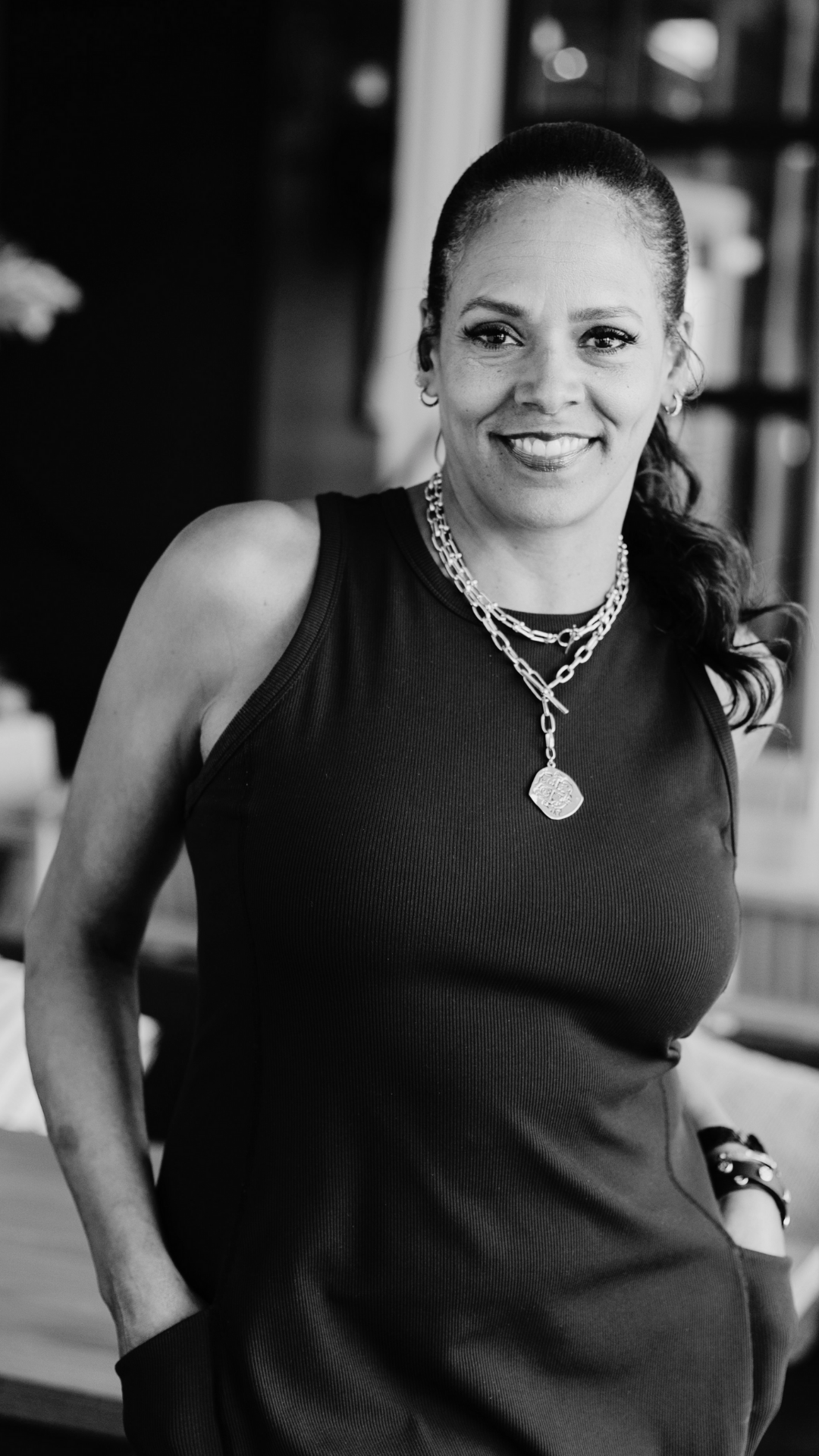 Michelle was born and raised in Chicago to a Polish immigrant mother and a black father. Her parents met in the mid-60s at a time when interracial marriages were not accepted. As a result, her parents intentionally chose an environment that was balanced racially and reflected their family, to raise Michelle and her sister.
Michelle considers herself a citizen of the world, who comes from a family of food. Her mother's parents were dairy farmers in Northern Wisconsin, making summers as a young black girl very interesting. As a young student, Michelle travelled around the world, landing in Brazil at the age of 16, in an exchange program. There she learned Portuguese in a very short time by being immersed in the culture and then went on to the University of Barcelona, where she also learned Spanish. She was often the only black girl in a lot of different places – a common thread that has since been woven into the many chapters of her life.
Upon joining the restaurant industry, Michelle fell in love with a chef and moved to Los Angeles, where she found the culture to be different. There, she learned a lot and had a lot of great mentors who did not look like her, but who were constantly championing her and pushing her through because they wanted to see her do well. Michelle's last job in LA before moving back to Chicago was in HR for the Limited Brands Clothing Company, where she focused on staffing and recruiting, while also starting to work in diversity and inclusion. That was in the early 2000s when a lot of companies weren't even talking about diversity and inclusion yet.
When Michelle moved back to Chicago, she had been out of the restaurant industry for a while, but was looking for a home. What resonated with Michelle most, was to find the things that made her feel that she could bring her whole self to work – she found those things in the restaurant industry. Michelle also wanted to stay busy while she figured out what she wanted to do next after losing her mother. She found healing, peace and herself in the restaurant industry. And so, Michelle launched her career in hospitality at Cornerstone Restaurant Group, which was owned by Michael Jordan and now works with BOKA Restaurant Group (BRG).
In 2020, when a lot of companies began taking a stance on diversity and inclusion after the murder of George Floyd, BOKA was too. Michelle was on furlough during COVID and was planning to leave the industry to pursue a coaching path – not because she didn't like it any more, but because she was tired after being in the events world and opening many restaurants with the BRG team. She wanted to do more and found herself gravitating towards connecting with people in the company and them coming to her for advice and support. BRG's Chief of Marketing asked Michelle to review their social post to make sure it sounded authentic. After reading it, Michelle told her that it was well written and as along as the team remained humble about their journey that they would be fine.
A couple days later, Michelle got a call from BRG's Chief Cultural Officer about creating a new role and specifically for her. After being able to sit down face-to-face with the leadership team, including its founders, to gauge if they were really committed to the work, she accepted the position. Then through honest and uncomfortable conversations, BRG committed to turning its hospitality inward and began laying out how to model its James Beard Award Winning / Michelin Star behavior for its employees.
"You have to know what that feels like. What that looks like. I realized that I had already been doing a lot of this work through my entire career, so it just made sense, which is when the synergy came together." - Michelle Herndon