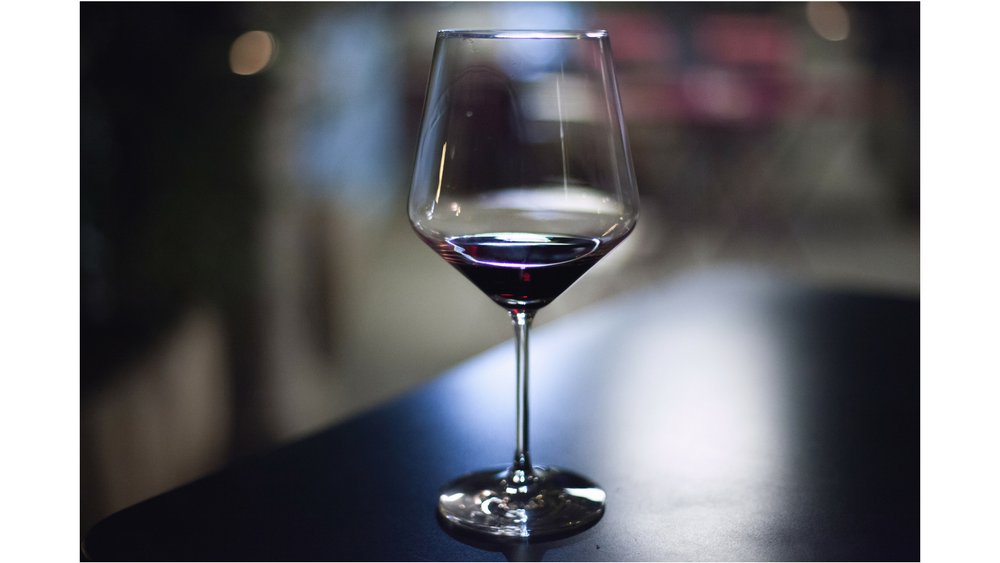
Dustin Wilson, Master Sommelier and Co-Owner of Verve Wine in New York City, guides us through the process of providing wine service for red wine at the table.
Red Wine Service (when decanting is needed):
- Repeat the order to the host (person who is ordering).
- Set the table with the proper stemware as well as a cork tray for when you present the cork and an underliner for the bottle and the decanter.
- Bring the wine to the table at the proper temperature (in this case, 60-65F depending on the type of wine).
- Since you are planning to decant the wine, always place the bottle gently into a cradle when grabbing the wine in the cellar to keep from disturbing any sediment. The bottle should remain on its side and handled very gently until after decanting is finished.
- Prepare a decanter and a light source in the place where you plan to decant the wine.
- Present the wine to the guest while the bottle is still in the cradle and confirm the producer name, vintage, grape or cuvée name.
- Take the bottle to your decanting station, still in the cradle.
- Use the knife on your wine key to cut the foil around the second (lower) lip on the neck of the bottle, remove the foil and place it in your pocket.
- Wipe the top of the bottle to ensure the top of the bottle is clean before removing the cork.
- Remove the cork from the worm of the wine key and hold it to present to the guest.
- Wipe the mouth of the bottle to ensure it is clean.
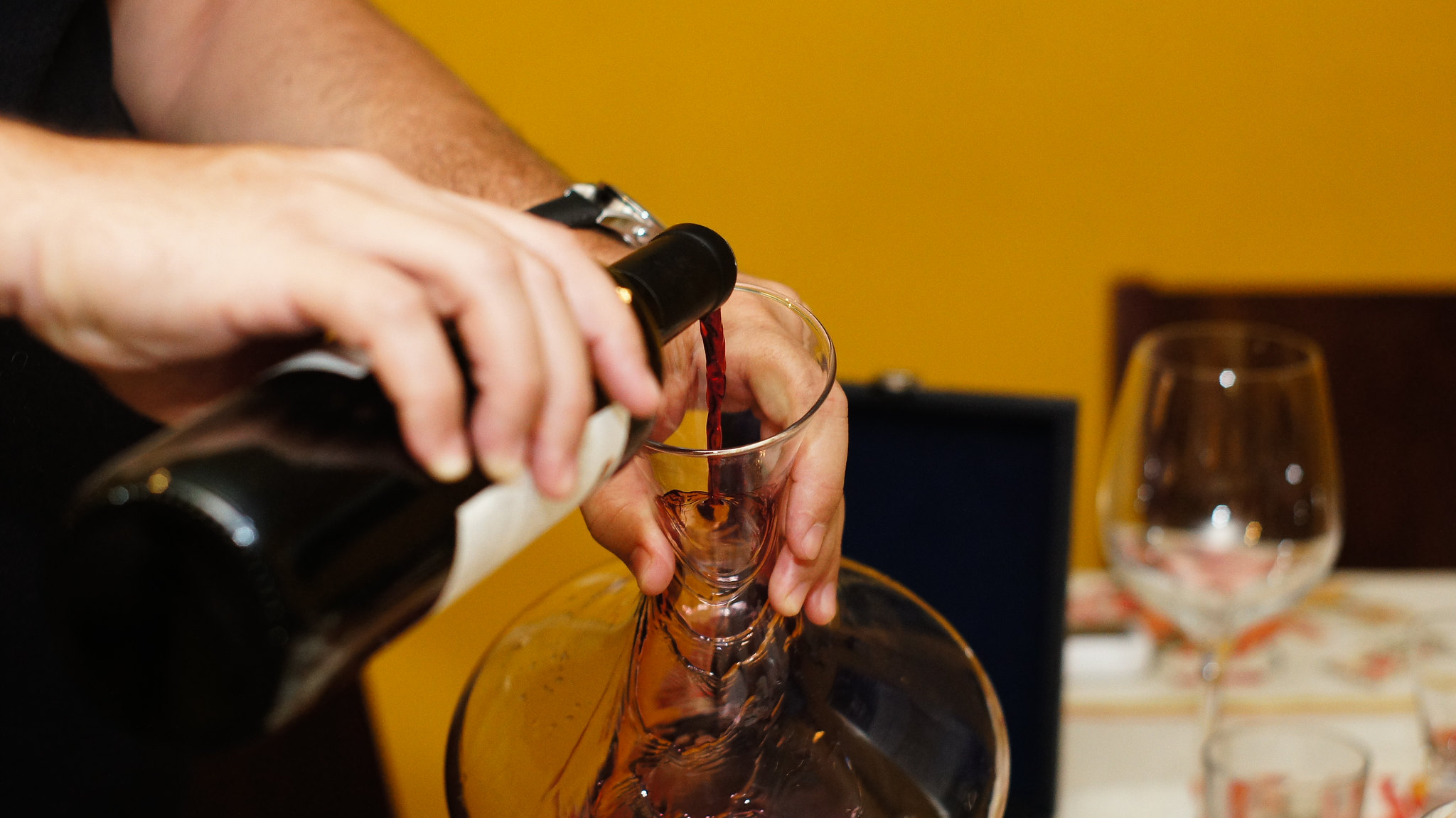
- Gently remove the bottle from the cradle and then slowly pour the wine into the decanter with the light source beneath the bottle such that you can watch the sediment in the bottle and catch it at the shoulder while pouring. Use one slow steady flow of wine to decant. Stop when the sediment reached the shoulder to ensure that no sediment makes it into the decanter.
- Return to the table with the bottle, decanter, and cork.
- Place the cork on the cork tray and the bottle onto the underliner provided.
- Pour a taste of the wine for the host from the decanter and allow him/her to smell and taste the wine. Wait for his/her approval before continuing to pour.
- Once approved, move clockwise around the table, pouring for guests of honor first (birthday person, etc.), otherwise pour for the ladies first, gentlemen second, and the host is last.
- After finishing the pours, offer to remove the cork from the table and place the decanter on the other underliner.
- Ask politely if there is anything else that you can help the guests with at that time.
- Check back in periodically to top up and make sure they are enjoying the bottle.
For red wines that are not going to be decanted, follow the same instructions for white wine service but there is no need to offer to put the wine on ice unless you or the guest prefers to keep the wine cool (e.g., Beaujolais).
About Dustin Wilson, MS:
With a work history that spans top restaurants across the US – Frasca Food & Wine (Boulder, CO); The Little Nell (Aspen) and RN74 (San Francisco), Dustin is best known for his position as Wine Director of the 3 Michelin-starred restaurant, Eleven Madison Park. His expertise is also showcased in the critically acclaimed wine documentary, SOMM, and the film’s sequel, SOMM: Into the Bottle. In 2017, he opened Verve Wine in the downtown Manhattan neighborhood of Tribeca.
Learn more: