Office & Admin
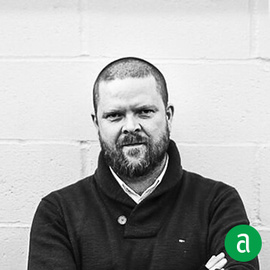
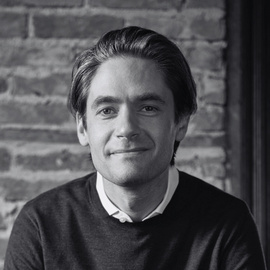
Jason Leeds
Founder, Chief Growth Officer | Chelsea Hospitality, Dartcor Enterprises


Experience
2019 - Present
Founder
Chelsea HospitalityWhippany, NJ
2019 - Present
Chief Growth Officer
Dartcor EnterprisesWhippany, NJ
2017 - 2019
Founder & Partner
Bocce Union SquareNew York, NY
2016 - 2018
Business Development
Nuts.comJersey City, NJ
2011 - 2013
Analyst – Investment Banking
Goldman SachsNew York, NY
2010 - 2010
Summer Analyst
Goldman SachsNew York, NY

Education
2007 - 2011
Bachelor’s Degree in Economics
Haverford CollegeHaverford, PA
Advice from Jason Leeds
Quotes about career path, skills, and teamwork from an industry leader.

Hospitality is much bigger than food, service, or operations.
Those things matter enormously, but they’re not the point.
The real work of hospitality is shaping how people feel in a place, how they behave toward one another, and whether they feel like they belong there.
People may forget what they ordered. They may forget the exact sequence of the evening or the meeting or the event. But they remember whether they felt seen. They remember whether the place had energy. They remember whether it made them want to come back.
Hospitality isn’t a layer you add at the end––it’s the emotional infrastructure of a place. Done well, it turns spaces into communities.
“Pay attention to the details because details are how people experience care.”
That idea has stayed with me.
In hospitality, a detail is rarely just a detail. Everything adds up to create a world we want our guests to experience. It’s the greeting at the door, the rhythm of service, the feel of a napkin, and small branded moments. The fact that a need was anticipated before it had to be asked for.
Great hospitality is made up of small signals that say:
you matter here.
This approach is common in great restaurants and hotels, but we're interested in bringing it to the often-overlooked places where people spend most of their time—like workplaces. People can feel the difference between something that was simply executed and something that was genuinely cared for.
I look for people who notice.
Curiosity matters.
Emotional intelligence matters. Humility matters. But the common thread is noticing—noticing when someone feels uncomfortable, when a teammate needs help, when a room feels off, when a guest needs something before they ask.
Technical skills, systems, and standards can be taught. But it’s much harder to teach genuine care.
The best hospitality people aren’t just friendly––they’re awake to the people around them. They understand that their job is not simply to complete a task, but to change the way someone experiences a moment.
A lot of my work sits between different worlds:
food, design, operations, real estate, workplace culture, finance, and guest experience.
You have to understand the business model, but you also have to understand the atmosphere. You have to think operationally, but also emotionally. You have to know what makes something work and what makes it matter.
The most important hospitality leaders today need a balance of taste, discipline, empathy, and strategic thinking. Because the opportunity is no longer just to serve people well––it’s to build places people actually want to be part of.
I try not to romanticize exhaustion.
Hospitality takes real emotional energy.
You're constantly reading people, solving problems, and creating experiences that help others feel comfortable and cared for. That's incredibly rewarding, but it can also be draining if you're not honest about it.
Don’t confuse innovation with humanity.
The tools are changing quickly.
Technology can make hospitality more efficient, more seamless, and more personalized. But it can’t replace the human moment. It cannot host. It cannot read a room with empathy. It cannot make someone feel genuinely seen.
The future of hospitality will not belong to the companies with the most amenities or the flashiest technology. It will belong to the ones that remember what hospitality is really for: creating trust, belonging, and connection.
My advice to leaders is to treat hospitality as a cultural force, not just an operational function.
Whether you are building a restaurant, workplace, hotel, or event, ask: How should people feel here? What behavior are we encouraging? What kind of community are we creating?
That is where the real work begins.
We focus on hiring people who are naturally wired for hospitality, while also giving them tools to sustain that work over time.
That includes ongoing training around mindfulness, breathing exercises, and other practices that help people manage stress, stay present, and recover more effectively.
I also think the people around you—and the systems you build—matter enormously. When teams trust one another, share responsibility, and have clear processes in place, it becomes much easier for everyone to step away, recharge, and come back at their best.
Hospitality was always around me.
I grew up around my family's catering business, so I understood the work from an early age––the pace, the pressure, the details, the pride.
But I don't think I fully understood the power of hospitality until later. I worked in finance, then in business development, and eventually started a seasonal restaurant and bar in Union Square. Each step taught me something different about people, energy, and experience.
The real turning point was coming out of COVID. When the world reopened, the pent-up demand to simply be together was unlike anything I'd seen. People weren't just going out to eat––they were hungry for human connection. It was a powerful reminder of what this profession actually does.
And it made me think about what we're up against. We live in a world that pulls people apart––screens, algorithms, social media, AI. These aren't necessarily bad things in isolation, but the cumulative effect is that genuine human experience is getting crowded out. I started to see what we do differently after that. We're creating the conditions for humans to remain human.
One thing we've intentionally invested in is creating systems that support people, not just operations.
That's part of why we worked with Kristi Ellingsworth to formalize her Director of Hospitality role, which focuses on helping employees feel connected, supported, and equipped to navigate the pressures that come with hospitality work.
Roles in Office & Admin
Check out the newest job opportunities in your area and level up your career.